
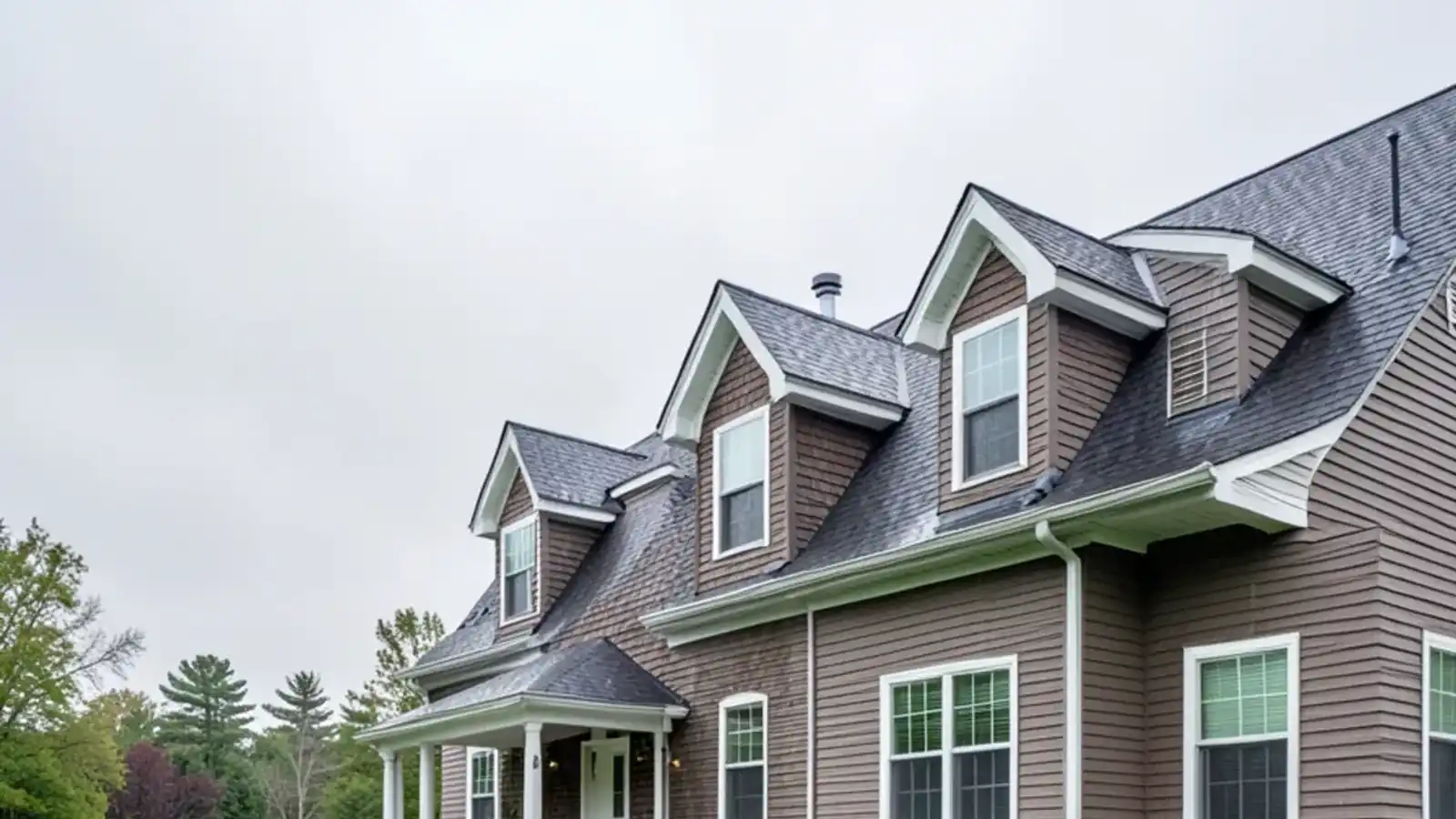
Seamless Gutters
5-Inch vs. 6-Inch Gutters: Which Size Fits Your Roof?
When you compare 5 inch vs 6 inch gutters, the 6-inch moves about 44 percent more water, and it earns its price on large roofs, steep roofs and valleys that funnel water to one corner. A 5-inch gutter is enough for many smaller, simple roofs. Measure the roof and look at the layout before you choose.
- ★ 5.0 on Google · 29 reviews
- Serving since 2024
- Based in Hampstead, NH
Published and updated November 2, 2026 · By the Lanes Gutters crew, Hampstead, NH
On this page
Size the gutter to the roof, not to the house next door. A 5-inch K-style gutter is rated for about 5,520 square feet of roof at 1 inch of rain per hour, and a 6-inch is rated for about 7,960 square feet. That is roughly 44 percent more capacity from one inch of extra width. Heavier rain or a steeper roof lowers both numbers.
5 inch vs 6 inch gutters: what the sizing numbers say
| 5-inch K-style | 6-inch K-style | |
|---|---|---|
| Rated roof area at 1 in/hr rain | About 5,520 sq ft | About 7,960 sq ft |
| Capacity gap | Baseline | About 44% larger |
| Usual downspout | Smaller | Often larger |
| Best fit | Smaller, simple roofs | Large, steep or complex roofs |
Those figures come from a published sizing chart, and they are the best case. A steep roof sheds water faster, so water arrives at the gutter in a rush. A heavy storm can also deliver more than 1 inch in an hour. Either lowers the practical number, so treat the chart as a ceiling.
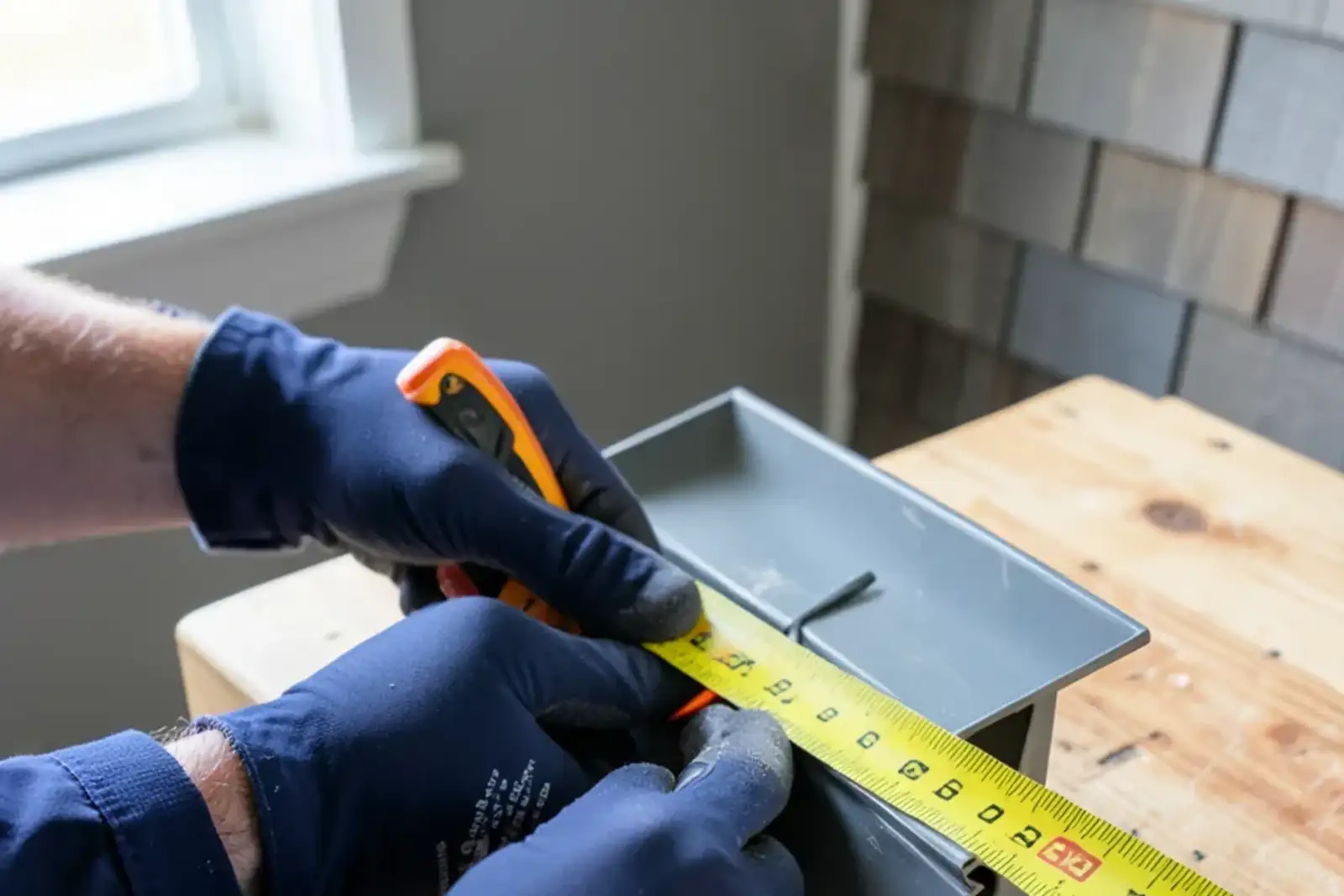
Step by step: size your own roof
- Find the roof area draining to each run. Multiply the length of the run by the depth of the roof plane, measured up the slope.
- Add any water that arrives from above. A dormer, a second roof or a valley that empties into the run adds to it.
- Compare the total with the chart. If you are close to the rated area, go up a size.
- Count the downspouts. The practical maximum is about 50 feet of gutter per downspout (SMACNA).
A worked example makes it concrete. A 40-foot run under a roof plane 25 feet deep drains about 1,000 square feet. That is far under either rating, so a 5-inch gutter is fine on paper. Now add a dormer and a valley that dumps a second roof into the same corner, and one run may take several times that load. Water concentrated at a corner is where the size question really appears. If you cannot measure the roof safely, a satellite image and a tape measure on the ground give a fair estimate, and a crew can confirm it on site. Never climb the roof to measure it.
A second worked example: the valley that beats the average
Take the same house. The main run is 30 feet long under a plane 20 feet deep, about 600 square feet. A smaller upper roof, 24 feet by 18, is about 430 square feet, and it empties through a valley into the last 6 feet of that run. The total is roughly 1,030 square feet, still far under either chart rating. On the chart, a 5-inch gutter is fine.
But the chart assumes the water spreads along the whole run. Here, 430 square feet of roof lands in a 6-foot stretch, and the first foot or two of that stretch takes most of it. That is why a gutter that is the right size on paper overflows at one corner and nowhere else. There are two fixes. Go to 6-inch on that run, or add an outlet near the valley so the water leaves where it lands. Doing both is often the safer call, since the downspout is what the water has to get through in the end.
Downspouts set the real limit
Gutter size only matters if the water can leave. A 5-inch gutter is commonly paired with a smaller downspout and a 6-inch gutter with a larger one, and the downspout size and count are often what limits a system in a downpour. SMACNA's practical limit of 50 feet of gutter per downspout is a ceiling for long runs. A valley, a tall wall or a roof that feeds another roof can call for an outlet sooner than 50 feet. We keep this part qualitative on purpose. Sources disagree on step-up thresholds, so we would measure your roof and write a price rather than hand you a rule that may not fit it.
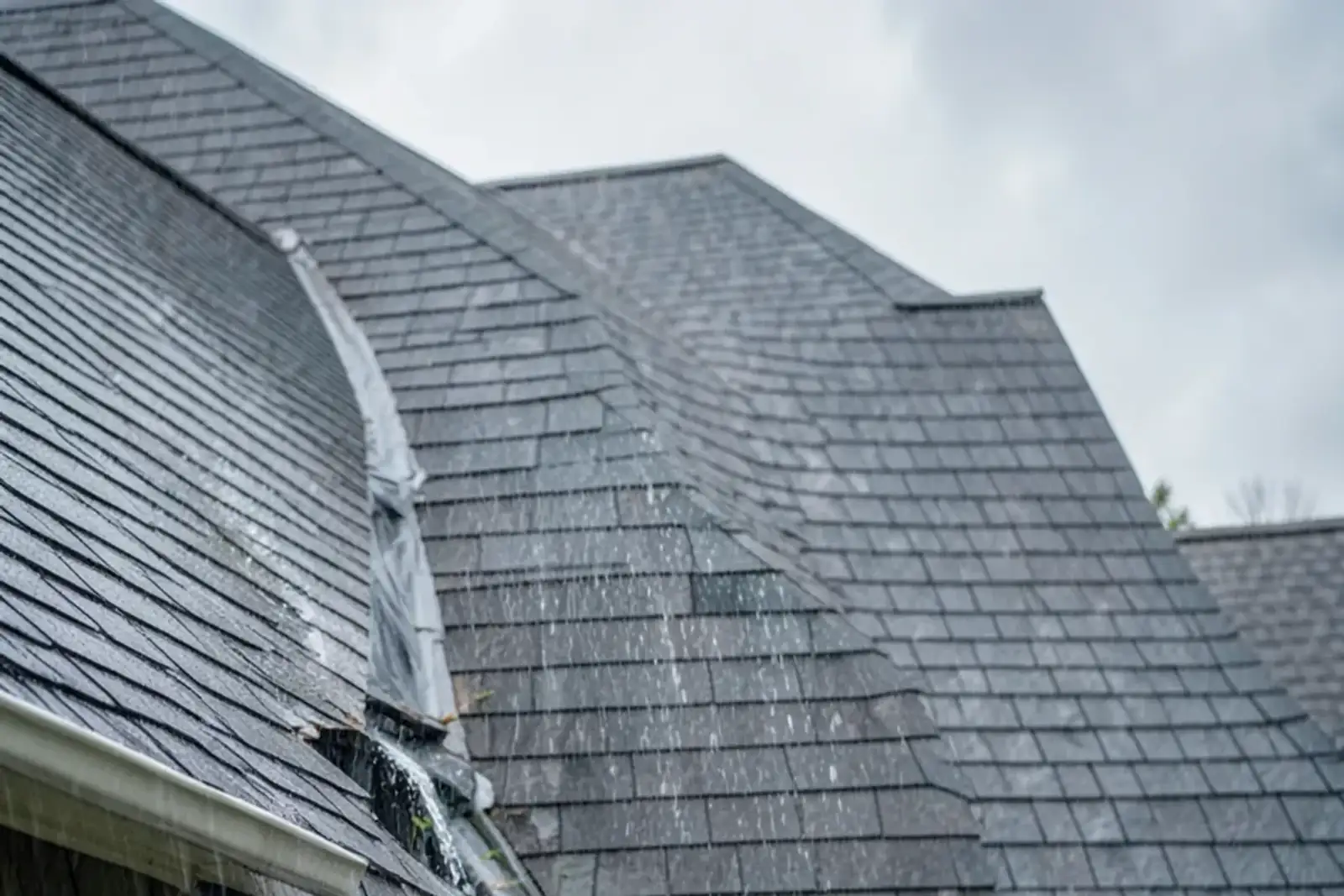
Where a 6-inch gutter earns its place
- Large roof planes. More roof means more water at once.
- Steep roofs. Water gets to the gutter faster and can shoot over the front edge.
- Valleys. Two roofs meet and send their water to one point.
- Long drops. A tall wall means fast, heavy flow in the downspout.
- Overflow history. A clean 5-inch gutter that still overflows is telling you something.
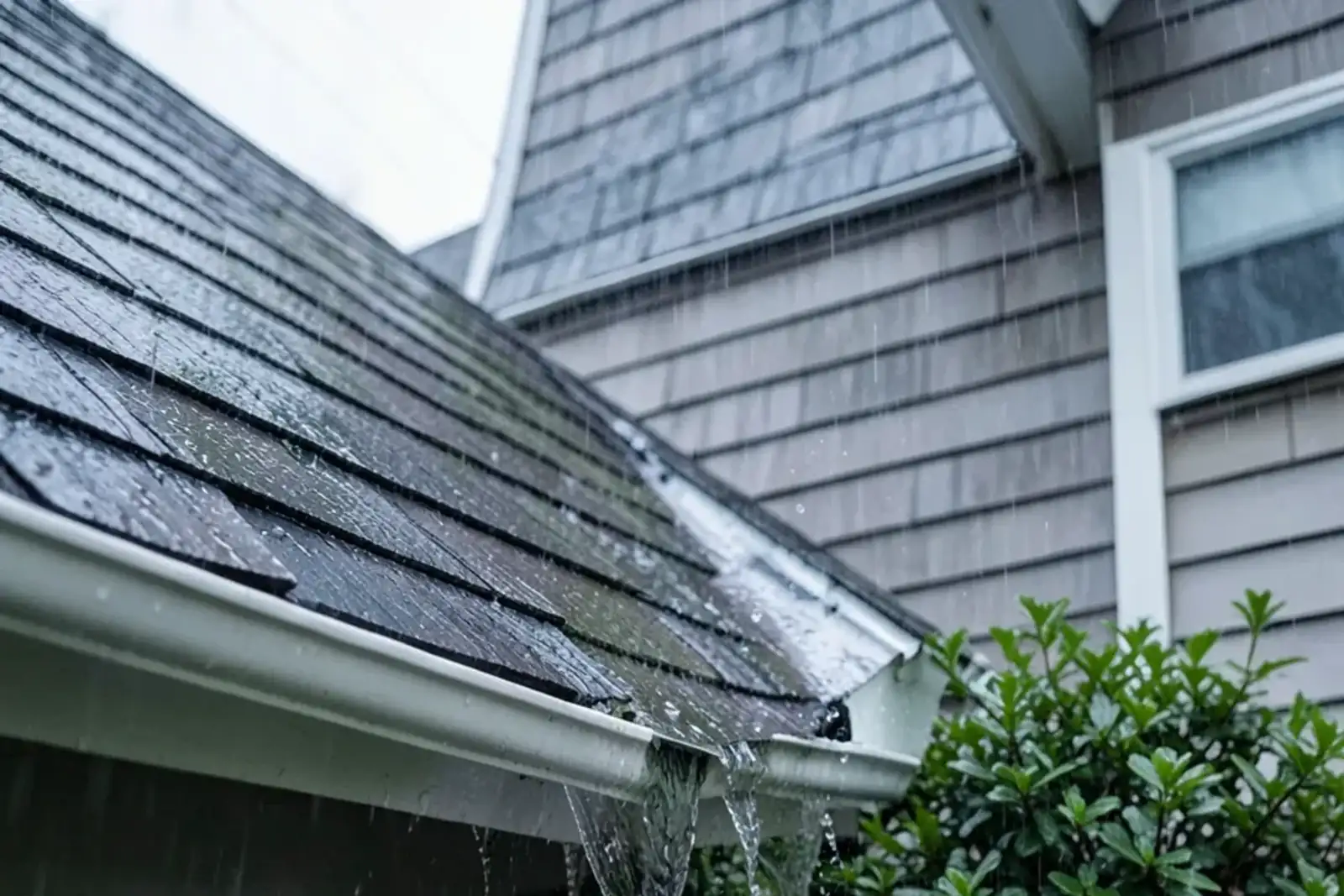
One of our reviews describes the result. Mustafa J. wrote that we installed 6 inch gutters on "my entire home" and that it made a difference.
From the crew: what size does not fix
General trade advice. A wider gutter cannot make up for too few downspouts. If a run is long and only has one outlet, the water backs up whatever its width. Add outlets before you add inches.
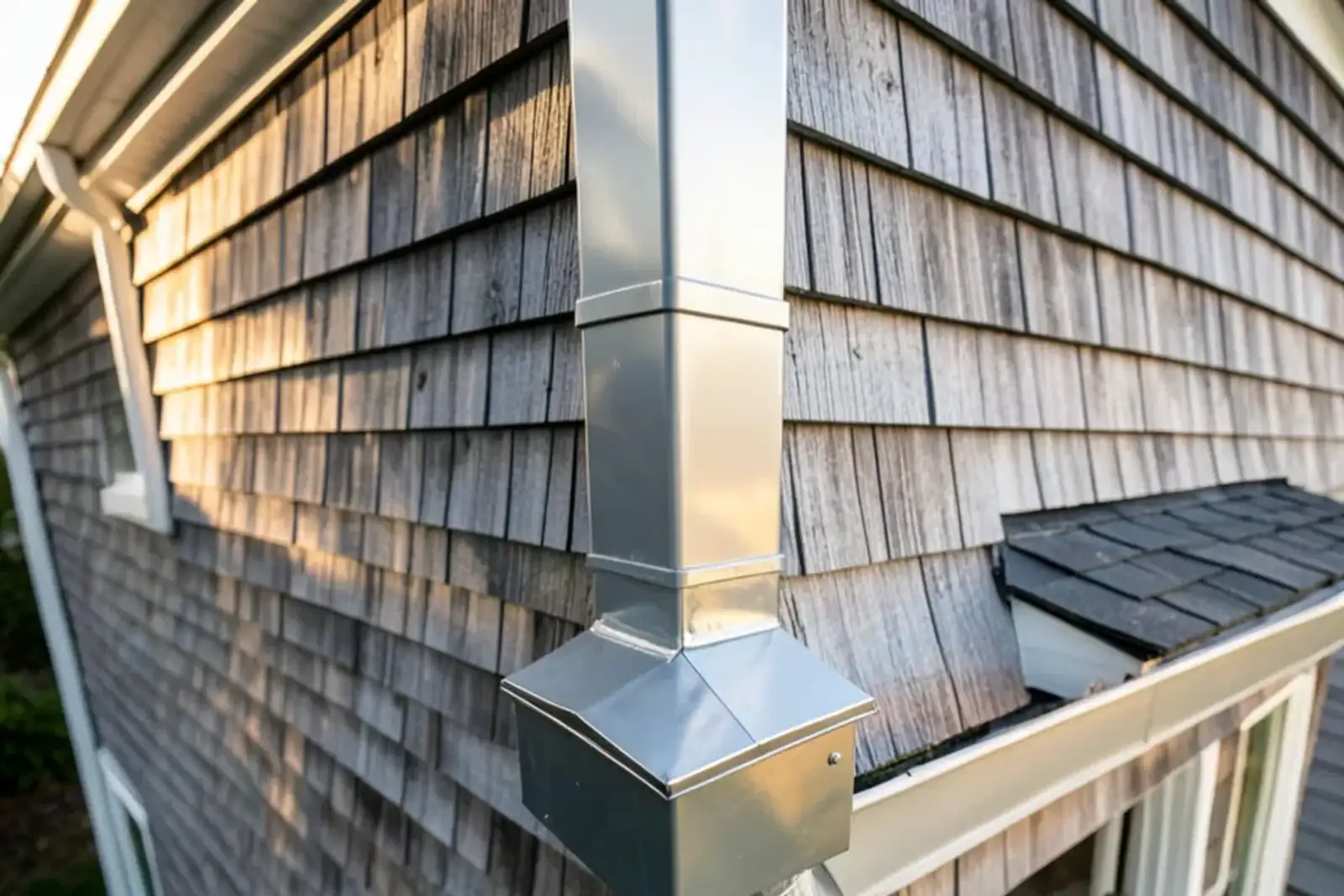
Downspout size matters as much as gutter size. A 6-inch gutter commonly pairs with a larger downspout, and a small downspout on a big gutter is the bottleneck. Pitch matters too, because a gutter that holds water gets no benefit from its extra width, and a run that sags between hangers loses capacity the same way.
Finally, a 6-inch gutter holds more water and ice, so it also needs strong hangers and a sound fascia behind it.
There is a cost on the other side, and it is honest to name it. A 6-inch gutter uses more metal, weighs more per foot and looks bigger on a small house. A mixed system, with 6-inch on the big roof planes and 5-inch elsewhere, is possible, but the sizes meet at transitions that need careful work. Most homes do better with one size around the house, chosen for the worst run.
When 5-inch is the right call
Bigger is not always better. A 5-inch gutter is the standard residential size for a reason, and it handles a simple roof well when it is clean, pitched correctly and fitted with enough downspouts. It costs less, it is lighter on the fascia and it suits a small ranch, cape or garage where the roof planes are short.
Pay for 6-inch where the numbers or the history call for it. Do not pay for it because a bigger gutter sounds safer.
What New Hampshire weather adds
Hampstead gets about 45.9 inches of precipitation a year and about 53.8 inches of snow (BestPlaces). Rain is only part of the load. A thaw can drop a roof's worth of snowmelt into the gutter in an afternoon, often into a run that still has ice in the bottom. A wider gutter gives that melt more room before it spills.
Windham roofs and the size decision
Windham is one of our closer towns, roughly 10 minutes out by our estimate. The median home there was built in 1996, and 94 percent are owner-occupied (ACS 2020-24). Many of the larger houses around Cobbetts Pond have big roof planes and complex valleys, which are the roofs where the size question matters most.
Our page on 6-inch gutters covers what we install and how we quote it, and our seamless gutters page covers the rest. Send us the roof layout, and the price comes back in writing.
Before you choose a size
Sketch the roof and mark each valley, dormer and long plane. Note where your gutters overflow when clean, how many downspouts the house has and where each one ends. Ask any installer to price 5-inch and 6-inch on the same run, and to say how many outlets each quote includes. Then call (208) 464-4195 with that sketch, and we will give you a written price for both.
Quick answers
How do I know if my Windham home needs 6-inch gutters?
Look for large roof planes, steep pitch, valleys and a gutter that overflows in heavy rain even when clean. Windham has many larger homes with complex rooflines around Cobbetts Pond. If your gutters overflow at one valley corner, a bigger gutter or an extra downspout there may fix it. Call us with the roof layout and we will price both.
Do 6-inch gutters cost much more than 5-inch gutters?
They cost somewhat more because there is more metal and the downspouts are often larger. The difference depends on how much gutter your house needs, so ask for both sizes priced on the same run. We give a written price after seeing the roof. The extra cost is small compared with repairing fascia that overflow has soaked.
Can I switch from 5-inch to 6-inch gutters on my existing Windham house?
Usually yes, if the fascia is deep enough and sound enough to carry the larger gutter. The downspouts commonly change too, since a 6-inch gutter is often paired with a bigger downspout, and the outlets are cut to match. Look at the fascia, the drip edge and the roof overhang before you decide. We would check those on a visit and quote the change in writing.
Will bigger gutters stop ice dams on a New Hampshire roof?
No. Ice dams form when attic heat melts snow that refreezes at the cold eaves, with or without gutters, so insulation and ventilation are the fix. A 6-inch gutter gives snowmelt more room and can hold more weight, which means the hangers and fascia matter more. Size helps overflow in a downpour, not a dam in January.
Are 6-inch gutters overkill for a small cape or ranch?
Often, yes. A short roof with simple planes and enough downspouts drains well in a 5-inch gutter, and it costs less and weighs less on the fascia. The exceptions are a valley that funnels water to one corner or a gutter that already overflows when clean. Judge by the roof layout and the overflow history, not by what the neighbors chose.
Sources
- Gutter sizing chart, K-style capacity at 1 inch of rain per hour
- SMACNA, practical maximum gutter run per downspout
- BestPlaces, Hampstead NH precipitation and snowfall
- American Community Survey 2020-24, Windham NH median year built
- Homeowner and trade gutter-sizing guides on downspout pairing, valleys and pitch, reviewed November 2026 (their step-up thresholds disagree, so none are used as hard numbers)
Questions about your gutters?
25 Glenwood North Rd #16, Hampstead, NH 03841
(208) 464-4195
Mon–Sat 8am–6pm · Sunday closed