
Seamless Gutters
Copper vs. Aluminum Gutters: Cost, Looks and Lifespan
Copper gutters cost much more than aluminum and can last many decades longer, while aluminum is lighter, comes in many colors and is the usual choice on most homes. Pick copper for looks and permanence, and aluminum for value and color. This guide compares them on price, appearance, lifespan and upkeep.
- ★ 5.0 on Google · 29 reviews
- Serving since 2024
- Based in Hampstead, NH
Published and updated November 2, 2026 · By the Lanes Gutters crew, Hampstead, NH
On this page
Copper wins on lifespan and looks, and aluminum wins on price, color choice and simplicity. For most New Hampshire homes aluminum is the practical choice, and copper is a deliberate upgrade for people who want the metal itself to be part of the house.
Which one fits your priorities?
| If you care most about | Lean toward | Why |
|---|---|---|
| Lowest up-front cost | Aluminum | Copper costs a great deal more per foot |
| A specific paint color | Aluminum | Aluminum is painted at the factory, copper is left to age |
| The longest life | Copper | It commonly outlasts aluminum by many years |
| A traditional or historic look | Copper | The patina suits older stone and wood houses |
| Low upkeep | Either | Both need cleaning but neither needs painting |
| Light weight | Aluminum | Less load on old fascia and hangers |
What happens to copper over time
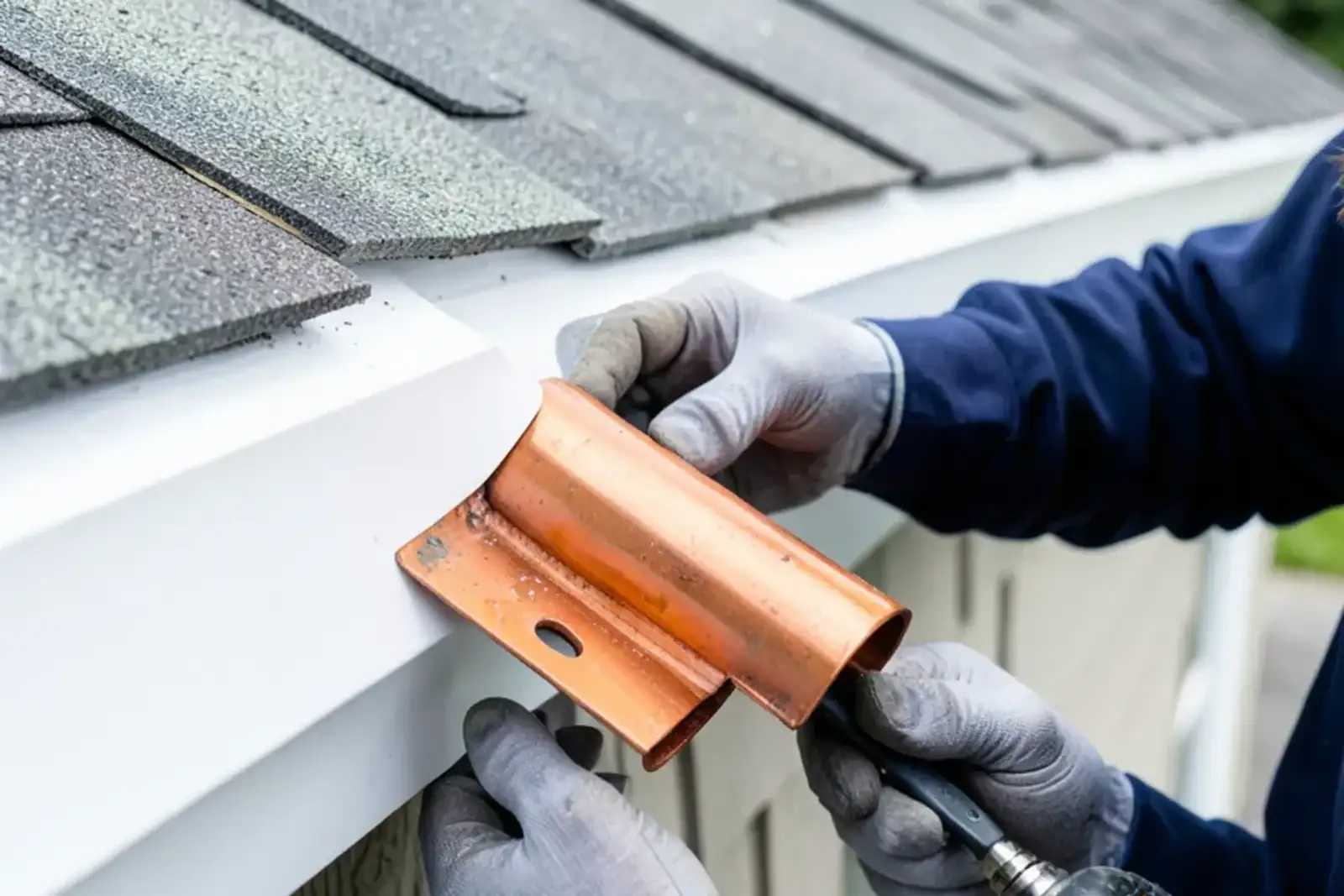
New copper is bright orange. It changes on its own, and you cannot hurry it.
- First months: the surface dulls to a warm brown.
- After a few years: darker brown and bronze tones spread, unevenly.
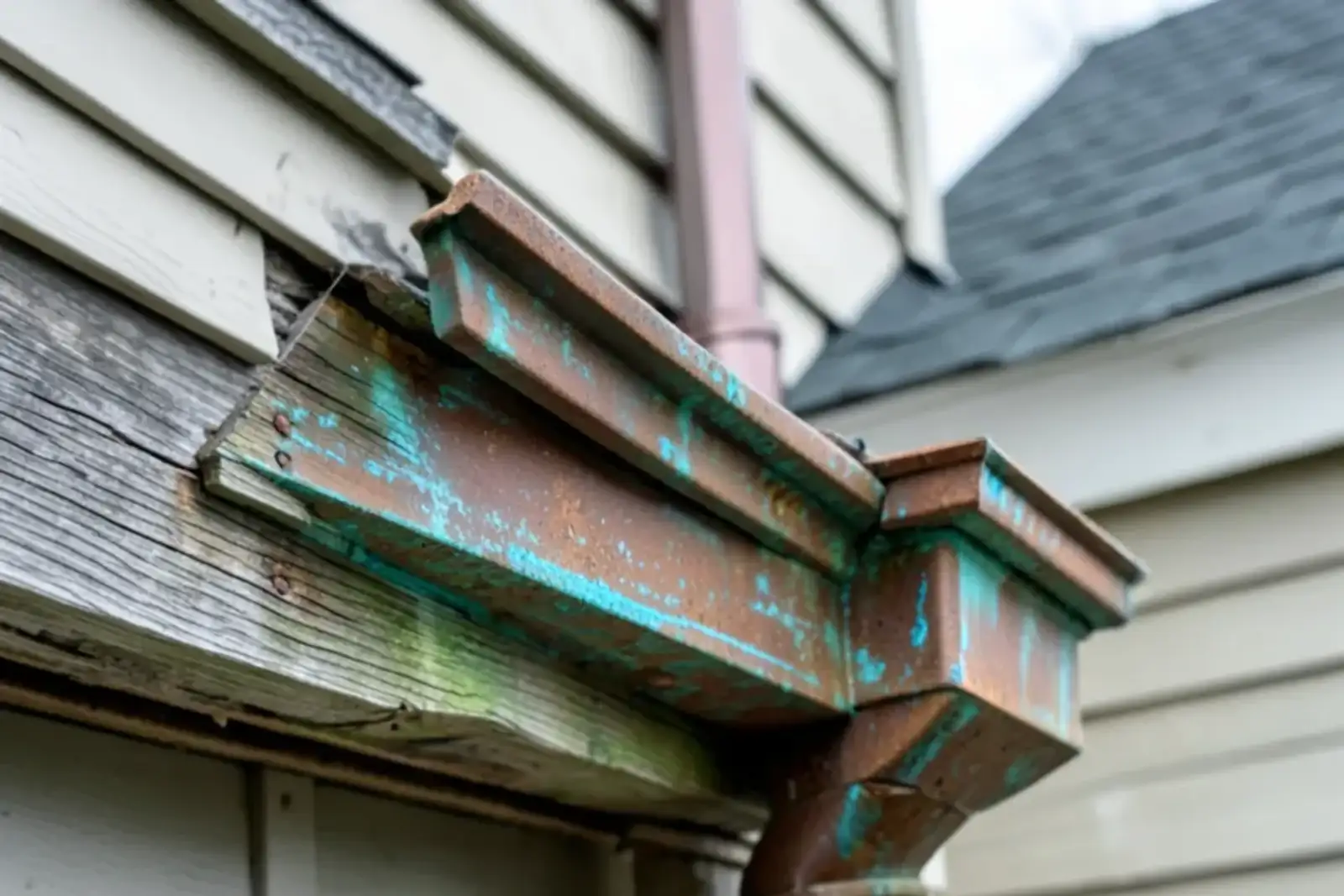
- After many years: a blue-green patina forms, faster near the coast and under dripping trees.
The patina protects the metal underneath. That is why old copper roofs and gutters survive so long, and also why owners who want the bright look have to accept that it is temporary. Copper's price is for the metal and for a finish you do not control.
Aluminum: the plain, useful metal
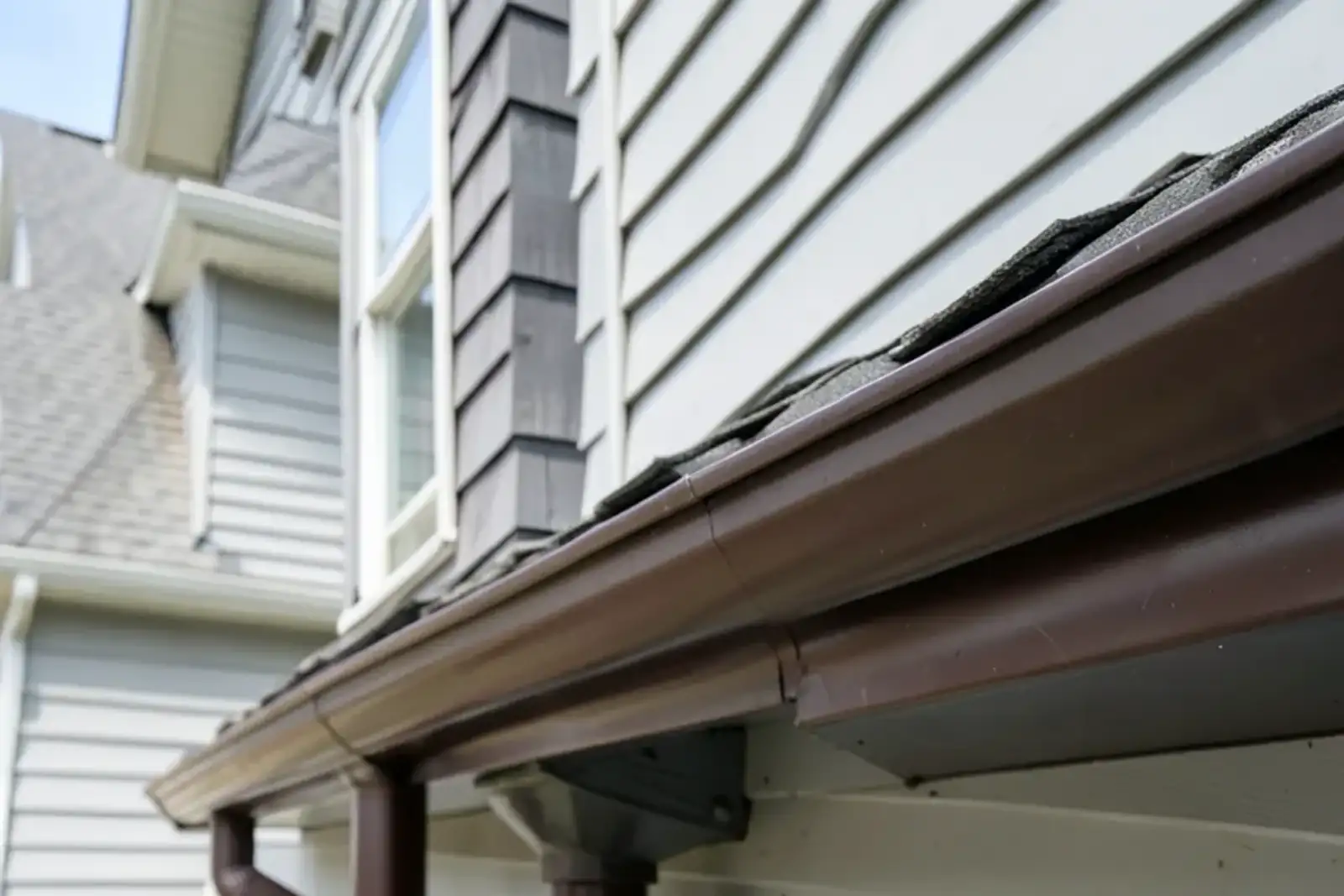
Aluminum does not rust, takes baked-on paint well and is light enough that old fascia carries it without trouble. The common residential thickness is .027 inch, with .032 inch used for heavy or snow-load work, and the .027 is listed at 20 to 30 years. Hampstead sees about 195 days below 50°F (Dwellics), and aluminum handles that range well. Our guide to .027 versus .032 aluminum explains the thickness question.
The tradeoff is dents. Thin aluminum bends if a ladder leans on it, and it does not take on character as it ages. It fades and chalks instead.
A worked example: cost per year with no price in it
You do not need a copper price to see how the math works. Use letters. Say the aluminum quote is P and you expect about 25 years from it, inside the common 20 to 30 year listing for standard .027 aluminum. That is P divided by 25 per year of ownership. If the copper quote is 3P and the copper lasts 75 years, it comes to 3P divided by 75, the same per year. If copper is 4P and lasts the same 75 years, it costs more per year than aluminum, and it only catches up if it truly lasts 100.
Then add the horizon. If you will own the house for 10 years, you pay for the full copper system and use a fraction of its life. A buyer may value copper, but that is a bet on the next buyer, not a number. The yearly view matters only if you will keep the house.
What goes with a copper run
A copper run needs more than the gutter. Hangers, screws and flashing near it should be compatible, and water should not run from copper onto aluminum or bare galvanized steel. Aluminum flashing above a copper gutter is generally the safer direction than copper above aluminum, but ask the installer to name every metal on the roof edge. Stain is also a design question: copper runoff leaves green or brown streaks on whatever is below, so the end of each downspout needs a plan.
Do not mix the metals
Copper and aluminum in contact corrode each other. When two different metals touch and water bridges them, the aluminum is eaten away in a process called galvanic corrosion. A copper downspout bolted to an aluminum gutter, or copper water running down onto aluminum, is a classic mistake.
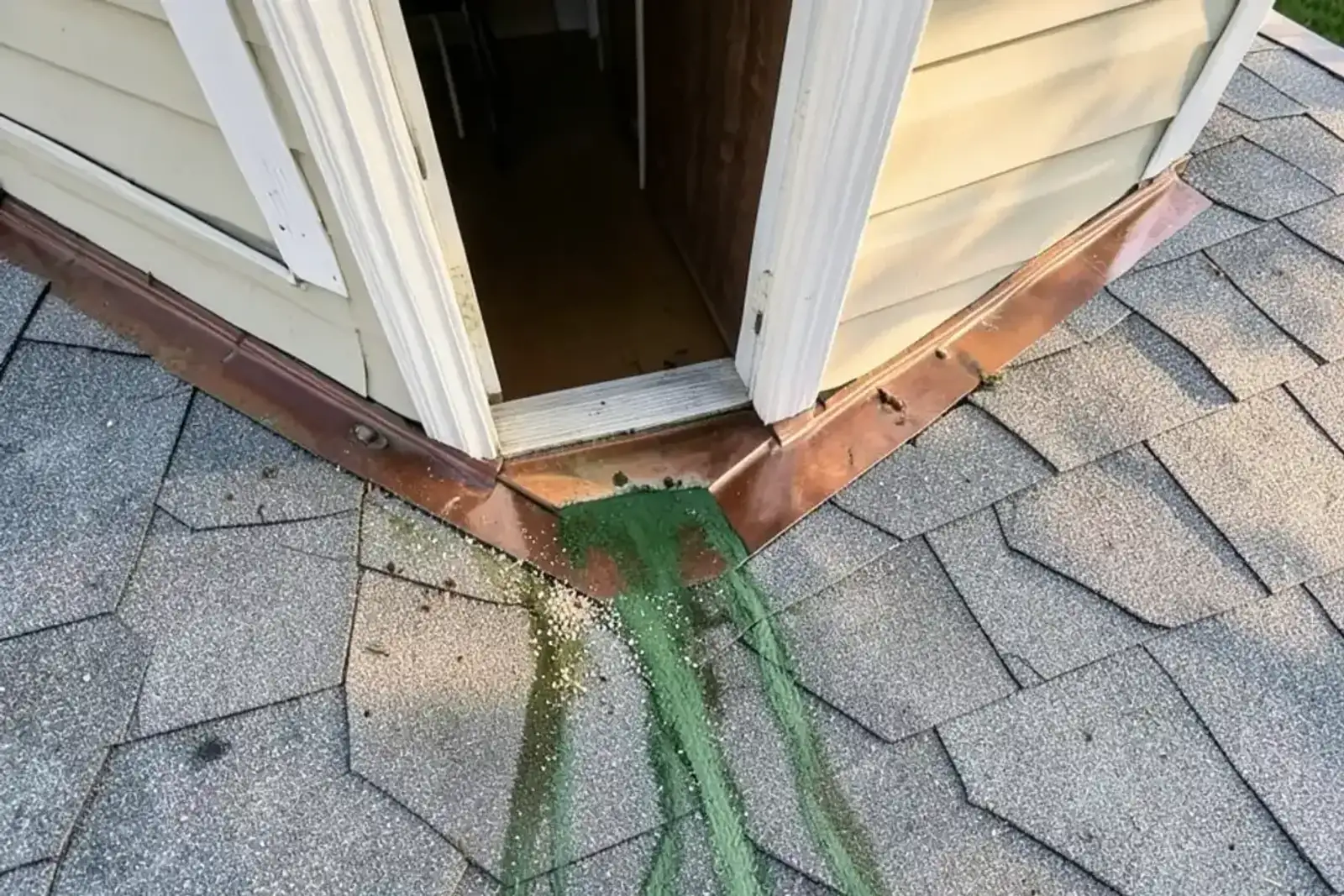
Copper runoff also stains. Water that crosses copper and lands on shingles, siding or a stone sill carries trace metal that leaves green or brown streaks. That is another reason to plan the whole drainage path, including where the downspouts end.
Comparing cost over the life of the gutter
We have no reliable third-party price for copper in New Hampshire, so we will not print one. The way to get a real comparison is to ask for both in writing:
- Same profile, same size and same number of downspouts on both quotes
- Copper priced with its solder work and fasteners listed
- Aluminum priced with its paint finish named
- The expected life that each contractor will stand behind in writing
Then divide each price by the years you expect to own the house. A copper system that lasts three times as long can come out close on a yearly basis, but only if you will own the house that long. If you plan to sell in ten years, aluminum is almost always the better spend.
Upkeep for each metal
Both need the same basic care. Clean the runs after leaf drop, keep the downspouts clear and check the hangers once a year. Neither needs painting.
Copper adds one rule, which is to leave the patina alone. Scrubbing it bright strips the protective layer and starts the aging again. Aluminum adds a different one, which is to keep ladders off the face of the gutter, since a thin wall dents under a ladder's weight.
From the crew: how we would approach a metal choice
These are general trade points. A crew pricing copper looks first at the roof and trim, because copper beside bare galvanized steel or aluminum flashing can set up the same corrosion. Then it asks how the joints will be made, since copper is normally joined with solder, not with sealant alone, and good soldering is a skill.
Here is the order a careful quote follows for a copper job:
- Walk the roof edge and list every metal already there: flashing, valleys, drip edge, downspouts.
- Ask where the water from the copper will land, and what it will stain.
- Check the fascia and the rafter tails, because copper is heavier than the aluminum most houses carry and needs sound hanger anchors.
- Decide the profile. Half-round and K-style are different looks and different jobs, and a half-round copper gutter is often chosen for a traditional house.
- Price the soldered joints, outlets and corners as their own lines.
- Put the written price beside an aluminum quote for the same roofline.
We also ask why. If the answer is a house with a wood or stone look and an owner who wants a permanent finish, copper is worth the discussion. If the answer is cost or a particular paint color, aluminum is the better match.
Bedford homes and metal choice
Bedford is in our service area, about 30 minutes away by our estimate. The median home there went up in 1990, and 83 percent are owner-occupied (ACS 2020-24). Those are larger, newer houses than the older coastal stock, so gutter size and finish are the first questions to settle.
We cannot confirm copper work, so call before you plan on it. We would look at the house, say plainly what we can quote and give a written price. To see what we do offer, read about seamless gutters or our page on copper gutters. For the plainer option, see aluminum gutters.
Choosing between them
Decide what the gutter is for. If it is a drainage tool, aluminum in a painted color does that for far less. If the metal is part of the look of a stone or wood house and you will stay for decades, copper deserves a written quote. Either way, get both priced on the same roofline and ask what the installer has done with soldered copper before. Call (208) 464-4195, tell us about the house, and we will say plainly what we can quote.
Quick answers
Is copper worth the extra cost compared with aluminum gutters?
It can be, on a house where looks and a very long life matter more than price. Copper lasts decades longer and develops a patina many owners like. Aluminum does the same drainage work for much less and comes painted in many colors. Ask for both priced in writing before deciding, since the gap depends on your roofline.
Do you install copper gutters for Bedford homes?
We cannot confirm copper work, so please call before planning around it. We cover Bedford, roughly 30 minutes from our Hampstead base by our estimate, and we would look at the house and say what we can quote. Copper needs soldered joints and careful detailing, so a contractor's real copper experience matters more than a price.
How long does copper take to turn green on a New Hampshire house?
There is no fixed date. New copper dulls to brown within months, and the blue-green stage usually takes years, often a decade or more, depending on rain, shade and how much salt or moisture reaches the metal. Sheltered sections change slowly and wet corners change fast, so one run can show several shades at once. Do not scrub it to speed things up.
Can I use copper gutters with aluminum downspouts?
No. Copper touching aluminum, or copper runoff landing on aluminum, sets up galvanic corrosion that eats the aluminum. Keep the whole drainage path one metal, with compatible fasteners and flashing. If a copper roof valley or flashing sits above an aluminum gutter, that is a conflict to resolve in the design before any quote is signed.
Are copper gutters a theft risk?
They can be, because copper has scrap value, and installed copper is sometimes stolen in some areas. A house with downspouts that run to ground level in a visible spot is easier to take from than one whose runs are high. We cannot confirm local theft rates, so ask your insurer how copper fittings are treated before you commit.
Sources
- Dwellics, Hampstead NH climate data
- American Community Survey 2020-24, Bedford NH median year built
- Trade and building-guide descriptions of galvanic corrosion between copper and aluminum, reviewed November 2026
- General copper gutter guides on patina, soldered seams and lifespan claims, reviewed November 2026 (vendor and installer sources, so lifespan figures are not repeated)
Questions about your gutters?
25 Glenwood North Rd #16, Hampstead, NH 03841
(208) 464-4195
Mon–Sat 8am–6pm · Sunday closed