
Gutter Service
Does Your Home Actually Need Gutters?
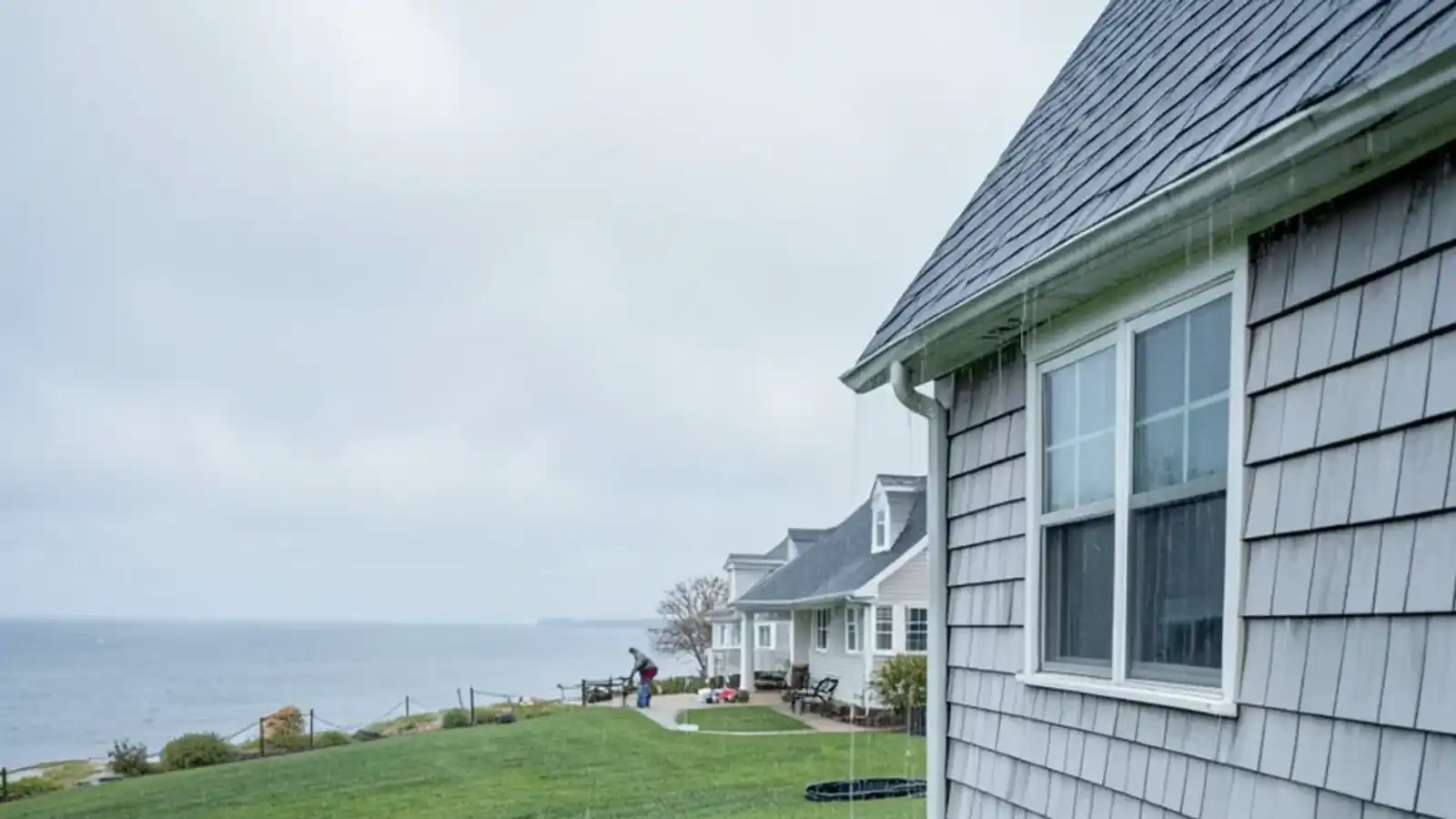
Most New Hampshire homes need gutters. A roof sheds a lot of water, and without gutters it lands beside the foundation, on the siding and on the front steps. A few houses can skip them, such as ones with wide overhangs, well-drained soil and ground that slopes away on every side. Seven questions will tell you which kind you have.
- ★ 5.0 on Google · 29 reviews
- Serving since 2024
- Based in Hampstead, NH
Published and updated November 2, 2026 · By the Lanes Gutters crew, Hampstead, NH
On this page
- Do I need gutters? Seven questions to ask
- What does water do to a house without gutters?
- How much water does a roof move?
- Our honest read on skipping gutters
- What are the alternatives to gutters?
- Can you put gutters on only part of the house?
- What do gutters cost to keep up?
- Making the call on your own roof edge
- Hampton cottages and tight lots
- Common questions
The honest answer is that most homes in southern New Hampshire do better with gutters than without them. A few do not need them. The test below sorts one from the other, and it takes about ten minutes, and it works best during a steady rain.
Do I need gutters? Seven questions to ask
Answer yes or no for your own house:
- Does the ground at the foundation slope toward the house, or sit flat?
- Is the soil heavy, such as clay, that drains slowly?
- Is there a basement, and has it ever been damp?
- Do the front or back doors sit directly under a roof edge?
- Is the siding wood, and does it stay stained or dark low on the wall?
- Is a deck, patio or walkway under the roof edge?
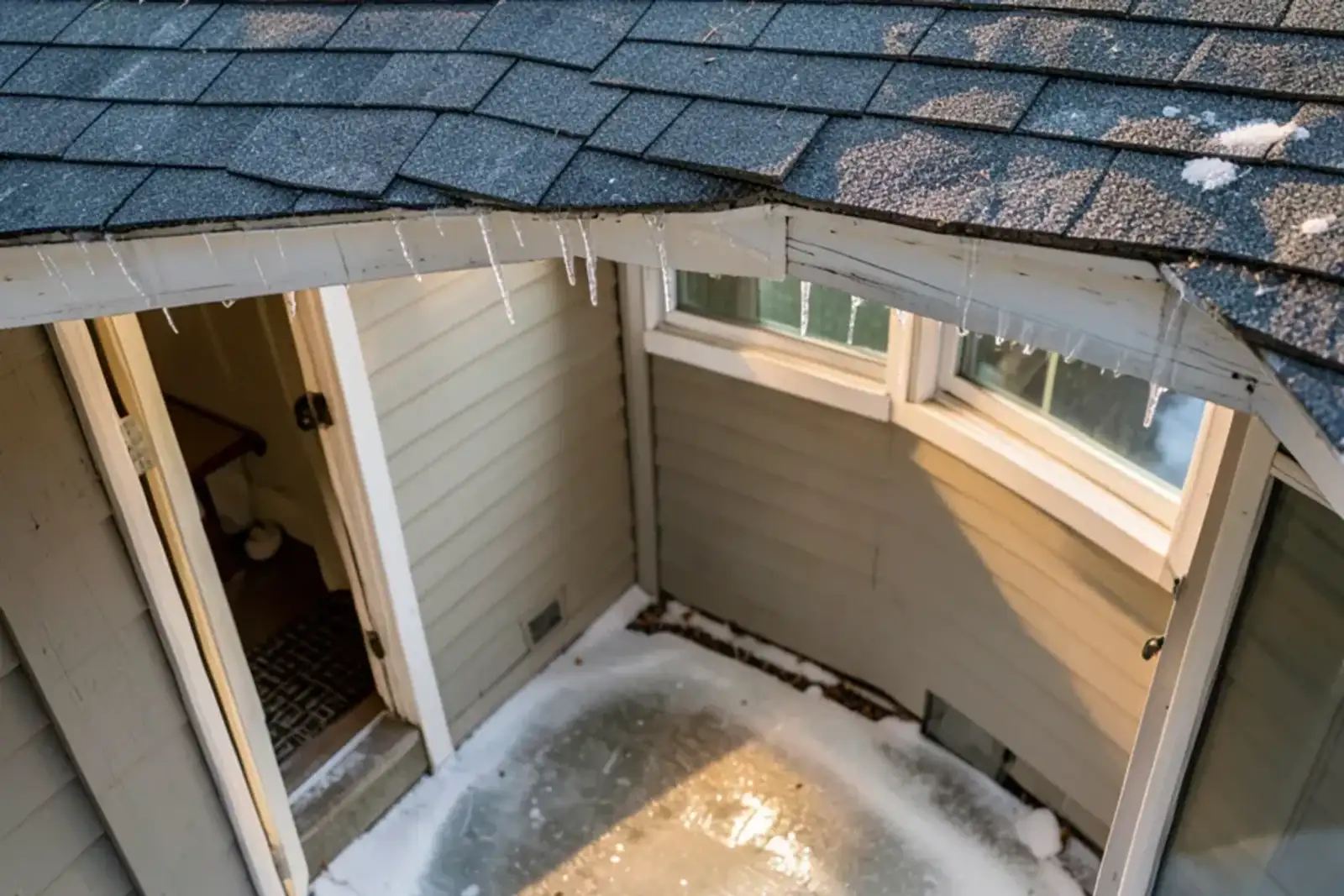
- Do icicles or ice patches form under the eaves in winter?
Two or more yeses means gutters would help. Four or more means water is probably already doing damage. Walk the house during a steady rain and watch where each roof edge sheds. The pattern on the ground matches your answers.
What does water do to a house without gutters?
Roof water has to go somewhere. Without a gutter it lands on a narrow strip of ground and works through the house from the bottom up.
| Where it lands | What it does |
|---|---|
| Soil at the foundation | Soaks in, loads the wall and can reach a basement |
| Lower siding | Splashes mud and keeps the bottom boards wet |
| Entry steps and walks | Wears them down and builds ice in winter |
| Garden beds below the eave | Digs a trench and washes out the bed |
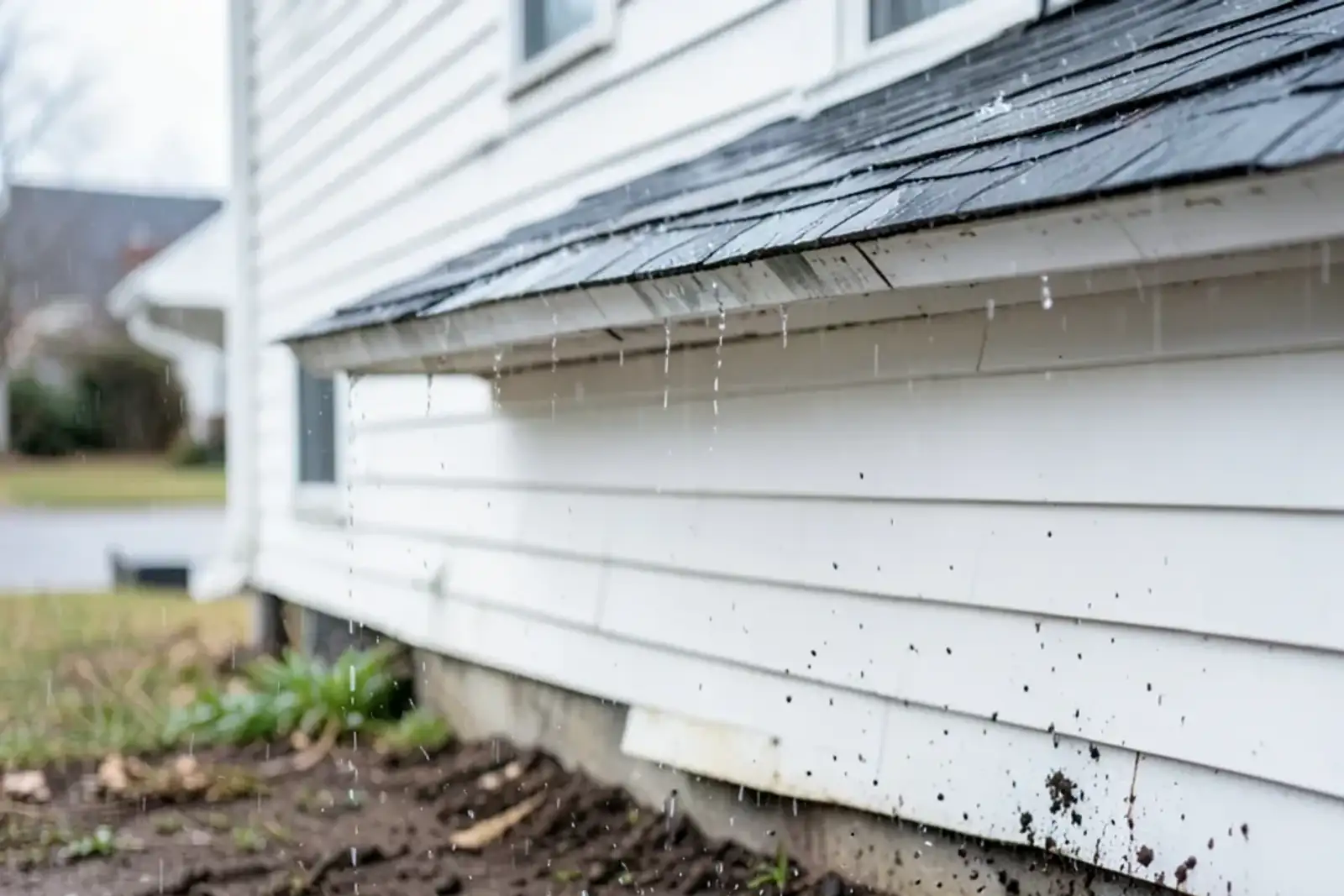
A worked example: where one storm goes
Take a cape with 1,500 square feet of roof, split evenly between a front and a back slope, each draining to a 40-foot eave. A storm that drops 1 inch of rain puts about 935 gallons on the roof, using the figure of 623 gallons per inch per 1,000 square feet. Half of it, about 467 gallons, comes off each eave. Spread along 40 feet, that is roughly 12 gallons for every foot of wall in a single storm.
Without a gutter, that water lands in a strip of ground a few inches wide. Where the soil is bare and sloped toward the house, it soaks in against the foundation. With a gutter and two downspouts, the same 467 gallons reaches two outlets and goes where you chose. That difference, repeated over dozens of storms a year, is what stains the siding and wets the cellar.
How much water does a roof move?
More than most people picture. One inch of rain on 1,000 square feet of roof is about 623 gallons. Hampstead gets about 45.9 inches of precipitation a year (BestPlaces). On a house with 1,500 square feet of roof footprint, our arithmetic puts that at roughly 43,000 gallons a year. Gutters collect that and send it to a few chosen places.
Snow adds to it. Hampstead sees about 53.8 inches of snow annually (BestPlaces), and a warm spell turns it into runoff all at once.
Our honest read on skipping gutters
Here is what we would tell a neighbor. A house can go without if every one of these is true: the roof has a wide overhang, the ground slopes away on every side, the soil drains fast, no door sits under an edge and nothing valuable lies below it. Few houses meet all five, but some do.
Even then, it is a judgment call. We would not tell someone with sandy soil, wide eaves and a dry basement that they are making a mistake. We would tell someone with a damp cellar and a front door under a roof edge that they are overdue.
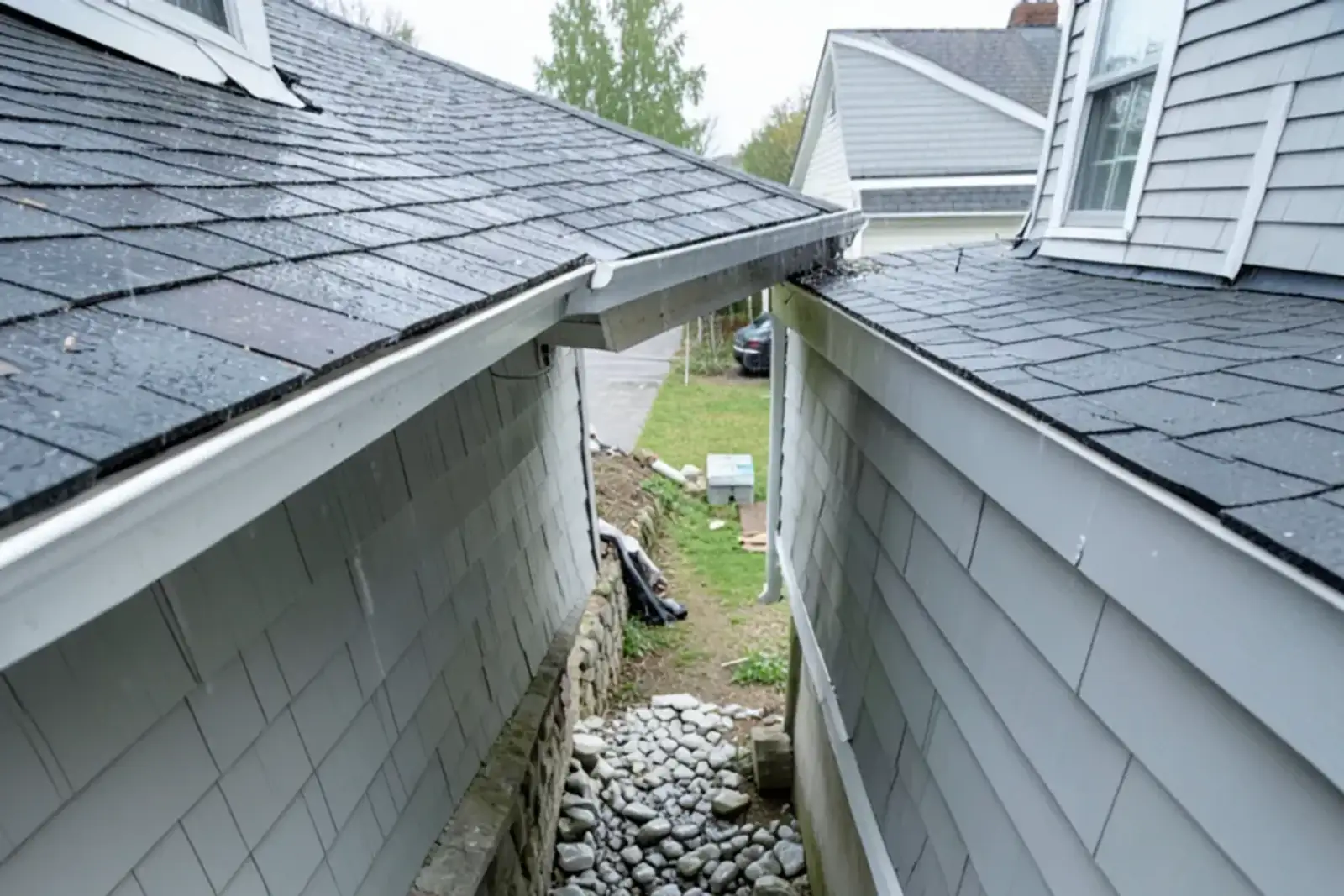
What a gutterless roof still needs
A house without gutters is not a house without a plan. Three things have to be right.
- A drip edge. This is the metal flashing at the roof edge that sends water off the shingles and keeps it from wicking back under them onto the roof deck. Model building codes call for it on many shingle roofs, and permits are handled town by town, so ask the town what it enforces.
- An overhang wide enough to throw water clear. A narrow overhang puts the water on the wall.
- Grading and a landing. The ground must fall away from the house on every side, and a stone-filled trench or other hard landing has to keep the water from digging a trench in the soil.
Building-science discussions of gutterless design stress that these pieces work together, and that keeping a basement dry still depends on grading and foundation drainage.
The honest trade-offs
Gutters need care. They clog, sag under ice and can pull from the fascia if they are neglected. A gutterless eave has nothing to maintain, and snow slides off it without a gutter to bend. Where gutters win is in control. They put water where you choose, and they protect the entries, steps, walks and foundation on the sides that matter. Where the answer is close, a gutter only over the doors and walks is a sensible middle.
What are the alternatives to gutters?
A few options can handle roof water without a full system:
- A stone drip-edge trench along the wall, lined and sloped, spreads the splash and sends water away
- Grading that falls away from the house, which also helps with gutters
- Wide overhangs, which reduce splash on the siding
- A short gutter over an entry, which is a small step with a daily benefit at the door
None of these gather water and carry it away from the foundation the way a gutter with downspouts does. They manage the problem rather than solving it.
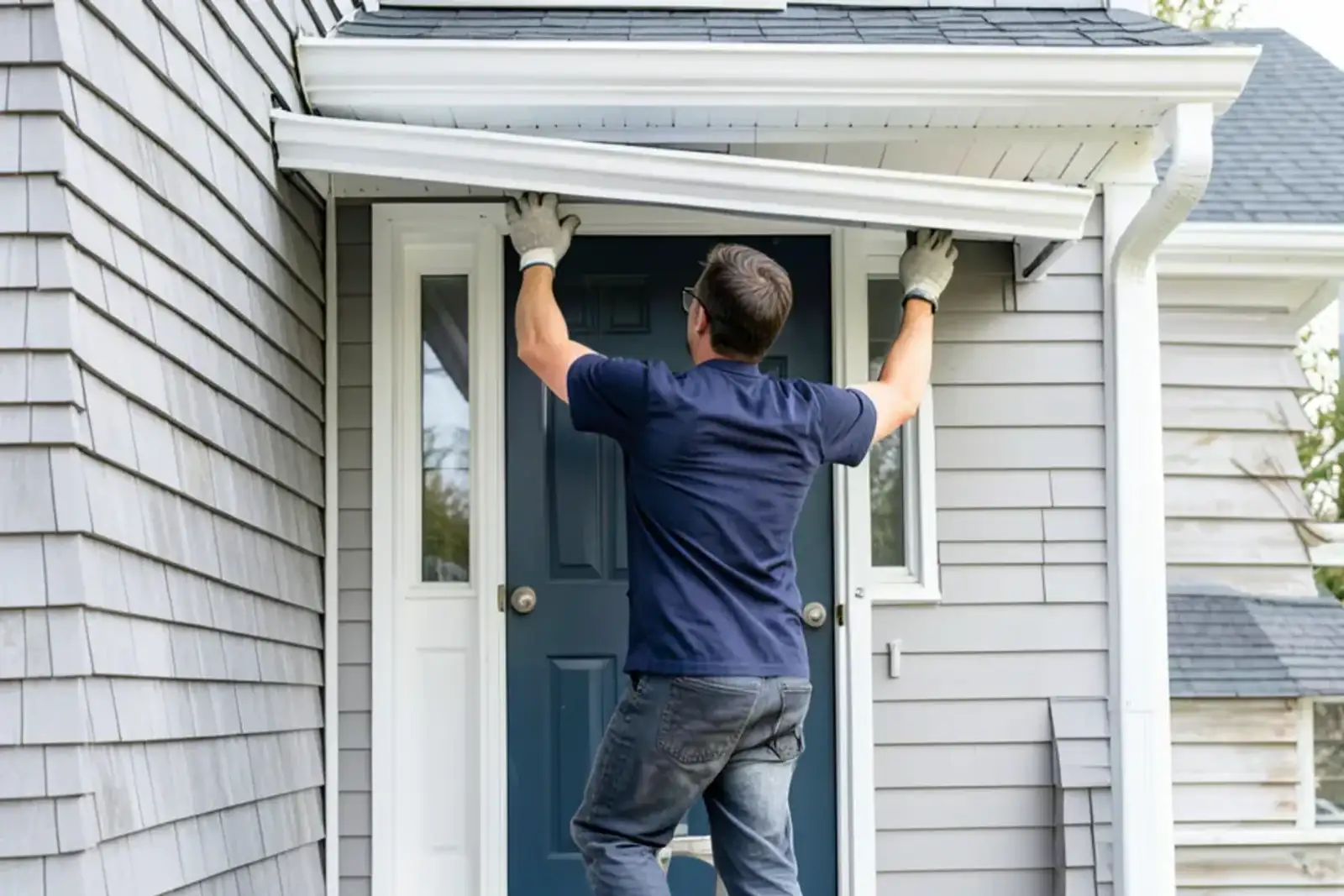
Can you put gutters on only part of the house?
Yes, and for some homes it is the right call. The spots that matter most are over doors, over steps and walks, on the side of the roof that dumps onto a deck or patio, and wherever a roof meets a wall. Partial runs are shorter, so a single downspout can serve each. Pitch and outlet placement still decide whether they work. Our residential gutter service page shows how we approach a whole-house layout, and the same thinking applies to a partial one.
What do gutters cost to keep up?
They need care. Cleaning averages about $275 nationally, within a range of $100 to $450 (This Old House, 2026). That is a third-party figure, not our price, and we price each job in writing after seeing it. Seasonal checks, a maintenance plan or a cleaning after leaf drop keep a system draining.
Making the call on your own roof edge
Go back to the seven questions and the worked example, and pick the roof edge that worries you most. Stand under it in the next steady rain and watch where the water falls. If it lands on a door, step or the side of a house with a damp cellar, that edge needs a gutter. If it lands on well-drained soil that slopes away, with a wide overhang above it, it may not.
Photograph the damage you can see, such as splash marks, a trench in the soil or an icy step. Photos make it easier to describe a problem on the phone. Call (208) 464-4195 and we will talk through whether the roof needs a full system or just a run over the entry.
Hampton cottages and tight lots
Hampton is about 24 miles from Hampstead, a drive of roughly 35 minutes by our estimate. Dense beach cottages sit close together near the shore, and the median home was built in 1978 (ACS 2020-24). On small lots, roof water reaches a neighbor's side quickly, so deciding where each downspout drains matters even more than having one. Salt spray near the shore is also hard on metal fasteners and finishes, which makes a spring check of hangers and seams worth the time. We cover Hampton, and trips there are booked ahead.
Quick answers
What happens if a house has no gutters?
Water falls from the roof edge in a line, splashing soil onto siding and digging a trench in the ground. It soaks the soil next to the foundation, and in winter it freezes on steps and walks. The damage is slow, so it often goes unnoticed. The cost shows up later as rot, stains or wet basement walls.
Do ranch houses need gutters?
Usually, yes. A low roof on a long single-story house sheds a lot of water at ground level, and the splash lands on the lower siding. A wide overhang helps, but it does not control where the water lands. A clear drainage path matters most where lots are small and neighbors are close.
Can a Hampton cottage skip gutters if it has a gravel drip line?
Sometimes. A stone trench along the wall can handle the splash from a wide overhang if the ground slopes away and the soil drains. On a tight Hampton lot, the trench also has to carry water somewhere that is not a neighbor's yard. If the cellar has ever been damp, a gutter and downspout are the safer answer.
Do gutters cause ice dams on New Hampshire houses?
No. Ice dams come from attic heat melting snow that refreezes at the cold eaves, with or without gutters. The ice just collects at the gutter line, so the gutter gets the blame. Insulation and ventilation are the real fix. A gutterless eave can still grow icicles and an ice patch on the step below.
Sources
- BestPlaces, Hampstead NH climate data
- This Old House, gutter cleaning cost 2026
- American Community Survey 2020-24, Hampton NH
- Building-science and trade discussions on gutterless roofs (overhang, drip edge flashing, grading); model codes call for drip edge on many shingle roofs, so confirm with the town
- Rainfall volume arithmetic, 623 gallons per inch of rain on 1,000 sq ft of roof
Questions about your gutters?
25 Glenwood North Rd #16, Hampstead, NH 03841
(208) 464-4195
Mon–Sat 8am–6pm · Sunday closed