
Gutter Installation
Downspouts vs. Rain Chains: Do Rain Chains Work in NH?
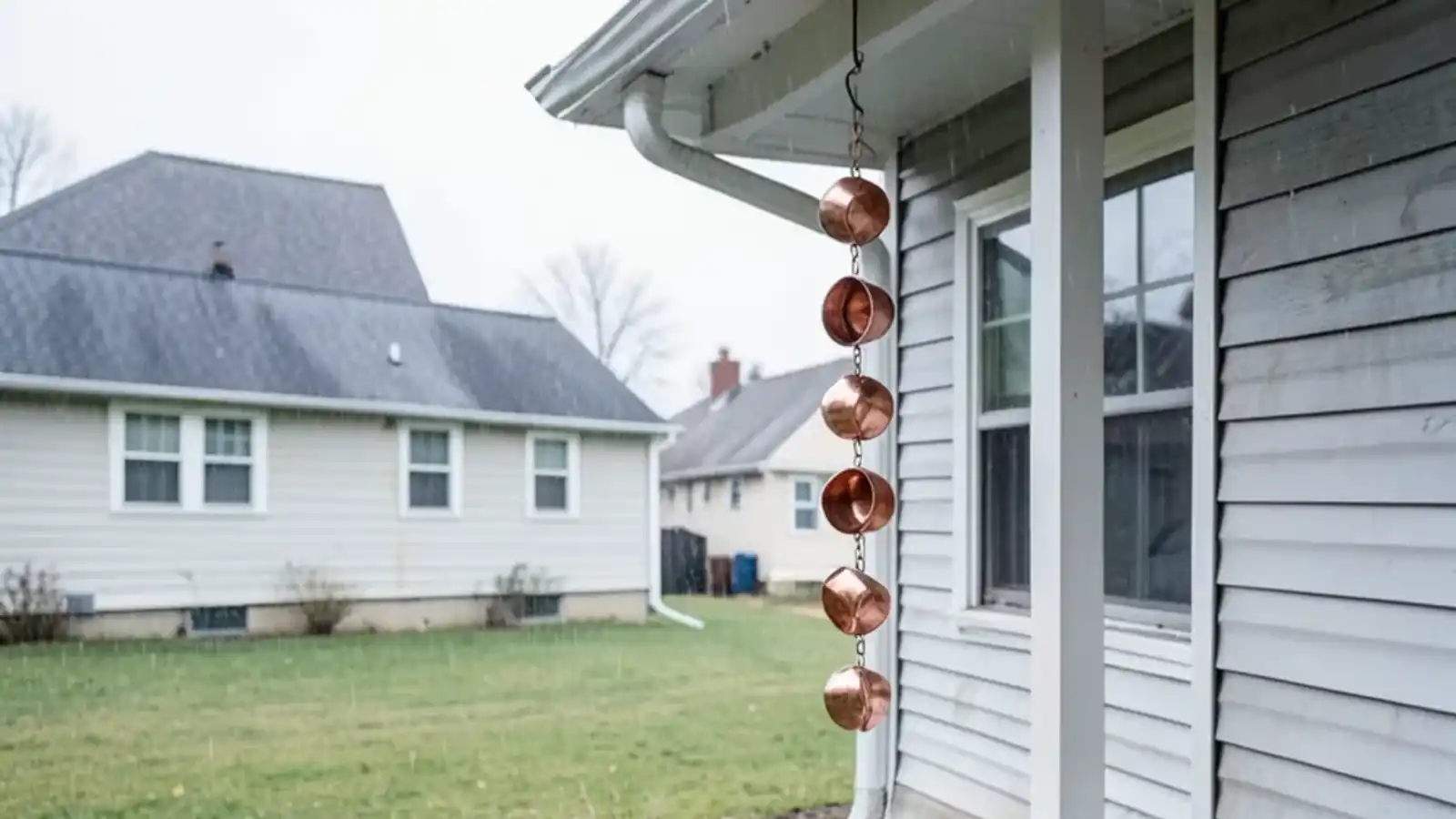
Downspouts win in New Hampshire for almost every roof, and a rain chain works only as a decorative feature on a small, covered roof section. A chain looks good in light rain, but it throws water in a downpour and freezes into a heavy column of ice in winter. A downspout contains the water and carries it away.
- ★ 5.0 on Google · 29 reviews
- Serving since 2024
- Based in Hampstead, NH
Published and updated November 2, 2026 · By the Lanes Gutters crew, Hampstead, NH
On this page
The short answer is that a downspout is the working part of the system and a rain chain is a decoration with a drain attached. Use the chain where little water arrives and nothing bad happens if it splashes.
What a rain chain cannot do
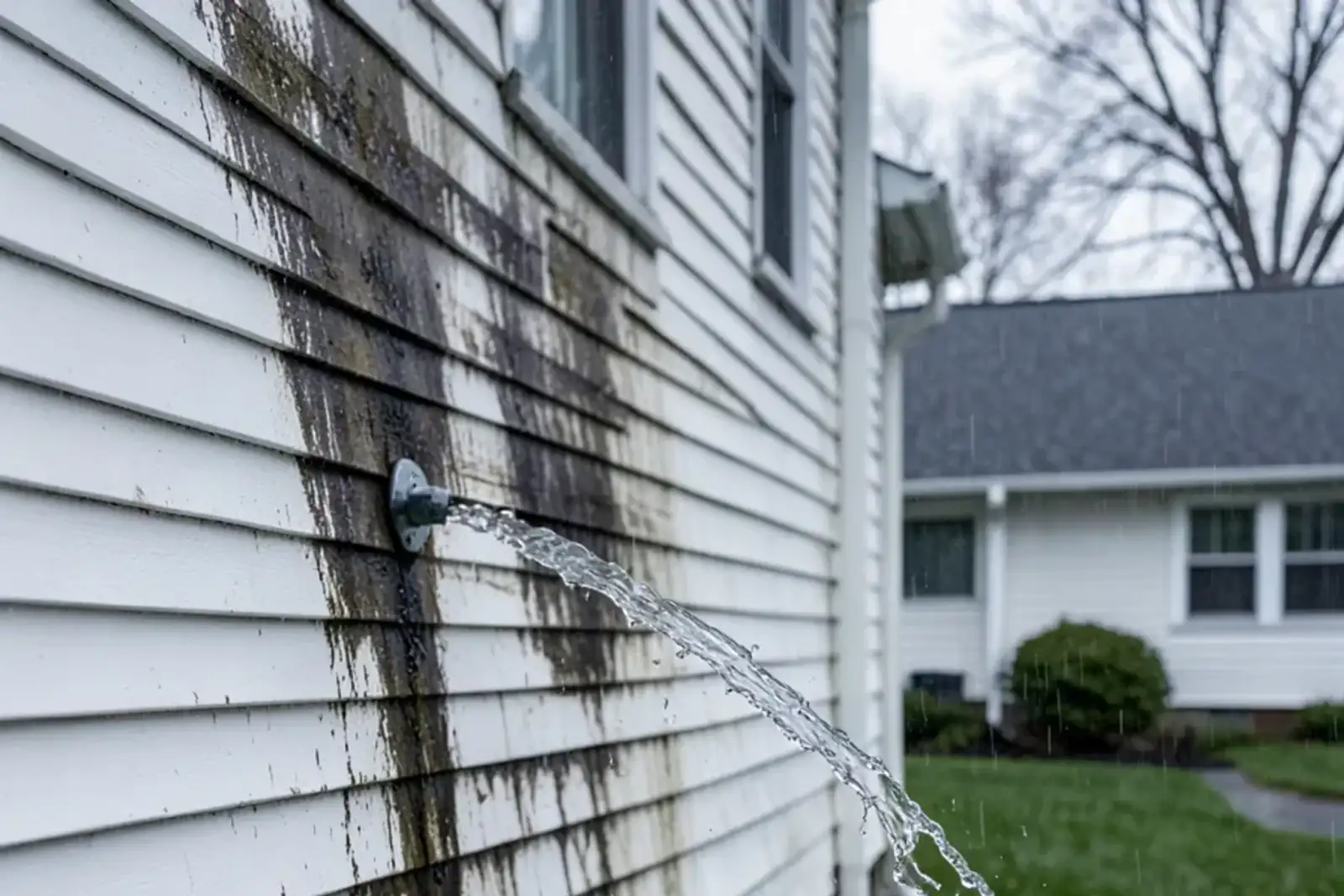
A rain chain guides water downward by cling and cups. It does not contain it. In a steady drizzle that looks lovely. In a downpour the water leaves the chain, hits the ground in a spray and lands against the wall.
A downspout is a closed channel. It also connects to an extension or a drain that moves water several feet from the foundation, which a chain cannot do on its own. On a larger roof a single outlet can send a lot of water down in a few minutes, and a chain was never built for that rate.
Where a rain chain can work
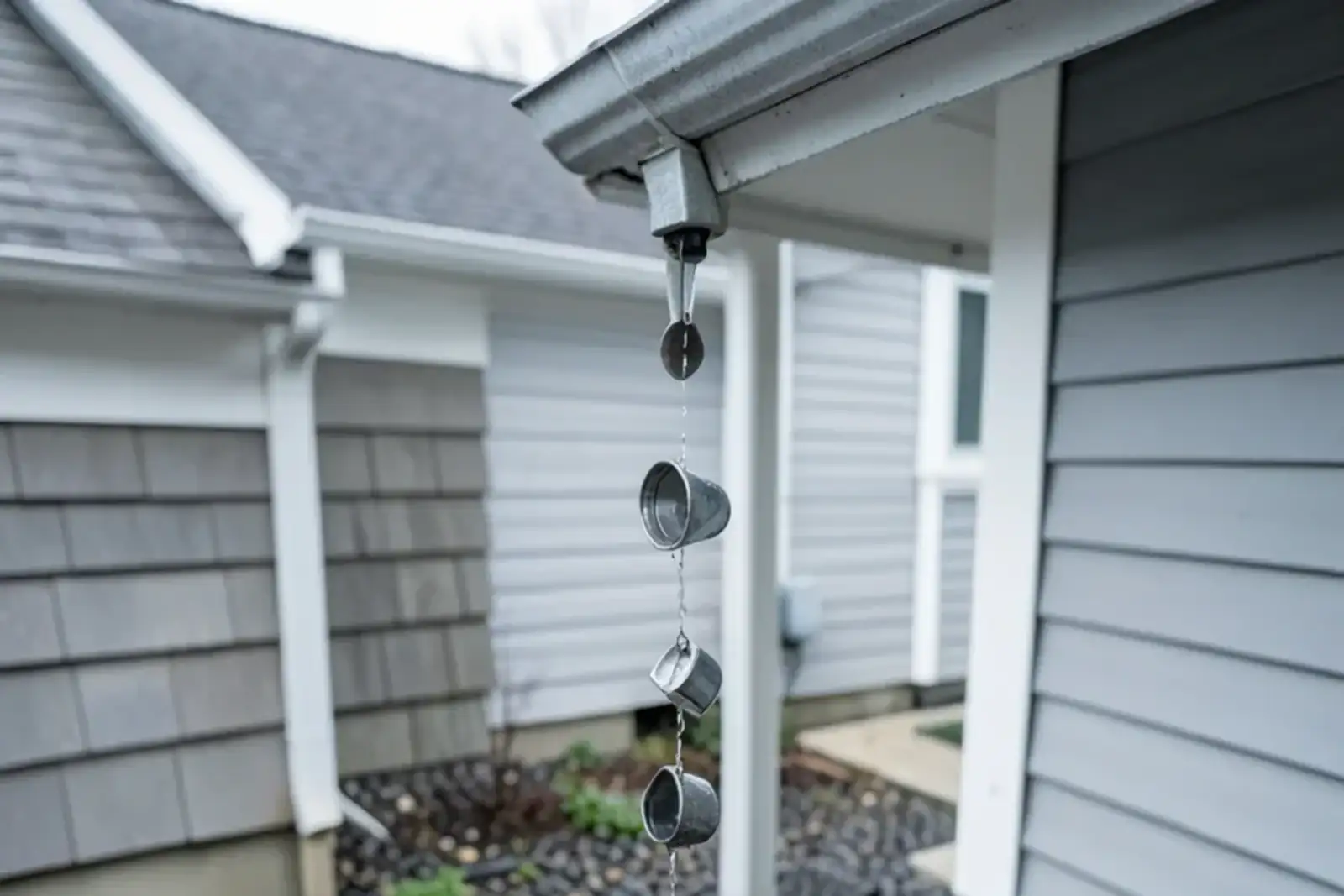
A rain chain makes sense in a few narrow spots:
- A covered entry or small porch roof that sheds a modest amount of water.
- A shed or garden building with a short roof, where the spray does no harm.
- A spot with a gravel bed or stone basin below to catch splash and absorb the flow.
- A gutter outlet far from siding and mulch, so the spray does not stain wood or wash out a bed.
Everywhere else, the chain adds a splash zone against the house and takes drainage away from where it is needed.
A worked example: a porch roof and a main roof
Rainwater math is simple. One inch of rain on one square foot of roof is about 0.6 gallons. A farmhouse porch roof of 320 square feet sheds roughly 200 gallons per inch of rain. The main roof of the same house, at 2,000 square feet, sheds about 1,240 gallons.
Spread the main roof across four downspouts and each corner handles roughly 310 gallons per inch. That is more than the porch chain sees in total, and it all has to be delivered away from the foundation. This is why the chain can live on the porch and the downspouts have to stay on the main roof. Even the porch chain needs a basin that can take 200 gallons without washing out the bed.
What winter does to a rain chain
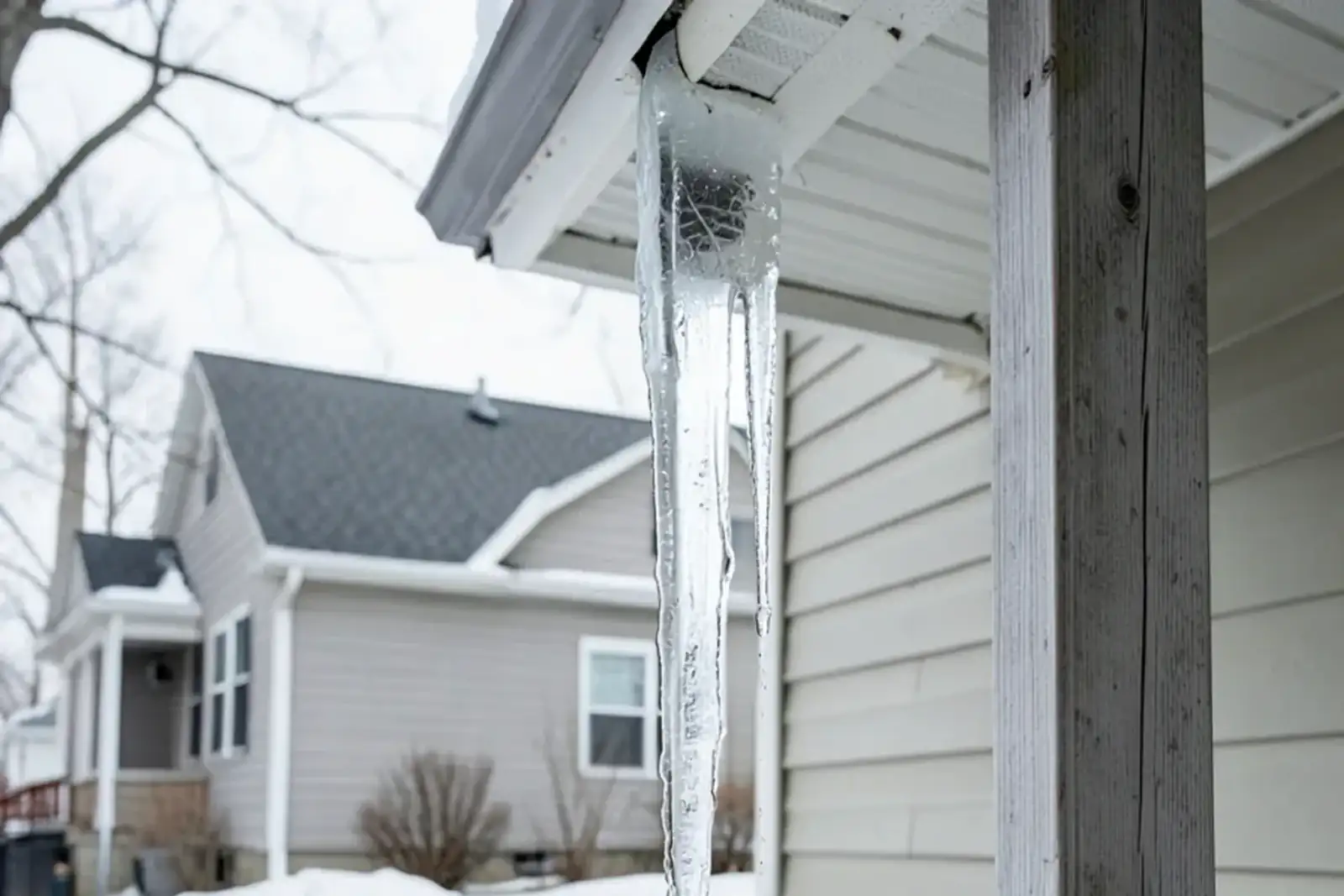
Winter is the real problem. Hampstead gets about 53.8 inches of snow a year (BestPlaces), and melt and refreeze run for months. Water that trickles down a chain freezes onto it, and the column thickens each cycle.
Ice is heavy, around 57 to 60 pounds per cubic foot. A thick column hanging from a gutter outlet pulls on the outlet and the fascia behind it, and it can break loose and fall on a walkway when it thaws. Falling ice can seriously hurt someone.
Design matters too. Decorative cup-style chains catch more ice and can deform as it builds, and some designers advise avoiding them in cold regions. A simple open-link chain sheds water more easily, though no style is immune to a thick freeze. Sources also mention knocking ice off the chain, removing it for the winter or adding heat tape. Removal is the simplest of those.
If you want a chain, plan to take it down before the first hard freeze. Early November is a reasonable time to do it.
What a crew thinks of a chain at the porch
From the trade side, the usual advice is to treat a rain chain as a feature on a small roof, not as the drainage for the house. A downspout stays on every other corner, and the chain sits on the one spot where it is safe and visible.
Three details decide whether it works. The outlet has to match the chain's hook so the water enters it cleanly. There must be a basin below that is large enough for splash. And the chain has to hang clear of the wall, out of reach of wind. Without those three, the result is mulch washed away and a damp stripe on the siding.
Where the water ends up
A chain drops water straight down, so the question is what sits underneath. Gravel or a stone basin absorbs it. A mulch bed washes out, and a patch of lawn turns to mud. Soil against a foundation is the worst place of all, because the water follows the wall down.
A downspout can be fitted with an extension that moves the same flow several feet away. That is the single biggest reason it keeps the job on most roofs. If you are weighing it, our guide to in-ground and above-ground drainage covers the options after the downspout.
Downspouts vs rain chains, side by side
- Heavy rain. The downspout contains it. The chain sprays.
- Distance from the foundation. The downspout can be extended or tied into a drain. The chain drops water in place.
- Winter. The downspout can ice inside but stays on the wall. The chain freezes into a column.
- Looks. The chain wins.
- Upkeep. A downspout needs clearing now and then. A chain needs seasonal removal and a clean basin.
Downspouts have winter problems too
A downspout is not immune. Water trapped by a clog freezes and expands inside it, and a thin or crushed section can split at a seam. Snow can bury the end of an extension, so the discharge freezes shut and the outlet backs up toward the gutter.
The fixes are small. Flush the downspouts in fall, keep the extension end clear of drifts, and use a downspout large enough to drain between freezes. A 3x4 holds more than a 2x3, and the larger size also resists packing with needles.
Getting the look and the drainage
If you like the chain, a workable arrangement has three steps:
- Keep a full downspout system on the main roof.
- Put the chain only on a small covered entry roof, over a gravel basin.
- Take it down before freeze-up and cap or fit a short downspout until spring.
Where the water goes after the downspout matters too. Our comparison of in-ground and above-ground downspout drainage covers that. We cover Hollis, about 40 minutes from Hampstead by our estimate (27 miles), where large homes on wooded lots send a lot of roof water to few outlets.
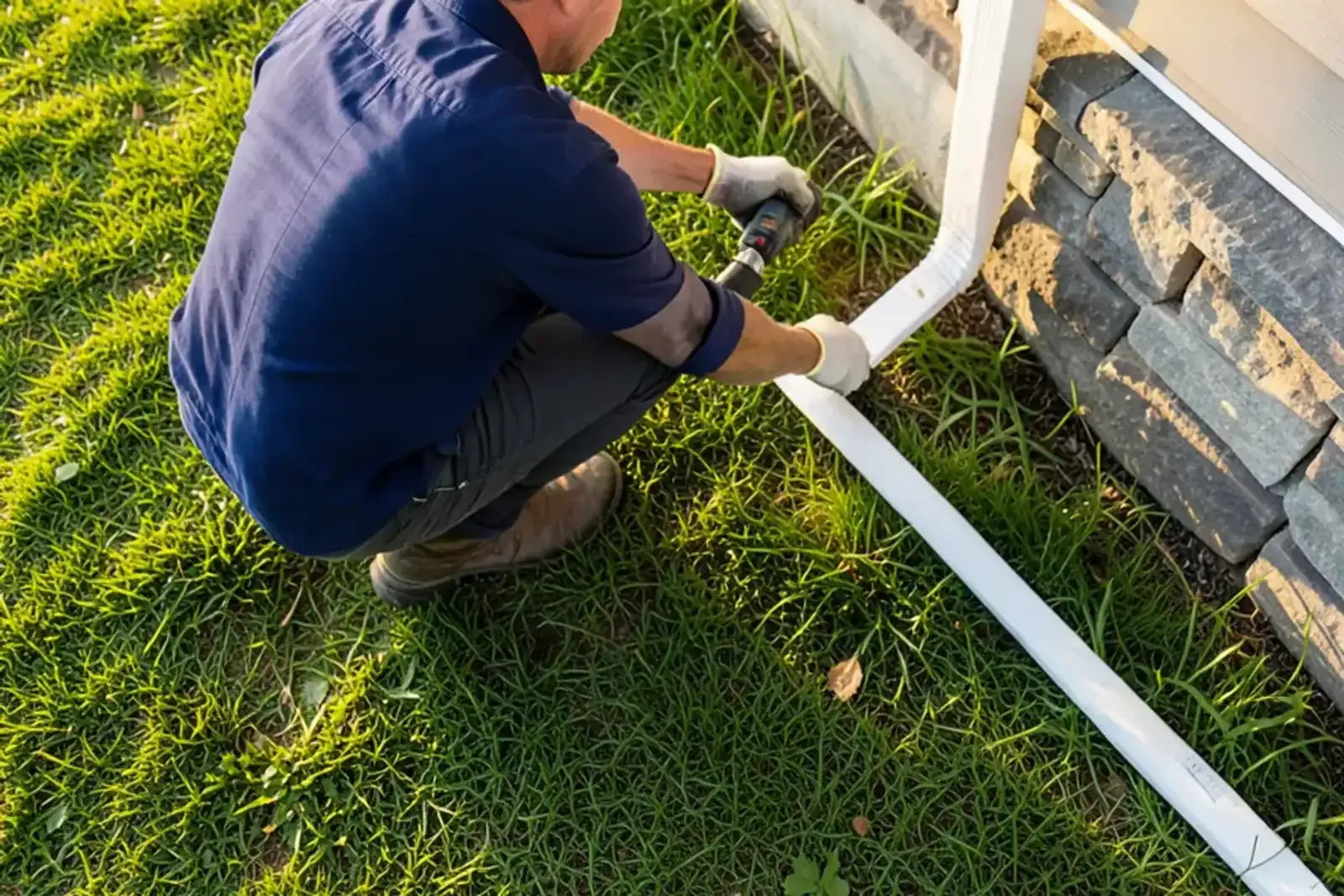
Reaching us about drainage
Ask any installer how many downspouts the plan uses, since about 50 feet of run per downspout is the practical limit (SMACNA). If any line goes underground, Dig Safe has to be called before digging. Our gutter installation page lists what we take on. Underground drainage and rain chains are not on our confirmed list, so see the underground drainage page for how we would assess it.
Keep downspouts on the main roof, give the chain a gravel basin on a small porch or skip it, and plan to take it down in November. Call (208) 464-4195 and describe the roof and the trouble spot, and we will talk through what would suit it.
Quick answers
Do rain chains work in New Hampshire winters?
Not through a full winter. Water on a chain freezes into a thick column of ice that adds weight to the gutter outlet and can drop hard when it thaws. Many owners take a chain down before the first hard freeze and put a short downspout in its place until spring.
Are downspouts or rain chains better for a large Hollis property?
Downspouts, for most of the roof. Hollis has large homes on wooded lots, with a median build year of 1979, and a big roof sends a lot of water to a few outlets. A chain may suit a small covered entry. Call us and ask how we would handle the rest.
Can a rain chain replace a downspout on my whole house?
Not safely. A chain does not contain heavy flow, does not carry water away from the foundation, and freezes into ice in winter. It can sit at one small covered entry as a feature, with a basin below it, while downspouts handle the rest of the roof.
Do downspouts freeze and crack in a New Hampshire winter?
They can ice up inside, and a split seam is possible when trapped water freezes and expands. The usual causes are a clog above or an extension that dumps into a snowbank. Clear leaves in fall and keep the extension end open all winter. A clear 3x4 downspout drains between freezes far better than a packed one.
How much water would a rain chain on a small porch roof in Hollis have to handle?
More than it looks. One inch of rain on a square foot of roof is about 0.6 gallons, so a 320 square foot porch roof sheds around 200 gallons per inch of rain. A chain on that corner needs a deep gravel basin, and anything larger needs a downspout.
Sources
- SMACNA gutter and downspout sizing guidance
- BestPlaces, Hampstead NH weather and snowfall
Questions about your gutters?
25 Glenwood North Rd #16, Hampstead, NH 03841
(208) 464-4195
Mon–Sat 8am–6pm · Sunday closed