
Emergency Gutter Repair
What to Do When a Gutter Falls Off Your NH Home
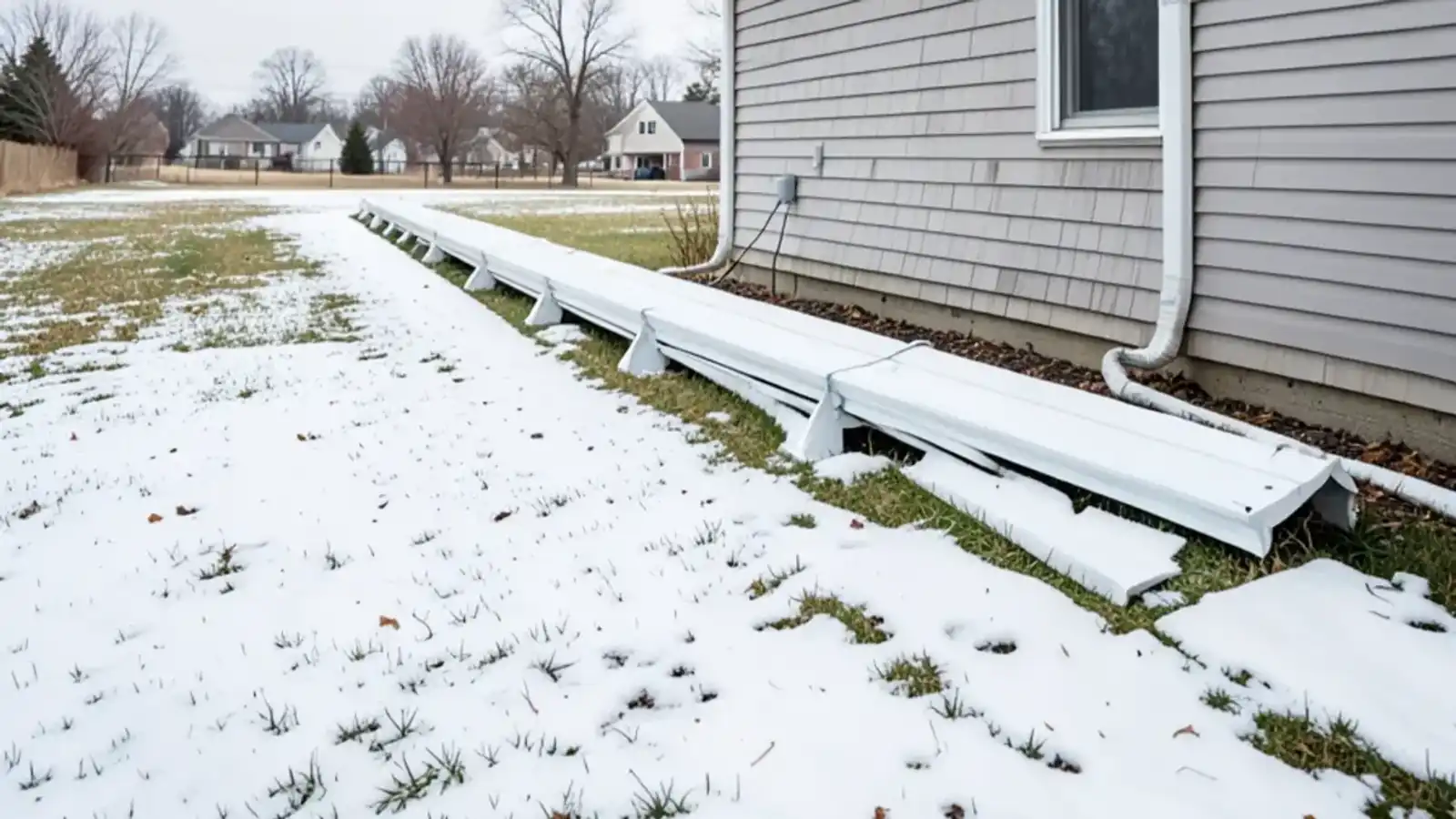
If a gutter fell off your house, stay clear of it, look for wires and keep people off the ground below before you touch anything. Most fallen runs can be rehung, but only after someone works out why they let go. Hung back on soft fascia or bent hangers, the same gutter comes down again.
- ★ 5.0 on Google · 29 reviews
- Serving since 2024
- Based in Hampstead, NH
Published and updated November 2, 2026 · By the Lanes Gutters crew, Hampstead, NH
On this page
- Gutter fell off the house? Do these six things in order
- What the fascia and the fallen run tell you
- Can the same gutter go back up?
- Urgent, or can it wait for a dry day?
- Protect the house until the repair
- What we look at first on a fallen run
- Fallen gutters around Derry
- Getting the run back on the house
- Common questions
When a gutter fell off the house, the first job is safety. The second is stopping roof water from soaking the wall the gutter used to protect. The repair comes third, and it goes better if you handle the first two calmly. Our fallen gutter repair page covers the work itself, and it belongs to our emergency gutter repair group.
Gutter fell off the house? Do these six things in order
- Check overhead. Look for service wires or a cable near the gutter. If it rests on one, stay away and call the electric utility.
- Keep people off the ground below. One hanging by an end can drop the rest of the way. Block the door or path it hangs over.
- Leave the ladder in the garage. Remaining hangers may be holding on by a nail tip, and a leaning ladder can bring the rest down.
- Wear gloves if you must move it. Cut aluminum edges are sharp. Drag the section clear only if it blocks a door or driveway.
- Photograph the fallen run and the roof edge. Take wide and close shots from the ground.
- Move anything stored along that wall. Roof water now lands at the foundation.
What the fascia and the fallen run tell you
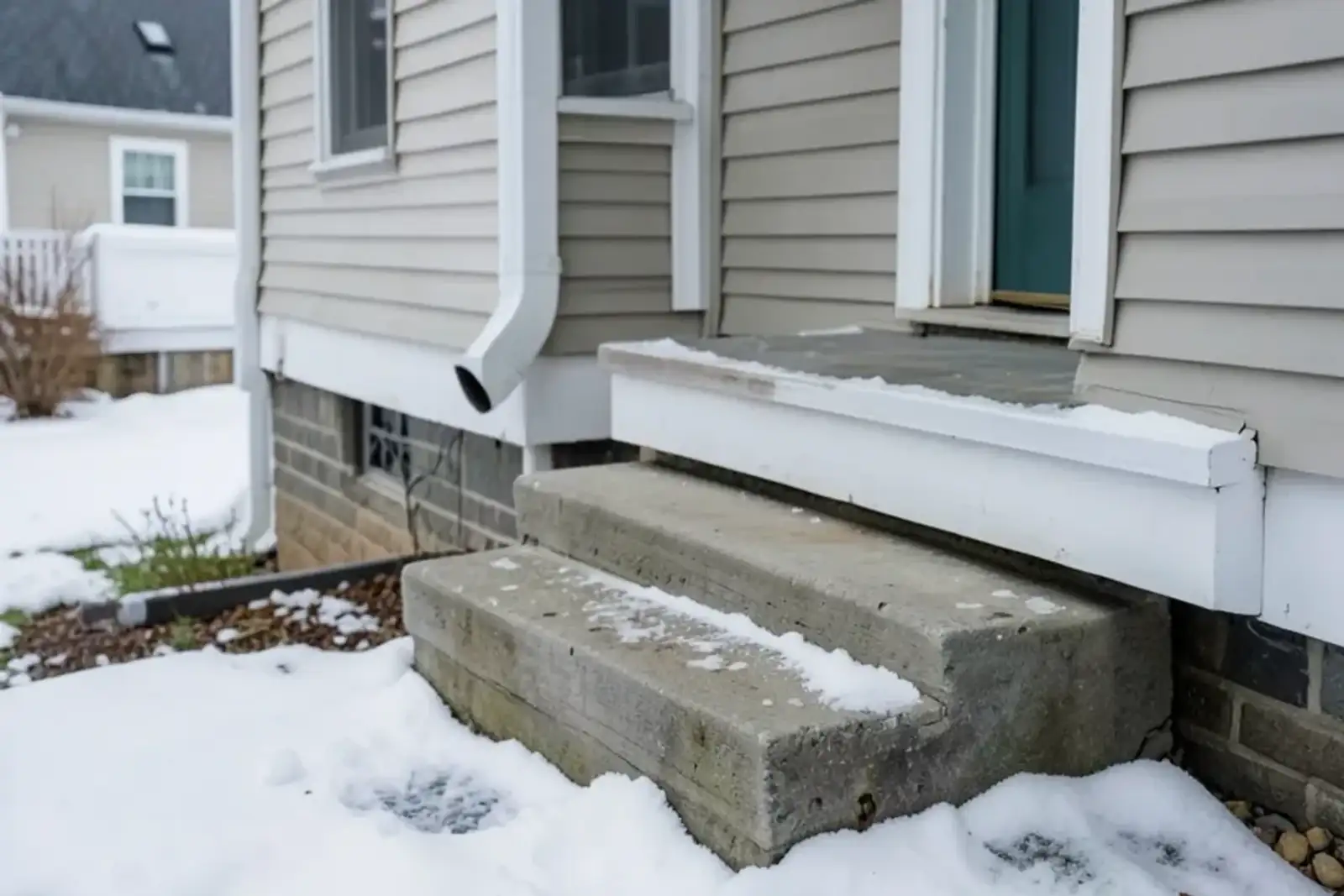
Fascia is the trim board on the roof edge, and the gutter hangs from it. Look at the board and the metal together, because they show what let go.
Clean holes and a straight board point to load. Ice or sliding snow overcame the hangers, and the wood is probably fine.
Dark, soft wood points to rot. Probe the board with a screwdriver tip. If the tip sinks in, the fasteners had nothing left to hold, and the wood needs repair before anything is hung on it.
Long nails lying in the grass point to old spikes. These work out of the wood over the years as the gutter expands and contracts.
A hard crease in the metal means the section was bent as it fell or was twisted by weight. Creased aluminum holds water and will not sit true.
Can the same gutter go back up?
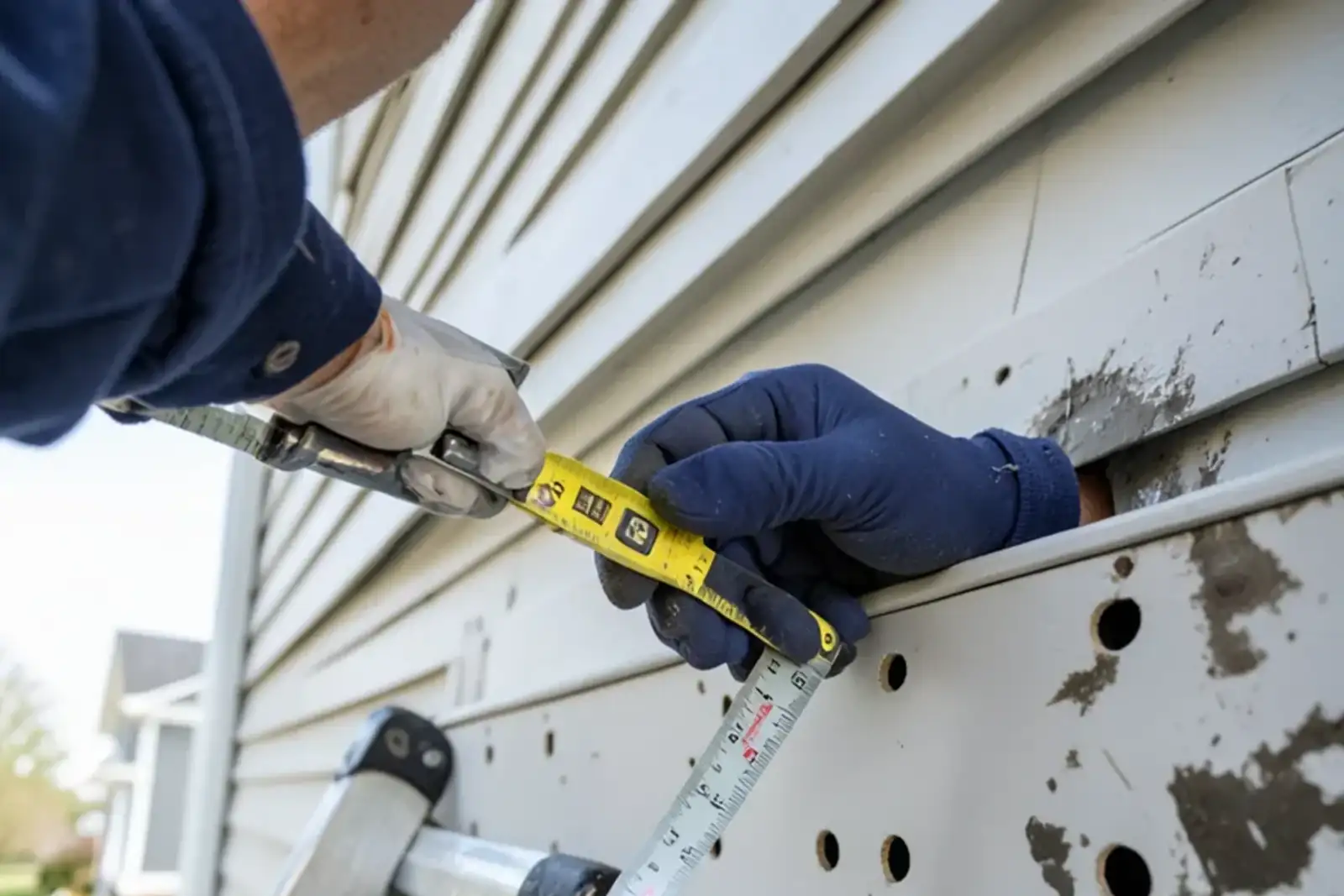
Sometimes. A run with straight lines, sound seams and no creases can be rehung on new hangers once the fascia is solid. A kinked or split section should be replaced, and a damaged corner can often be swapped on its own.
Ask for the decision in writing, section by section. A written price that lists fascia work, hangers and any replaced lengths separately lets you see where the money goes. If most of an old sectional run is tired, compare the cost of rehanging it with the cost of new seamless runs before you commit.
Questions to ask before you accept a rehang quote
Any contractor should be able to answer these plainly, and the answers tell you more than the total does.
- What hanger spacing does the price assume, and what fastener sits behind each hanger?
- Will the screws reach the rafter tails behind the fascia, or stop in the trim board?
- Is the fascia work on its own line, with the wood repair priced apart from the gutter?
- How will the pitch be set, and which downspout will the run drain to?
- Can I see a current certificate of insurance before anyone climbs a ladder?
- Is haul-away of the old metal, spikes and debris in the price?
Urgent, or can it wait for a dry day?
It is urgent when the gutter hangs over an entry, a walkway or a driveway, because a second fall can hurt someone. It is also urgent when it rests on or near a wire.
It can wait a few days when the run is fully on the ground, nothing overhead is loose and the weather is dry. The roof edge is exposed in the meantime, so treat that stretch as an open drain and keep an eye on the soil and siding below it. If rain or snow is forecast, make the call sooner and say so, so the visit can be set with that in mind.
Two ways it can play out
These are illustrations, not jobs we are claiming. First, picture a 30-foot run hanging by one end over a front step in a dry week. The step is the priority, so block it, use another door and let the rest wait for the visit. The surviving hangers at the other end have been carrying the swinging weight, so we would check those too.
Second, picture a full side down after a thaw, with wet snow still on the roof above. A crew working under that edge can be hit by whatever slides next. We would look at the roof first, and part of the work may have to wait until it sheds.
Protect the house until the repair
Water is the next problem. Without a gutter, the roof sheds along the whole edge onto the siding and the ground.
- Lay a flexible downspout extension, or any long sloped channel, to carry water away from the foundation.
- In freezing weather, watch the walkway. Dripping roof water freezes on a path within hours.
- Do not tarp or tie the gutter to the house. A loaded, tied gutter can pull wood off with it.
Photos and paperwork
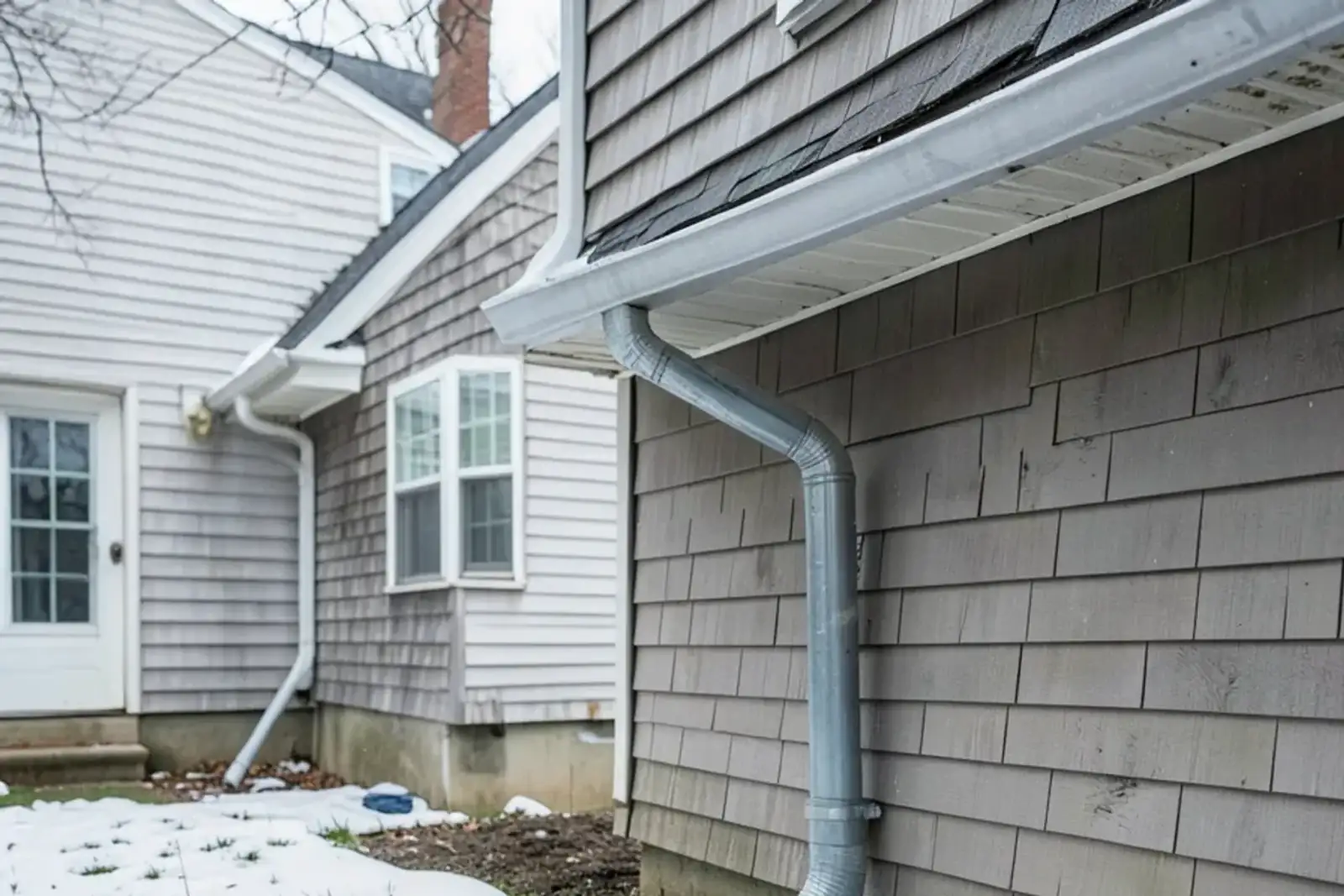
If wind, a limb or heavy snow brought it down, whether your homeowners policy responds depends on the policy and the insurer, so call your agent before anything is thrown out. Keep the fallen pieces if you can stack them clear of the walk, and keep the repair quote itemized. Our storm-damaged gutters page covers the photo steps in more detail.
What we look at first on a fallen run
From our crew, the fallen section is the least interesting part. We look at how it was hung. The standard is hangers spaced closely enough that a loaded gutter does not flex between them, and modern hidden hangers hold better than the long spikes that were common decades ago.
We also check the slope. A gutter should fall gently toward the outlet, at least about a quarter inch every ten feet, and a dip holds water that adds weight. Then we walk the rest of the roof edge. A run that fell once often has neighbors in the same condition, with hangers bent, spikes backing out or fascia going soft.
Hangers, screws and what they bite into
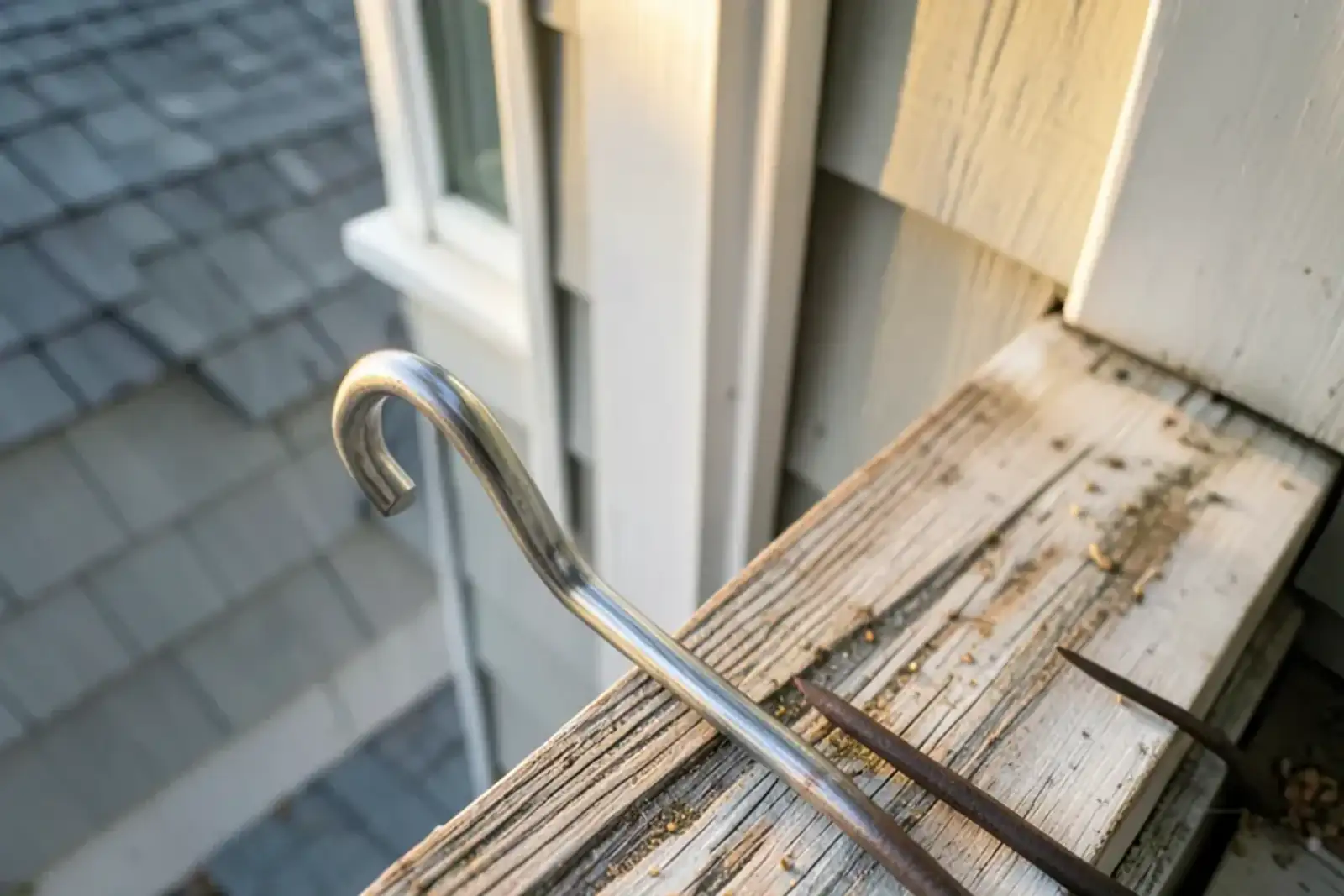
A hanger is the bracket that carries the gutter, and the fastener behind it does the real work. Old spikes with a sleeve rely on friction in the fascia board, and friction loses to years of expansion and contraction. A screw-in hidden hanger grips with threads, and a screw long enough to pass through the fascia reaches the rafter tail behind it, which is framing rather than trim.
Spacing matters as much as hardware. Two to three feet between hangers is a commonly cited range, and in snow country we would lean toward the closer end, because a loaded gutter flexes between brackets. On a 40-foot run, hangers every 36 inches come to about 14 brackets and every 24 inches to about 20. Six extra brackets are a small part of the job compared with doing it twice.
The trade-off is parts and labor, so a tight-spacing quote will sit above a loose one. Ask what spacing each price assumes, since it is one of the quietest differences between two quotes.
The gap behind the gutter
Look at the top of the fascia where the roof meets it. Drip edge is the thin metal strip along the roof edge that should guide water into the gutter instead of behind it. If the shingles stop short, or the metal sits behind the back lip, roof water runs down the back and soaks the board. That slow leak can be the very rot that let the gutter go. A fallen run shows the gap in plain view, so it is the best moment to fix it rather than hang a new run over the same leak.
When the fascia has to come off
Soft wood gets cut back to sound wood, ideally ending on a rafter tail so the new piece has something to fasten to. The new board should be primed on every face and end before it goes up, because bare end grain drinks water. Some owners ask to wrap the board in aluminum trim coil instead. Over sound wood that is a fair finish and saves painting. Over soft wood it is a poor idea, since it hides the problem and traps moisture against the board, so we would probe the wood before agreeing to cover anything.
Fallen gutters around Derry
Derry is part of our service area, roughly 5 minutes from our Hampstead base by our estimate. Many Derry homes were built in the 1980s, and the median is 1983, so spikes and sectional runs from that era are the likeliest places for failure. See our Derry gutter service page for more on the town.
Getting the run back on the house
Once the area is safe and the water is moved, the order is simple: find why it let go, fix the wood, rehang on closer hangers and set the pitch. Photos of the fallen run, the bare fascia and the roof edge make the first phone call quicker. Tell us whether the gutter is hanging, down or near a wire, and what the weather is doing. Call us at (208) 464-4195 and describe what came down.
Quick answers
Can I screw a fallen gutter back up myself?
It is risky and rarely lasts. Fasteners go back into the same weak wood, and a ladder near an iced or loaded roof edge is a fall waiting to happen. If the run is on the ground and the fascia is sound, a rehang is a routine job for a crew. Call and we will set the earliest visit we can.
How long can a fallen gutter sit on the lawn?
A few days is usually fine if it is out of the way and clear of wires. The bigger concern is the roof edge, which now drops water at the foundation and onto the walk. In a Derry winter that means ice on the path, so lay down a temporary extension and keep the area marked off until the work is done.
Will my fascia need repair after a gutter falls?
Often it does, because either soft wood let the gutter go or the falling gutter tore wood out. Probe the board with a screwdriver. If it gives way, expect carpentry before new hangers. A written price that lists the fascia work on its own line lets you see that part separately from the gutter itself.
Should I call the electric company if a Derry gutter is touching a service wire?
Yes. Stay well back, keep children and pets away, and phone the utility before anyone else, because a metal gutter resting on a live line can carry current to whatever touches it. Tell us where the wire meets the house when you call, and we will set the earliest visit we can once the wire has been dealt with.
Why does one fallen gutter often mean more trouble along southern New Hampshire roof edges?
The rest of the run has usually seen the same winters and the same ice load. When one section lets go, its neighbors take on the extra weight, and their hangers may already be bent, backing out or sitting in soft fascia. We walk the whole roof edge and tell you which other stretches look close to the same failure.
Sources
- Contractor and trade guides on rehanging gutters, hanger spacing and fascia repair (web search, November 2026)
- Dwellics, Hampstead NH climate data
Questions about your gutters?
25 Glenwood North Rd #16, Hampstead, NH 03841
(208) 464-4195
Mon–Sat 8am–6pm · Sunday closed