
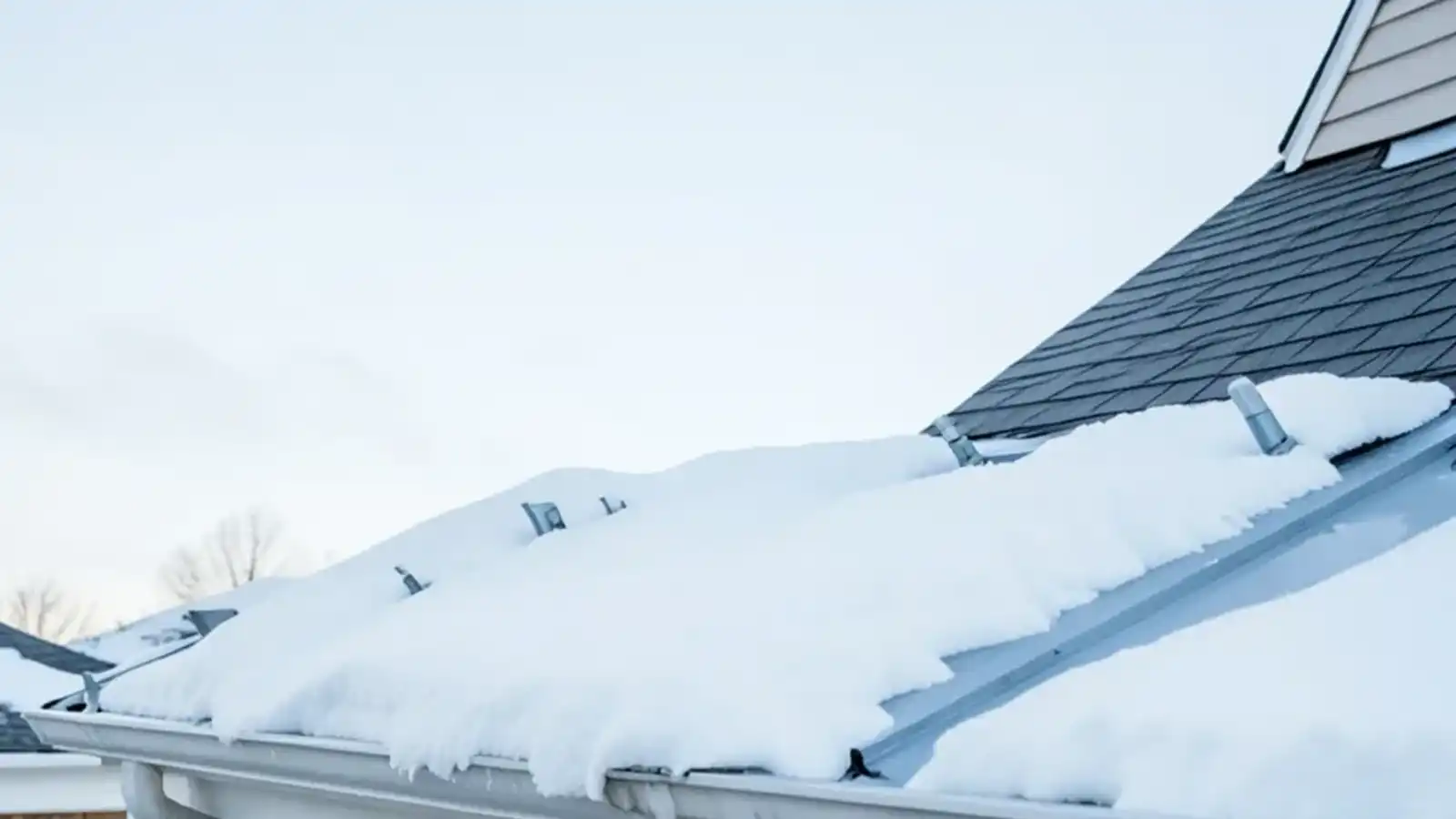
Winter Gutter Protection
Heat Cable vs. Snow Guards: Which Do You Need?
One melts and one holds. Heat cable warms a channel through ice so meltwater can drain, and snow guards hold snow on the roof so it melts and sheds in small amounts instead of sliding in a slab. They answer different winter problems, and neither one cures an ice dam. Insulation and attic ventilation do that.
- ★ 5.0 on Google · 29 reviews
- Serving since 2024
- Based in Hampstead, NH
Published and updated November 2, 2026 · By the Lanes Gutters crew, Hampstead, NH
On this page
The short answer is that guards protect what is below the roof edge, and cable keeps a drain path open. Start by naming which problem you have.
Which winter problem is yours?
| What you see | What is happening | Tool that helps |
|---|---|---|
| Snow sliding off in slabs, bending gutters or landing on a walk | A smooth or steep roof releasing its load all at once | Snow guards |
| An ice ridge at the eave and water backing up under shingles | An ice dam from attic heat | Insulation and ventilation first |
| Ice that blocks a gutter or downspout from draining | Meltwater refreezing in the run | Heat cable, in some cases |
| Long icicles on a cold eave | The same refreeze at the edge | Neither, since the cause is heat loss |
Hampstead averages about 53.8 inches of snow a year and 17.1 in January (BestPlaces), so both problems are real.
What do snow guards do?
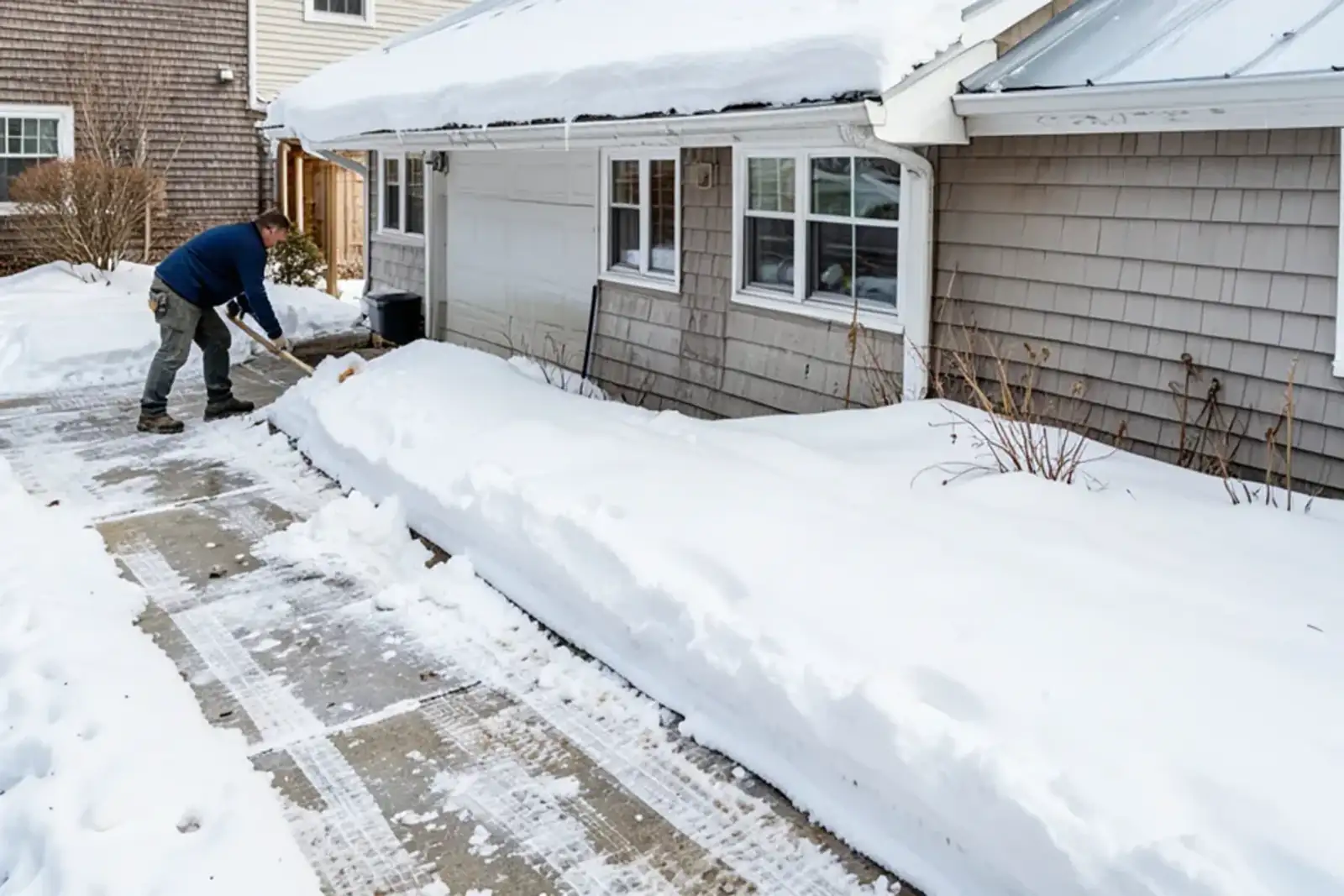
Snow guards are small pads, bars or rails fastened to the roof surface. They break up a snow load and hold it in place, so it melts and slides off in small pieces over days instead of crashing down in one slab.
They matter most on metal and other slick roofs, and over entries, walkways, a lower roof, shrubs and gutters. A slab of snow can bend or tear a gutter off the fascia.
A Google reviewer, Genevieve P., wrote that she "needed snow guards installed and gutters lowered and replaced." That review documents snow guard work with us, and we price each job in writing after seeing the roof. Our snow guards page covers how we scope it.
How guards are laid out
Snow guards are not one row of pads at the edge. The count and spacing depend on the roof pitch, the length of the slope above them and the ground snow load for the town, so a layout comes from the roof and not from a standard. Rows are usually staggered and set above the area you want to protect, because the aim is to break the slab up before it picks up speed.
Fastening is the other half. On a standing-seam metal roof, clamp-on guards grip the seam without drilling. On shingle roofs, guards that screw into the deck need sealing at every fastener. Ask how each guard attaches and what happens if one lets go, since a guard that fails sends its load down with it.
What does heat cable do?
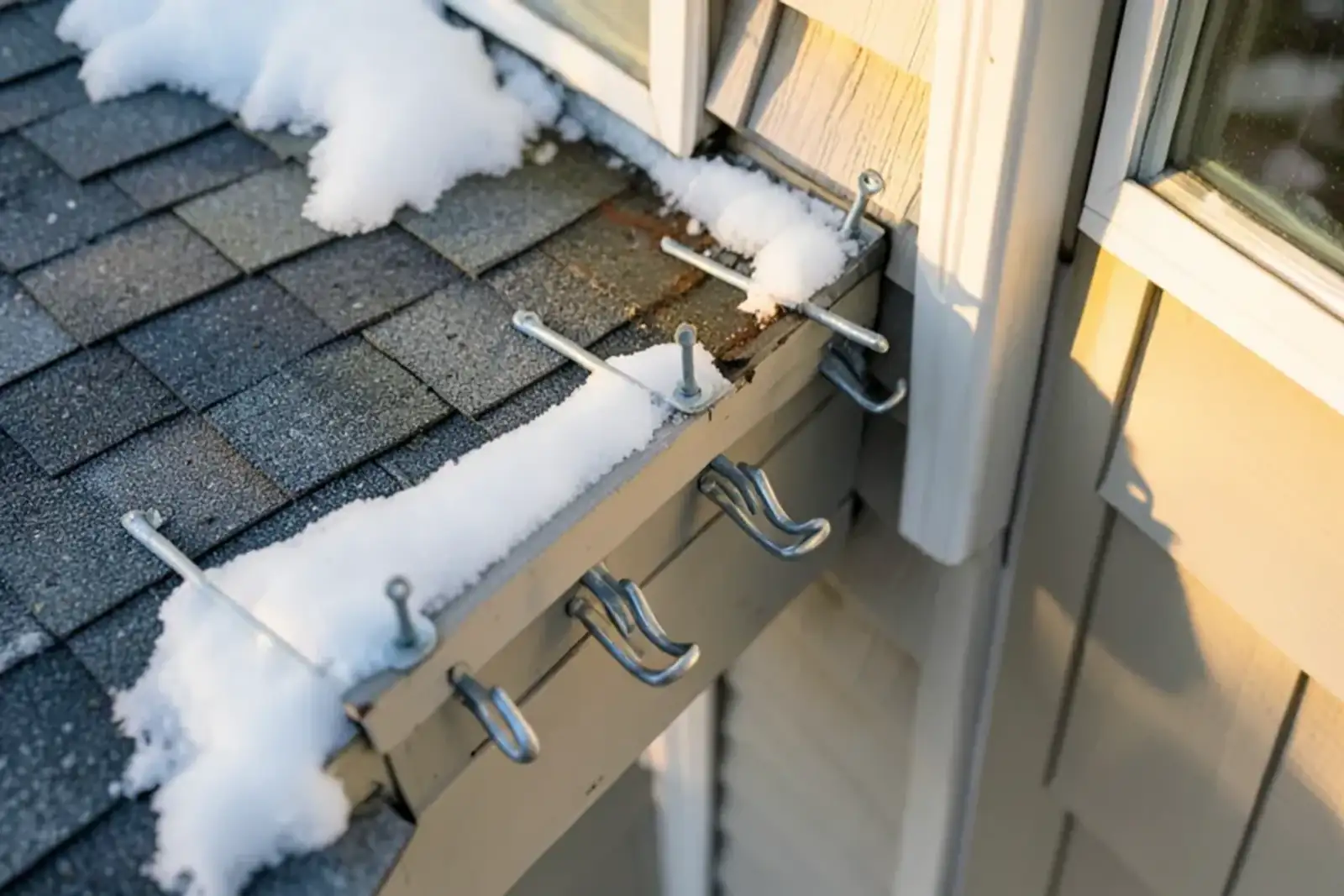
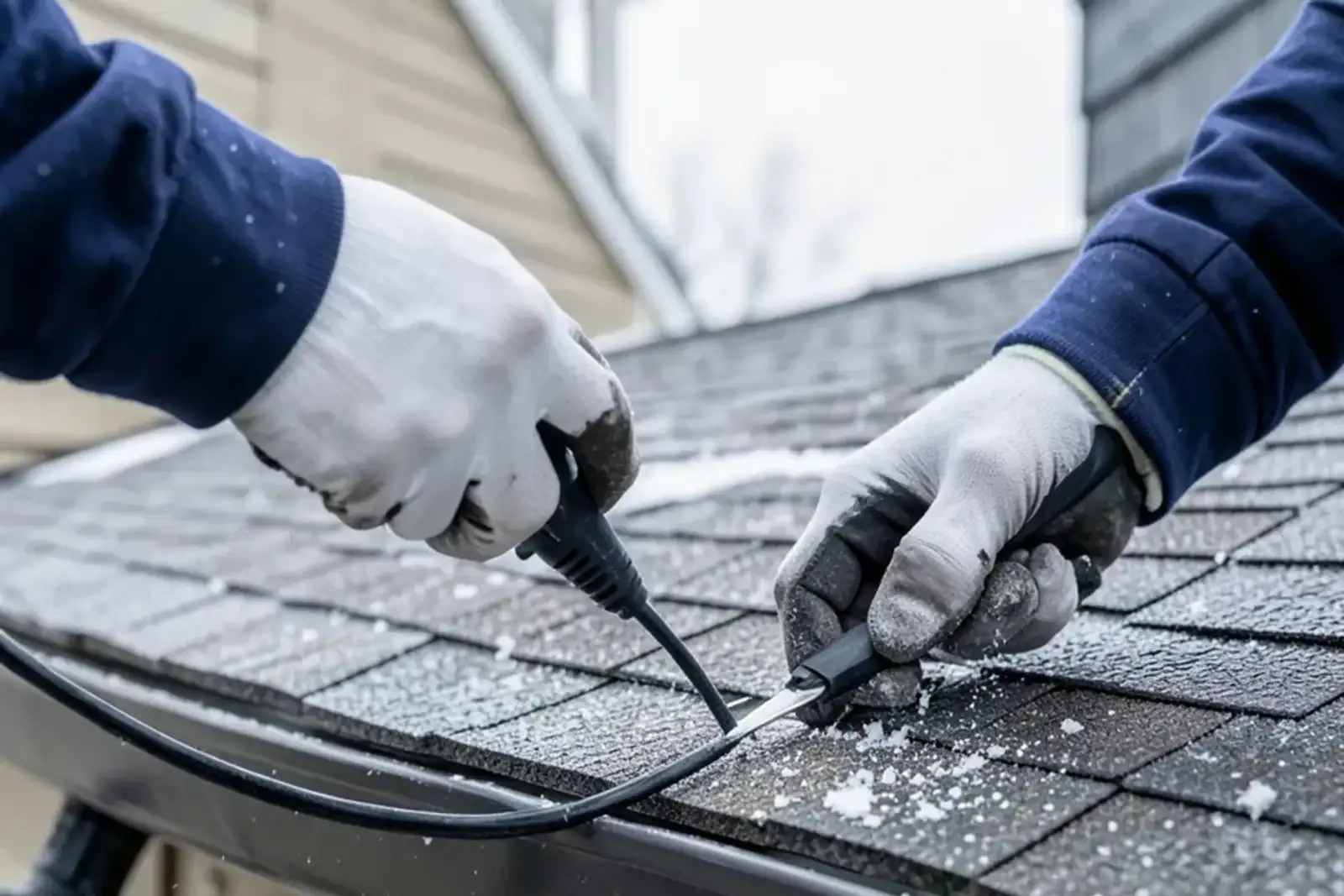
Heat cable is electric cable clipped along the roof edge in a zigzag pattern, and run through the gutter and downspout. It warms a channel so meltwater can drain instead of freezing in place.
It uses power for as long as it is switched on, so running costs depend on watts per foot and how it is controlled. It needs a safe circuit and should be installed with electrical code in mind. We have not confirmed heat cable as a service, so call and ask whether we would take a job like that.
Self-regulating cable and where it must end
Cable comes in two broad kinds. Constant-wattage cable puts out the same heat everywhere along its length. Self-regulating cable puts out more where it touches ice and less where the surface is warm, so it wastes less power. Many installers favor the second for roof edges, though it costs more per foot.
Placement decides whether it works. A cable that stops short of the gutter builds a ridge of ice at the shingle edge, and one that stops short of the downspout outlet leaves a plug. The channel has to run from the roof edge, through the gutter and down the downspout to a point where water can leave. Cable is a patch on a trouble spot, which is why our heated gutter cables page treats it as a case-by-case question.
Can heat cable fix an ice dam?
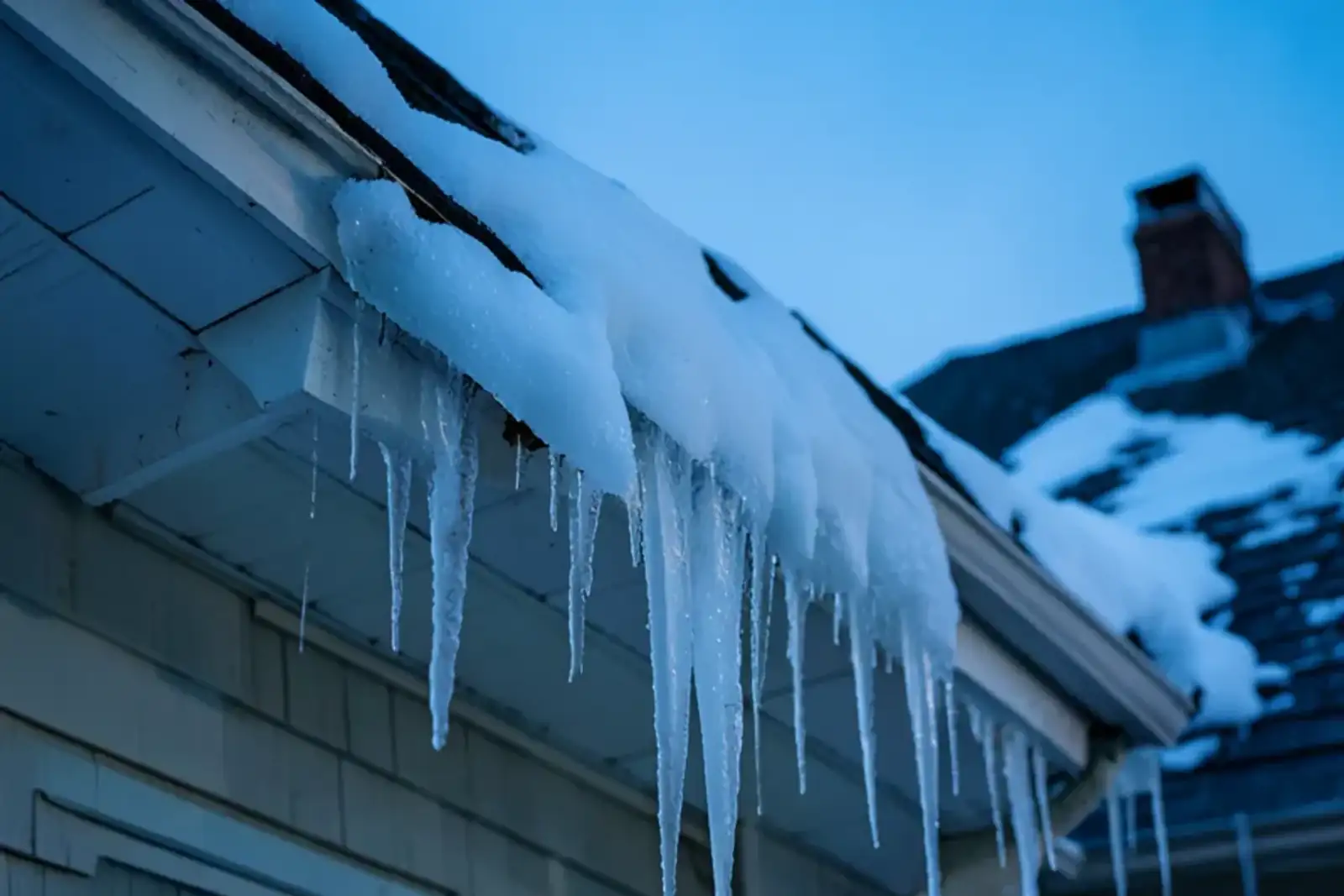
No. An ice dam happens when heat from the house escapes into the attic, melts the underside of the snow, and the water refreezes at the cold eave. It happens with or without gutters.
A cable can hold open a path through the ice, which can limit water backing up under shingles for a season. It does nothing about where the heat is escaping. Sealing attic air leaks, adding insulation and improving ventilation are the lasting fix.
The crew's rule of thumb on winter roofs
From the trade side, the order is cause first, load second, cable last. Fix the heat loss. Then deal with snow that slides. Then add a cable only to a trouble spot that still needs one.
The reverse order is the common mistake. Cable on a leaky attic runs all winter and keeps fighting the same problem. Guards on a roof with a hot attic still sit behind a growing ice ridge.
One more rule, which is plain safety. Falling ice can seriously hurt someone, so keep doors and walks out from under a roof that sheds.
What snow does to the gutter under it
A gutter is not built to take a sliding slab of snow. The load lands on the front edge and the hangers, and the run bends, pulls away from the fascia or tears loose at a seam. That is a common winter repair call after a thaw following a heavy snow.
It is also why guards and gutters are sometimes done together. A reviewer's job above included lowering the gutters, which changes how sliding snow meets the edge. The right setup depends on the roof, so describe the surface, the pitch and what sits below it.
A worked example: a slab over an entry
Ice weighs about 57 to 60 pounds per cubic foot. Take a ridge of ice 4 inches thick that sits 2 feet deep along 10 feet of eave. That is about 6.7 cubic feet, or roughly 380 to 400 pounds, hanging off a few hangers and a thin front lip. Snow above it adds more.
If that eave sits over a front entry, a guard row is a sound answer, because it keeps the slab from releasing at once. If the same ridge sits over a gutter that fills and freezes, the first question is where the attic heat is leaking, since the ridge returns every cold week until that is fixed. A cable might hold a drain path open in the meantime, and it would not lighten the ridge above it.
The two cases look alike from the lawn and need different fixes. Photograph the roof edge from the ground, note what sits below it and call with the picture.
Which roof needs which?
- Standing-seam or other metal roof over a door or walk. Snow guards.
- Smooth, steep shingle roof above a gutter. Snow guards, and check gutter hangers.
- Roof with a cold, ventilated attic and long icicles. Check insulation and air sealing first.
- Valley or low roof that traps ice and drains slowly. Cable may be a spot fix.
- Roof with a gutter that holds ice through January. Look at pitch and hangers before adding anything electric.
Londonderry roofs and winter loads
We cover Londonderry, about 15 minutes from Hampstead by our estimate (12 miles). Its 1970s to 1990s subdivisions near the airport have a median build year of 1986 (ACS 2020-24), so many roofs and attics date from before today's insulation habits.
If you do add a cable, have an electrician confirm the circuit, use a ground-fault outlet, and plug it in only when the weather calls for it. Leaving one running through a dry, cold week wastes power and gains nothing.
For the wider picture, see our winter gutter protection overview, and our ice dam prevention page for the attic side of the question.
Picking the winter fix for your roof
Name the problem first. Snow sliding onto a door, walk or gutter is a guard job. Ice that keeps coming back at the same eave is an attic job, and cable is the last resort for a stubborn spot. Call (208) 464-4195 and describe the roof surface, the pitch and what sits below it, and we will talk through where to start.
Quick answers
Do heat cables stop ice dams?
No. A cable melts a channel so water can drain, but ice dams start with attic heat melting roof snow that then refreezes at the cold eave. The lasting fix is insulation and ventilation. A cable can be a stopgap, and it adds an electric bill, so ask any installer what it draws and how it is wired.
Are snow guards worth it on a Londonderry roof with a slick surface?
Often, if snow slides over a walk, a door or a gutter. Londonderry's 1970s to 1990s subdivisions have a median build year of 1986, and a smooth or steep roof sheds snow in slabs. Guards hold it so it melts in smaller pieces. Call us and describe the roof.
Do I need snow guards if I already have heat cable?
Possibly, since they do different jobs. A cable keeps a drain path open through ice but does nothing to stop snow sliding off a smooth or steep roof. Guards hold the snow. If snow lands on a door, walk or gutter, guards are the part that protects it.
How much power does heat cable use on a New Hampshire roof?
It depends on the cable's watts per foot and how long it runs, so read the label. As an illustration, 60 feet at 5 watts per foot draws 300 watts, which is 30 kilowatt-hours over 100 hours switched on. Multiply by the rate on your own bill. A controller that runs the cable only in freezing, wet weather keeps hours down.
Can snow guards on a shingle roof cause leaks in Londonderry?
They can if they are fastened badly. Guards that go through shingles are penetrations, so each needs proper flashing or sealing, and clamp-on guards for standing-seam metal avoid holes. Londonderry's roofs from the 1970s to 1990s vary in age and surface, so ask any installer how a guard attaches to your roof and what seals it.
Sources
- BestPlaces, Hampstead NH weather and snowfall
- Dwellics, Hampstead NH climate data
Questions about your gutters?
25 Glenwood North Rd #16, Hampstead, NH 03841
(208) 464-4195
Mon–Sat 8am–6pm · Sunday closed