
Commercial Gutters
HOA Gutter Maintenance: A Guide for NH Condo Boards
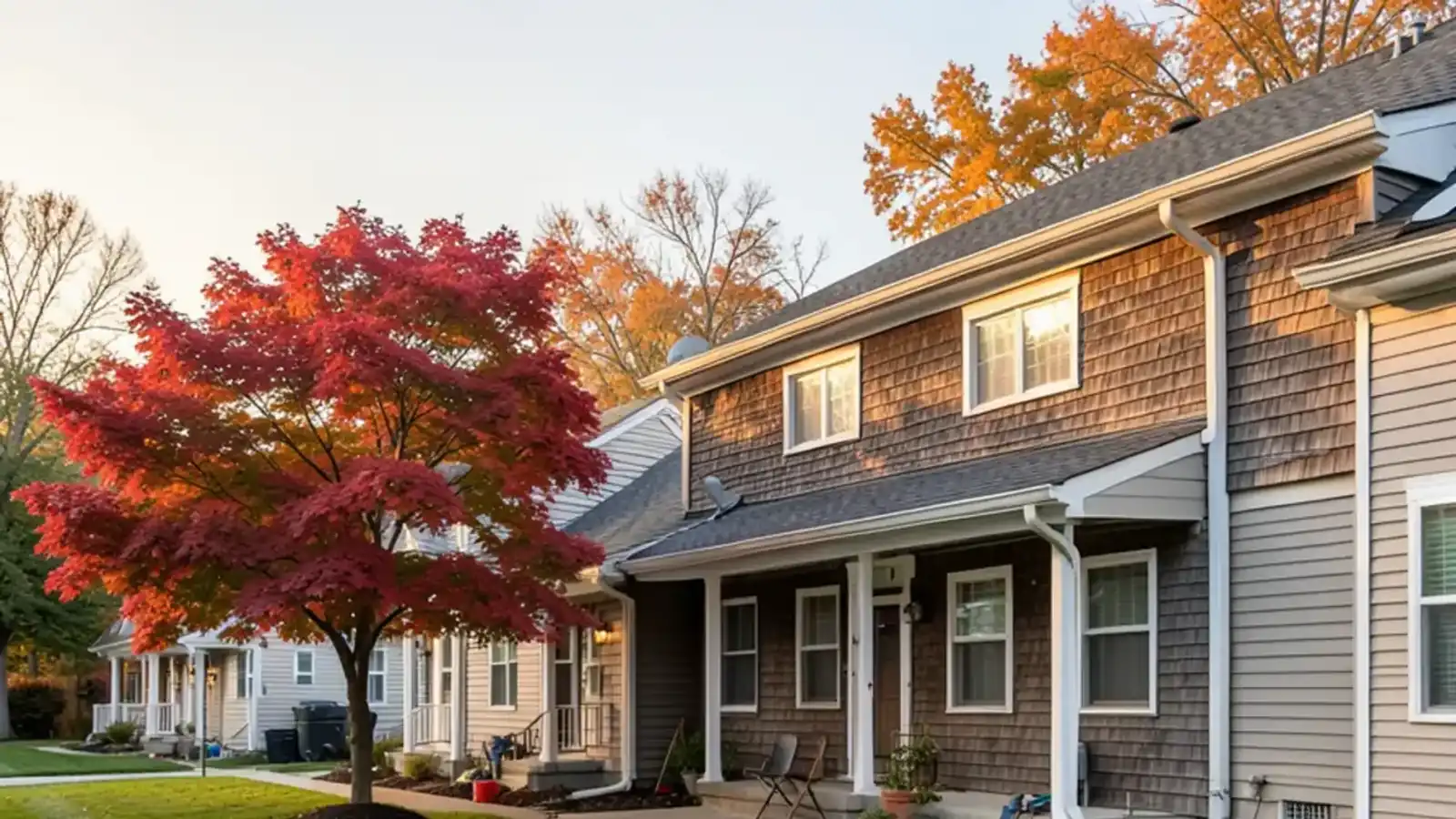
HOA gutter maintenance starts with one question, which is who owns the gutter under your governing documents. In many condo and townhouse communities the association handles gutters on shared rooflines, and unit owners handle only what the documents assign to them. Read the declaration first, then set a yearly schedule, a budget line and a written scope.
- ★ 5.0 on Google · 29 reviews
- Serving since 2024
- Based in Hampstead, NH
Published and updated November 2, 2026 · By the Lanes Gutters crew, Hampstead, NH
On this page
- Who is responsible for HOA gutters, the board or the owner?
- Budgeting: operating line or reserve?
- What to put in the bid request
- From the crew: where shared roofs go wrong
- Scheduling around residents
- Records that protect the board
- Our record, and where Salem fits
- What a board can do this month
- Common questions
The board usually owns the shared gutters, and the owners own what the documents hand to them. Settle that first, because every decision after it, from budget to bid, depends on who writes the check and who signs the contract.
Who is responsible for HOA gutters, the board or the owner?
Governing documents vary, so treat this table as a list of questions to check, not a legal answer.
| Situation | Common default | What to check |
|---|---|---|
| Condo building, one shared roof | Association, as a common element | Whether the declaration lists roofs and gutters as common |
| Attached townhouses | Often association, sometimes each owner | Whether the document splits exterior upkeep by unit |
| Detached homes in an HOA | Usually the owner | Whether the association sets a required maintenance schedule |
| Downspout extension or splash block on an owner's patio | Often the owner | Whether the owner changed the original drainage |
If the language is unclear, ask the association's attorney. A contractor can quote the work but cannot interpret your declaration.
Budgeting: operating line or reserve?
Routine cleaning and small repairs are a recurring yearly cost, and many boards carry them in the operating budget. Replacing a failed gutter system is a larger, less frequent expense, and communities with a reserve study often list it there. Ask your property manager or accountant how your association classifies each one.
A steady yearly cleaning lowers the chance of a surprise bill. Gutters that overflow wet the fascia, and wood repair costs more than the visit that would have prevented it.
What to put in the bid request
Send every bidder the same sheet:
- Number of buildings, stories and units
- Total gutter length, or ask each bidder to measure
- Parking, fences, decks, gardens and anything a lift must work around
- Dates, with a plan for notifying residents
- What the crew reports after each building
- How repairs are priced, as a written price before any work starts
- A certificate of insurance from each bidder, naming the association
Seven items sound like a lot, but they take a manager an hour to assemble and make bids comparable. Ask each bidder to confirm the footage on their own walk, because a board's estimate from a site plan is often off, and a gap between two bids usually turns out to be a gap in footage, not in rates. If you want a service that fits this pattern, see our HOA and condo gutter service page.
From the crew: where shared roofs go wrong
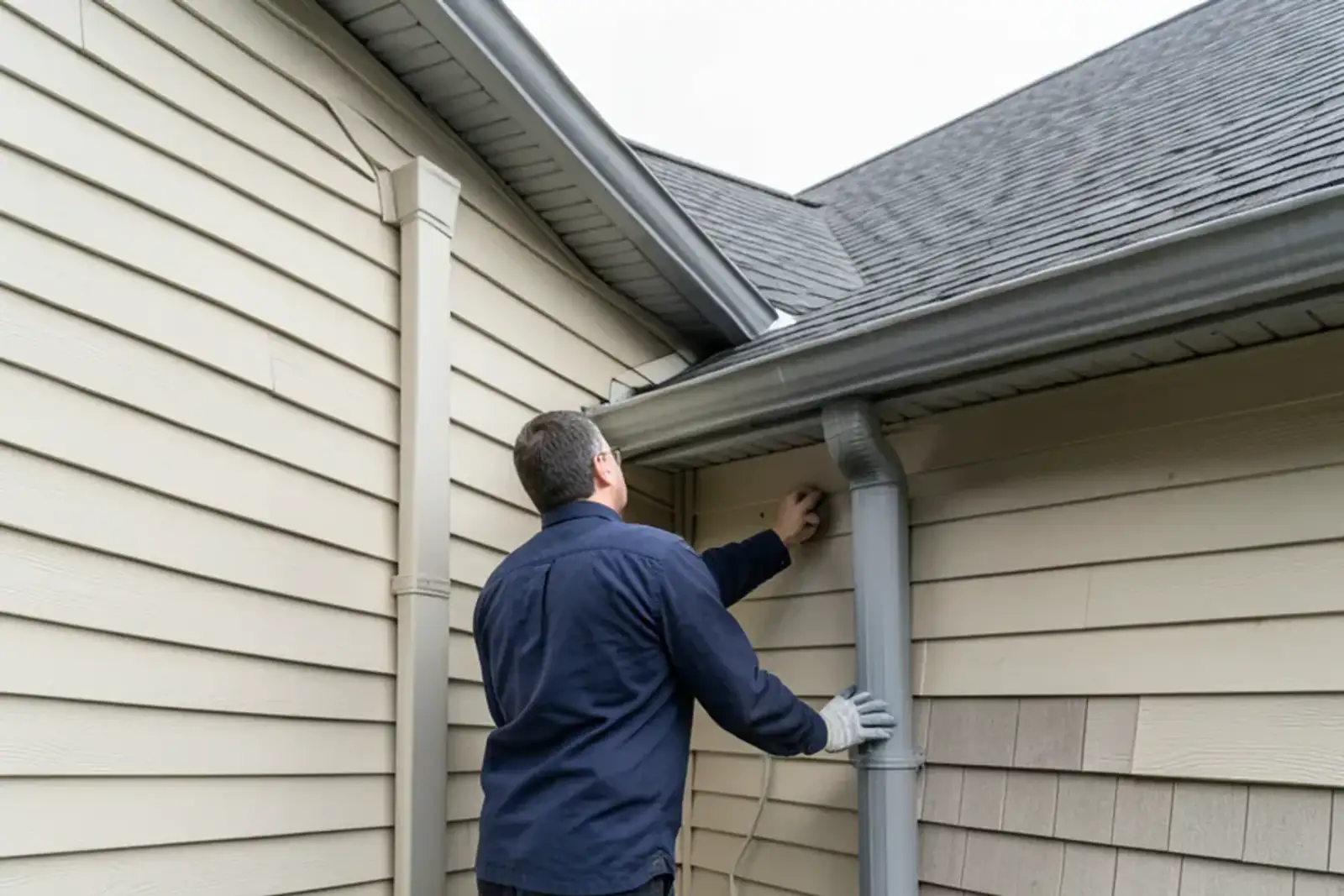
These are general trade observations, not stories from any one property. On multi-unit buildings the trouble starts where roofs meet. A valley or party wall funnels water from two units into one downspout, and that outlet clogs first.
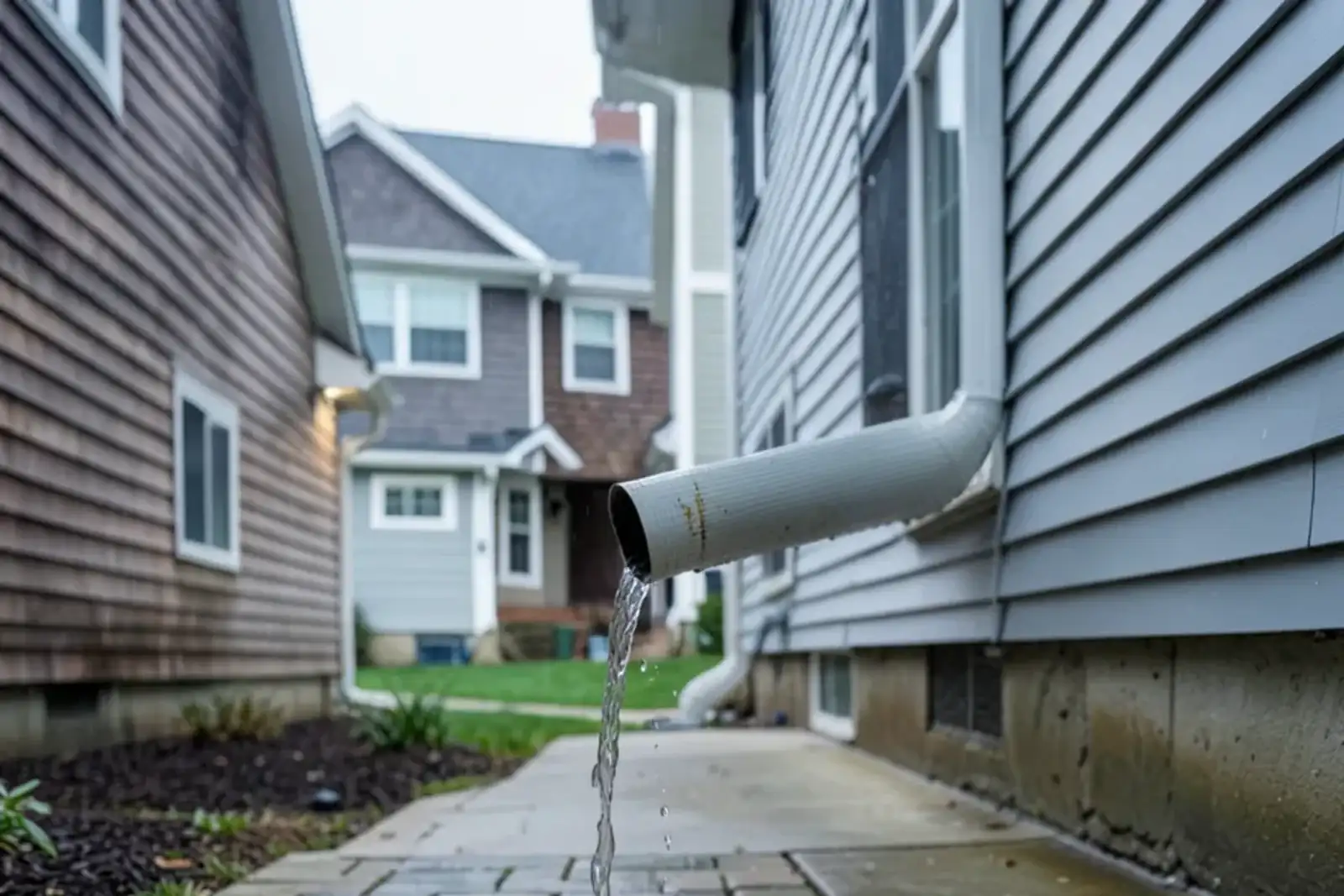
Downspout discharge is the second spot. A downspout that empties across a walkway or a neighbor's patio turns into an ice patch in January and a complaint in March.
The third is piecemeal repair. When owners fix their own section over the years, a single run ends up with mismatched ages, sealants and hangers, and the weakest section sets how well the whole run works.
There is a fourth worth naming: size. Long shared roofs with big valleys can overwhelm a 5-inch gutter. A common sizing chart rates a 5-inch K-style for about 5,520 square feet of roof and a 6-inch for about 7,960, at one inch of rain per hour. Steeper roofs and harder rain lower those figures. When a board replaces a run, it is the moment to price the 6-inch option against a matched replacement. The trade-off is cost and a slightly larger look on the fascia against fewer overflows at the valleys.
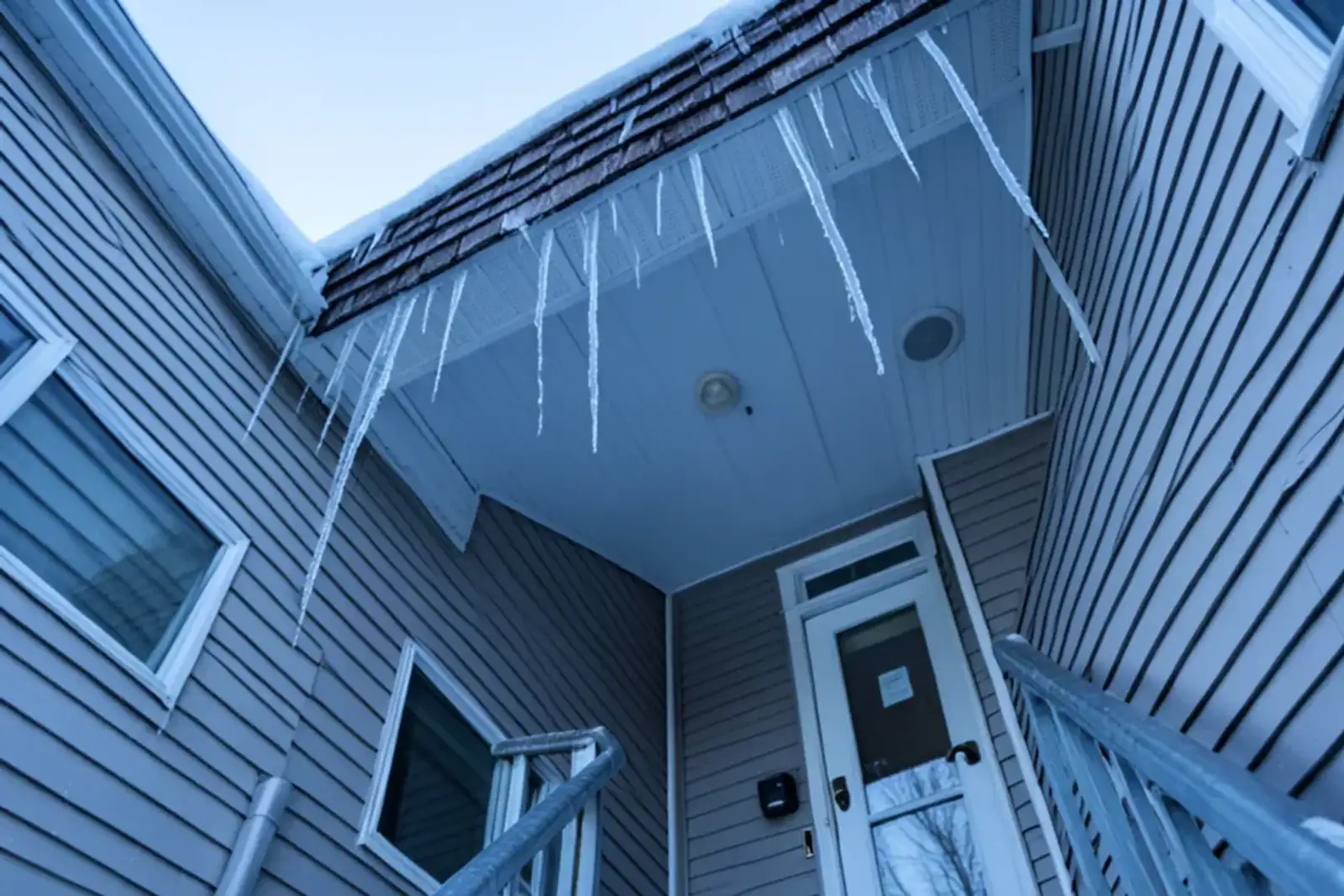
Ice at shared entries is a fifth. It comes from attic heat and cold eaves, with or without a gutter, so insulation and ventilation are the real fix. A gutter that is clean and pitched right keeps the meltwater moving, but it will not stop an ice dam by itself.
A worked budget example
This is an illustration with third-party numbers, not a Lanes price. Say a community has eight buildings with about 140 feet of gutter each, or 1,120 feet in all. Today's Homeowner lists cleaning at about $1.10 per linear foot, which puts a single-story-equivalent cleaning near $1,232 for the whole community. Taller buildings, heavy debris and lift work push the real figure up, and the labor share is about 70% of any cleaning price (This Old House, 2026). Use the number to size a budget line and to spot a bid far off the range, then get written prices for your actual buildings.
Now the replacement side. Standard aluminum is commonly listed at 20 to 30 years of service. A community built in the late 1980s with its original gutters is already at or past that window, so replacement belongs on the reserve schedule now, with cleaning staying in the operating budget.
Where shared downspouts should drain
Where an outlet empties is a board decision as much as a contractor one. A discharge that crosses a shared walk or a neighbor's patio will freeze, and falling ice from a loaded eave can seriously hurt someone. A buried drain line to carry water off a common lawn needs Dig Safe called before anyone digs, and the association should ask the town about any rules on it. Extensions that run water out across grass, away from entries and foundations, are the simplest fix.
Scheduling around residents
Residents notice a crew more than they notice clean gutters, so a notice goes a long way. Send one a week ahead with the dates, the buildings by day and a reminder to move cars, grills and planters away from the walls. Ask residents to keep pets inside while ladders and lifts are in use.
Plan the order of buildings by risk, not by address. Start with the ones under the most trees and the ones with shared entries, since those clog first and drip onto the most foot traffic. Leave a spare day in the window for rain, because a wet roof is no place to work and the whole route slides when one day is lost.
After the visit, send the board the report and post a short note for residents saying the work is done and who to call about a drip.
Records that protect the board
Keep a simple file for each building, with dates, photos, invoices and the contractor's report. Add a log of resident complaints and what was done. Insurers and unit owners may ask when maintenance last happened, and a dated record answers that quickly.
Our record, and where Salem fits
We will be plain about it. Our reviews do not include a condo association job. The biggest job on our record is a 30,000 sq ft commercial building in Plaistow, cleaned first and repaired at the seams afterward. A multi-building community is a different shape of job, so we would start with a walk of the property and a written price.
We cover Salem, a drive of about 10 minutes from Hampstead by our estimate. The median Salem home dates to 1977 (ACS 2020-24), so many roofs and gutters in the town are well into their second or third decade. For the wider picture of what we do on larger properties, see commercial gutters.
What a board can do this month
Pull the declaration and mark every line that mentions roofs, gutters, downspouts or exterior upkeep. Walk one building from the ground and photograph every outlet. Then send the bid sheet above to two or three contractors, with commercial gutter cleaning as the first line item and commercial gutter repair priced separately. Our post on commercial gutter cleaning cost explains what moves a quote. To talk through your community, call (208) 464-4195 with the building count and roof type.
Quick answers
How often should an HOA schedule gutter cleaning in New Hampshire?
Once a year after leaf drop is the usual minimum, and communities with mature pines or oaks often add a spring visit. Pick dates early, tell residents which days the crew will be on the property, and keep the same window each year so the cleaning becomes routine and the budget line stays steady.
Can a condo board bill one owner for a clogged gutter on a shared roof?
That depends on your declaration and bylaws, so check them before sending any bill. Shared roofs are usually common elements, which puts routine upkeep on the association. A chargeback normally needs a clear damage cause and a procedure in the documents. Ask the association's attorney if the language is unclear.
What should a condo gutter cleaning bid include for a multi-building community?
It should list each building, the work per building, the dates, how repairs are priced and what the crew reports afterward. Ask every bidder for a certificate of insurance naming the association. Salem communities that bid the same scope to several contractors get quotes that are easy to compare.
Do gutters belong in an HOA reserve study in New Hampshire?
Only if the association is responsible for them. A reserve study lists common components with a limited useful life, so gutters belong there when the documents make them a common element. Routine cleaning is an operating cost, while full replacement is the reserve item. Standard aluminum is commonly listed at 20 to 30 years, which sets a rough replacement window.
Should condo owners be allowed to hire their own gutter contractor on a shared roofline?
Usually not without board approval. One owner's repair changes the sealant, hangers and pitch of a run that other units share, and mismatched work is hard to trace later. Many boards require that any gutter work on a shared roof go through the association, with the owner billed only if the documents allow it.
Sources
- American Community Survey 2020-24, Salem NH median year built
- General HOA guidance on common-area responsibility and reserve study components, reviewed November 2026
- Today's Homeowner, gutter cleaning about $1.10 per linear foot
- SMACNA, practical maximum gutter run per downspout
Questions about your gutters?
25 Glenwood North Rd #16, Hampstead, NH 03841
(208) 464-4195
Mon–Sat 8am–6pm · Sunday closed