
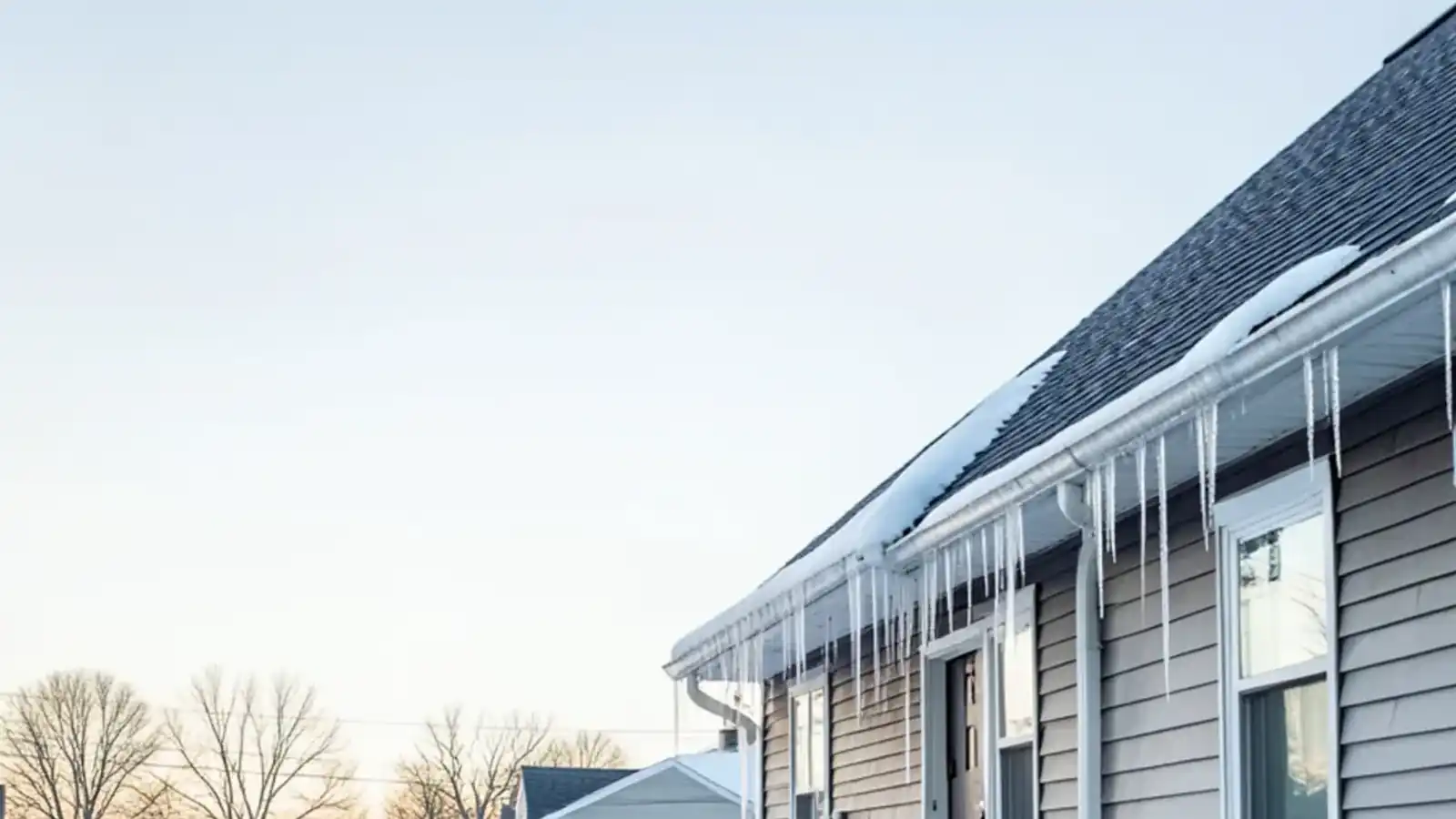
Emergency Gutter Repair
Ice Dam on Your Roof? First Steps for NH Homeowners
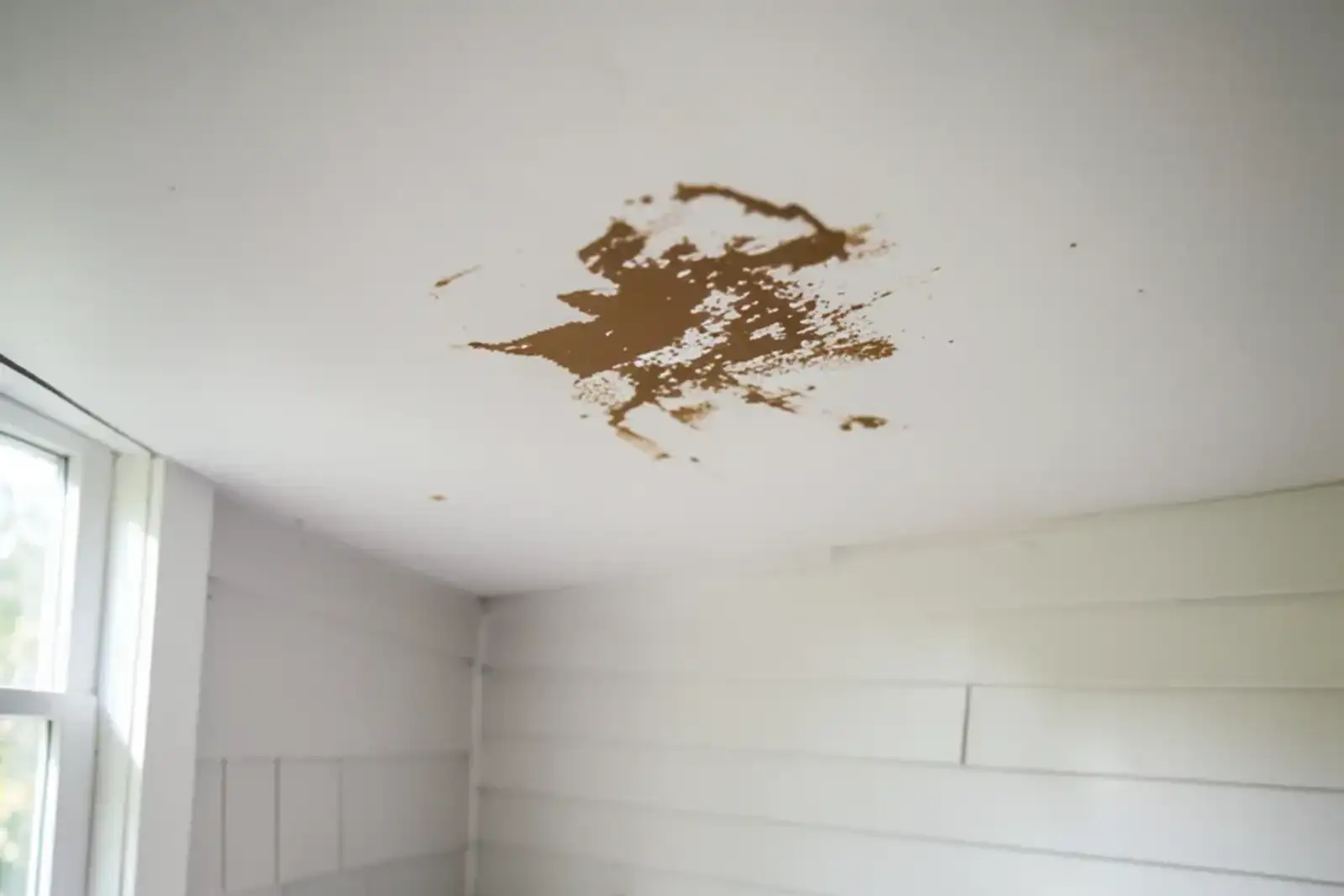
If you have an ice dam, or a ceiling stain under a snowy roof edge, the first steps are indoors and from the ground. Move belongings, catch drips, photograph the damage and keep off the roof and the ladder. Never swing a hammer, axe or shovel at the ice, because shingles and gutters break before the ice does.
- ★ 5.0 on Google · 29 reviews
- Serving since 2024
- Based in Hampstead, NH
Published and updated November 2, 2026 · By the Lanes Gutters crew, Hampstead, NH
On this page
The first steps for an ice dam happen inside the house and from the ground. Your goal is to limit the water, record the damage and stay off icy surfaces until the weather or a qualified roofer changes things. This guide sits within our emergency gutter repair pages, and our ice dam removal page explains what we can and cannot do about the ice itself.
Ice dam what to do first: three steps indoors
Water usually finds a way inside near an exterior wall, so start there.
- Move what can be damaged. Clear furniture, rugs and electronics out from under a stain or a drip.
- Catch and contain the water. Put a bucket under a drip and a towel around its base. Poke nothing into a bulging ceiling unless a professional tells you to.
- Photograph it. Take wide and close shots of the ceiling, the wall and the outside edge, and note the date.
If water is near a light fixture or outlet, keep away from it and switch off the circuit at the panel.
Why the first two days matter
Wet drywall and insulation should be dried quickly. EPA guidance on mold is to dry wet building materials within 24 to 48 hours, so run a fan or dehumidifier and open the room if the weather allows. A ceiling that bulges is holding a pocket of water. A professional may relieve it with a small hole made over a bucket, because letting it burst on its own brings the sheetrock down. Do not try it yourself with a ladder under a loaded ceiling.
Keep a simple log of the date, the room and the stain size. It helps the insurer, and it helps a roofer see whether the leak follows the thaw days.
What never to do on an iced roof
Do not chip, hack or pry at the ice, and do not go up on the roof. The rules, in short:
- No hammers, axes, picks or shovels. They crack shingles and bend gutters, and the ice is bonded hard to both.
- No ladders in ice or snow. Frozen ground and rungs mean a bad fall.
- No roof work in a thaw. Wet, loaded snow lets go without warning.
- No standing under the eave. Ice and icicles drop in sheets.
- No pulling a gutter free to see what is behind it.
Falling ice can seriously hurt someone. If the ice is above a door or walk, tape off the area and use another entrance.
Short-term ways to slow the water
None of these removes an ice dam. They buy time until the thaw or a roofer arrives, and each one has a cost.
| Option | What it does | Honest trade-off |
|---|---|---|
| Roof rake from the ground | Pulls snow off the lowest few feet of roof before it melts and refreezes | Works best before the dam exists. Can scrape granules off shingles, so a rake with wheels is gentler |
| Calcium chloride in a stocking | Melts a narrow channel so trapped water can drain | Can stain metal and harm plants below. Placing it means reaching the roof, so many people skip it |
| Heat cable laid in a zigzag | Keeps a channel open at the eave every winter | Adds an electric bill, only treats the edge, and has to be installed and wired correctly |
| Interior drip control | Limits damage while the ice sits | Fixes nothing outside, so it only covers the next day or two |
A roofer or ice removal company can judge whether steaming or hand work is the safer option. We do not list ice dam removal as something we have done, so we say so plainly when you call.
How an ice dam forms
Heat from the house leaks into the attic and warms the roof deck. Snow on the upper roof melts, runs down to the cold overhang and freezes there. Over days, the ridge grows until meltwater backs up under the shingles and finds its way into the wall or ceiling.
This happens with or without gutters. A gutter does not cause an ice dam, though a gutter full of ice can make one worse by holding water at the edge. Snow totals about 53.8 inches a year in Hampstead, 17.1 of it in January (BestPlaces), and sees about 62 days of snow cover (Dwellics). That is plenty of time for the cycle to repeat.
What the ice does to a gutter
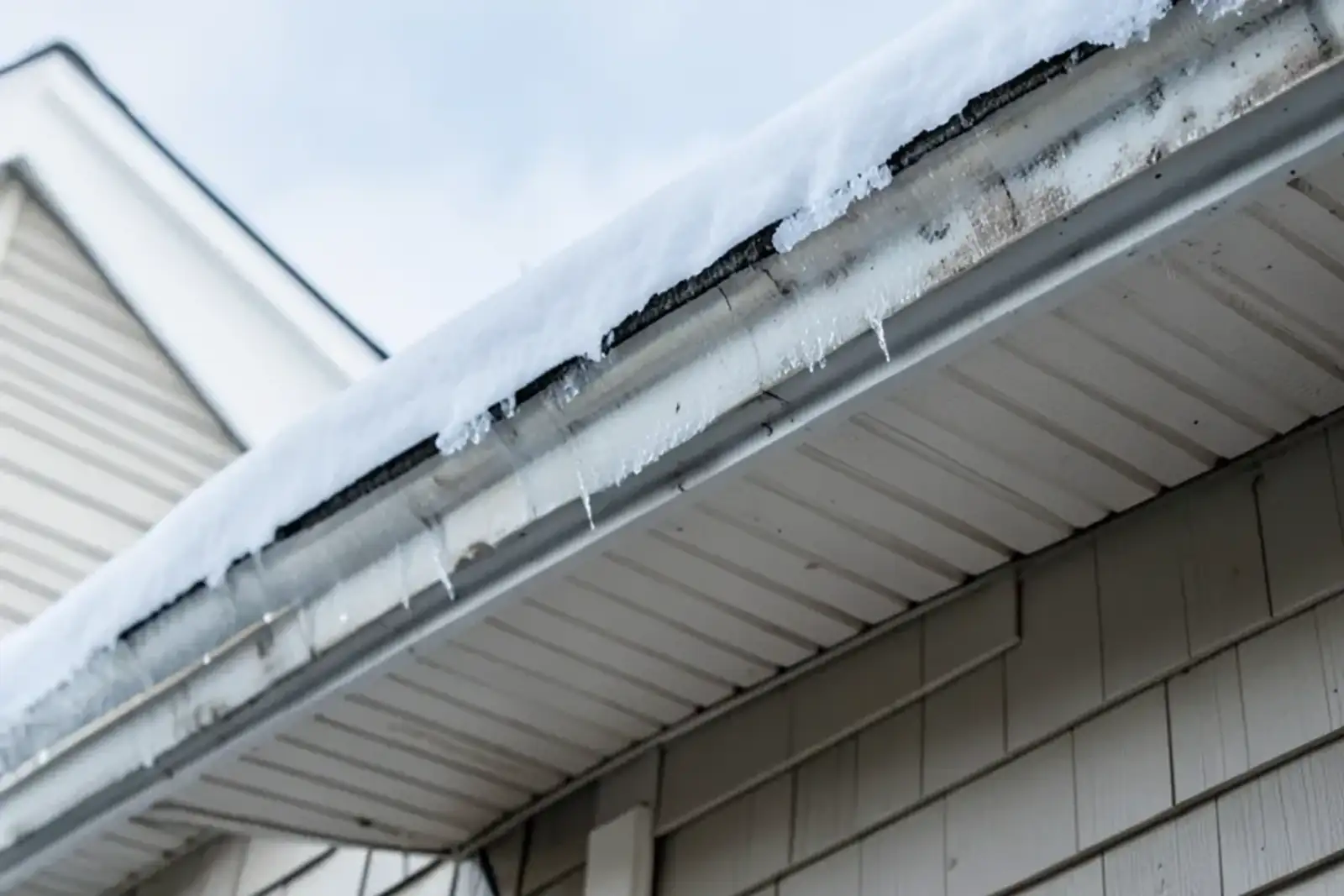
Each cubic foot of ice weighs between 57 and 60 pounds. A block 6 inches wide and 6 inches thick holds roughly 14 to 15 pounds in every foot of gutter, by our arithmetic from that weight. Across a 40-foot run, that is near 600 pounds on hangers made to carry water.
Look from the ground for these signs once the ice has softened:
- A sag or a bow in the front edge of the gutter
- Hangers pulled out of the fascia
- A gap between the gutter and the roof edge
- Gutter seams opened or dripping
Where the gutter ends and the attic begins
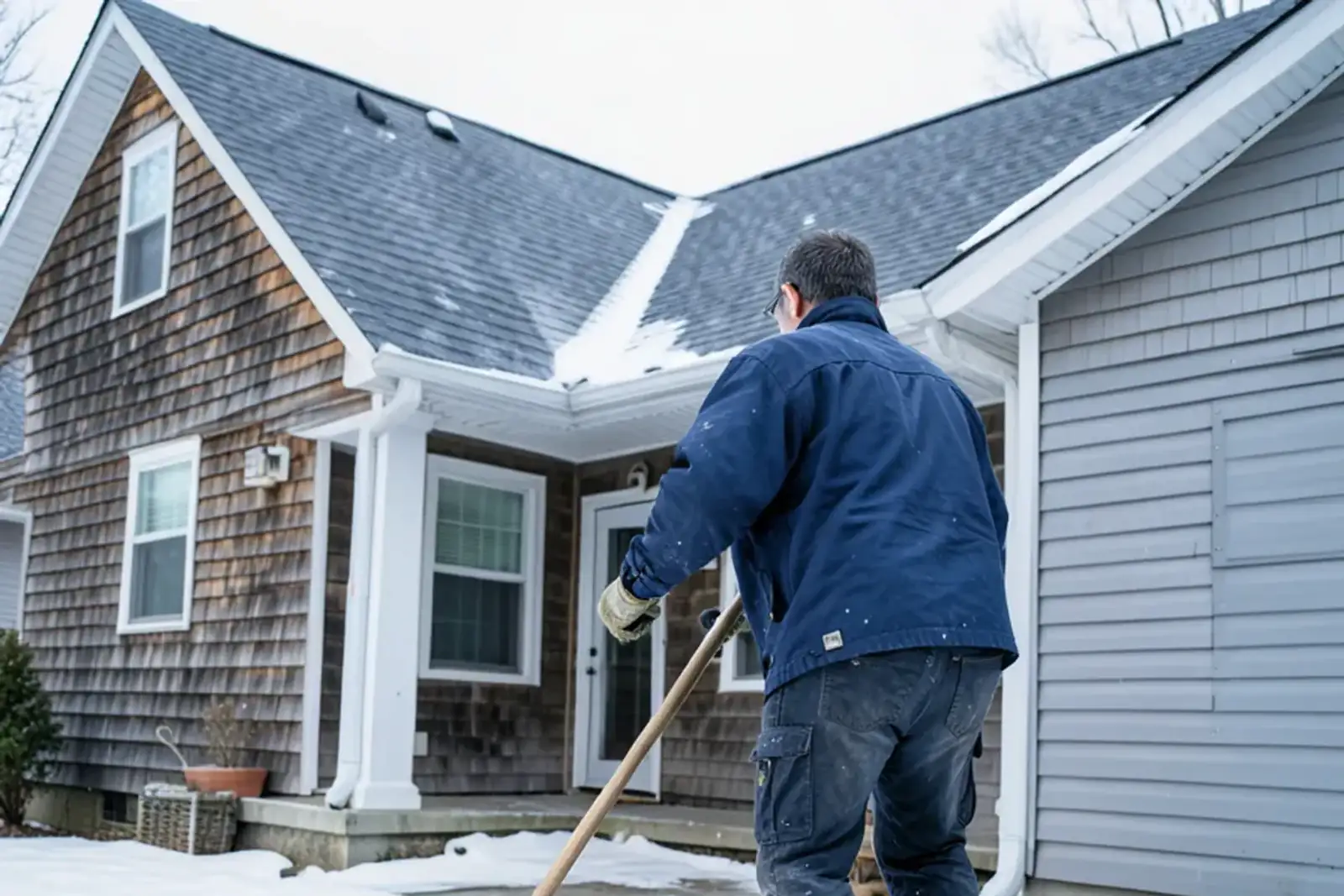
From our crew, the most useful thing to say is that ice dams are an attic problem first. Cutting ice out of a gutter treats a symptom. Air leaks from the living space, thin insulation and poor ventilation at the eaves are what keep the roof deck warm.
Rockingham County's median home dates to 1983, and houses from the 1970s and 1980s predate the insulation levels that are typical today. That does not mean every house has the problem. It means an attic check is worth doing, and a roofer or insulation specialist can do it.
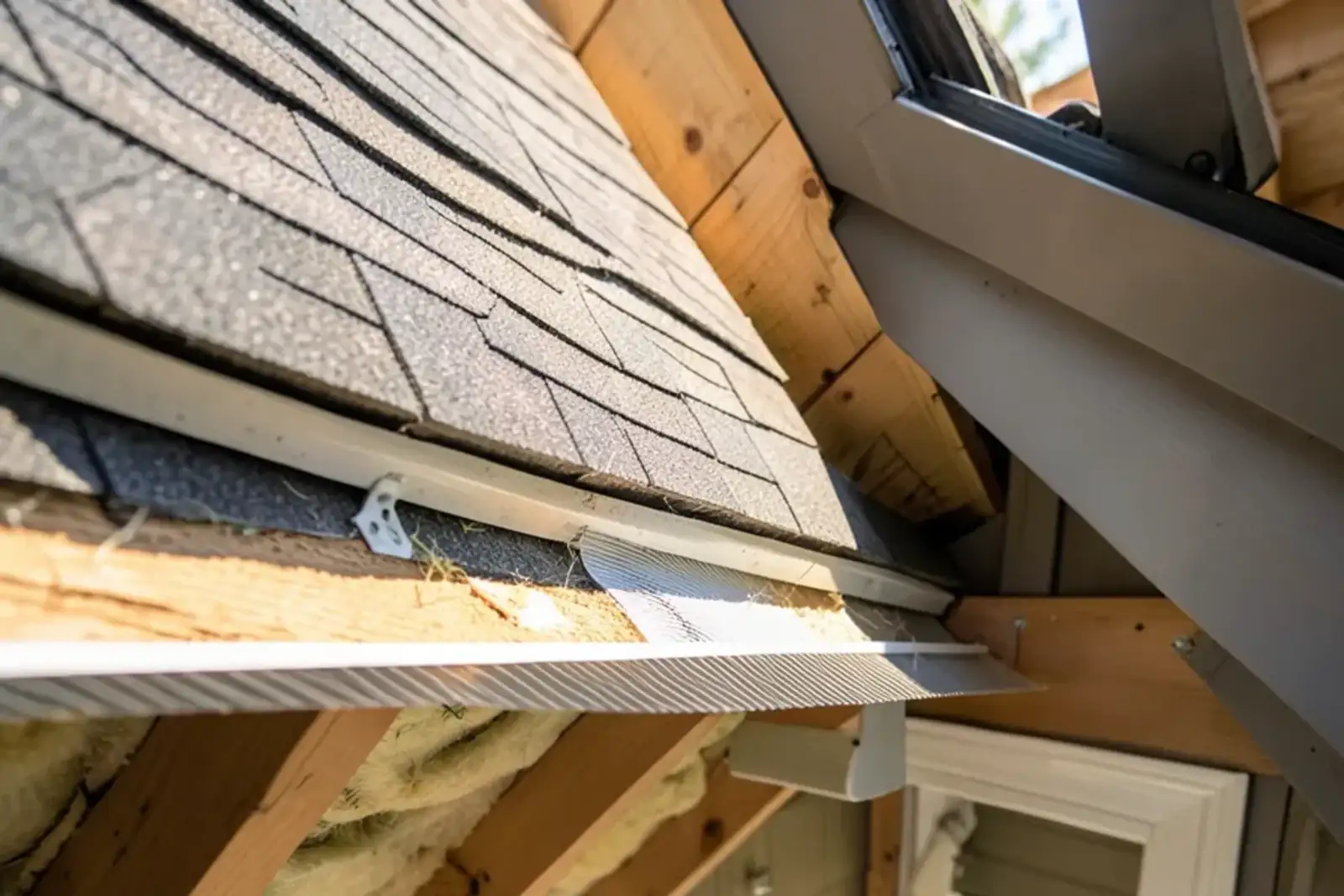
Reading the roof for where the heat escapes
After a snowfall, look at the roof from across the yard. Bare patches or thin snow over a heated room, a chimney chase or a bathroom point to heat leaking up. A clean, even blanket of snow is a better sign. Icicles that cluster over one wall while the rest of the eave is clear tell you where the warm air is coming through.
Inside the attic, the quick checks are easy. If you can see the tops of the ceiling joists above the insulation, the layer is thin. Insurer and building-science guides commonly cite at least R-30 for cold climates, with R-38 or more preferred. R-value is a rating of how well insulation resists heat flow, and higher is better. A bathroom fan that vents into the attic instead of outdoors dumps moist, warm air under the roof deck and should be on the list.
Ventilation helps, but air sealing comes first
The order matters. Sealing the gaps that let warm air rise from the living space costs less than any other step and often does more. Common leaks are around recessed lights, the attic hatch, plumbing and wiring holes in the top plates and the chimney chase. Insulation then goes over the sealed floor.
Ventilation comes after that. Baffles at the eaves keep insulation from blocking the path from soffit to ridge, so cold air can wash the underside of the deck. Adding a power fan is not the answer, since it can pull heated air from the house into the attic. The trade-off is cost: air sealing and added insulation can run into real money, and an attic specialist should size it. Set that against the cost of repairing the same ceiling every winter.
We look at the gutter side: whether the gutter is damaged, whether it drains once the ice melts and whether the roof edge sheds water cleanly. For removing ice from a roof, ask when you call. If someone else is better placed to do it, we will say so.
Fixes that work for the next winter
The real fixes cost less than repeated damage:
- Seal attic air leaks at light fixtures, hatches and wall tops.
- Add insulation to the attic floor.
- Keep a clear vent path from the soffit to the ridge.
- Rake the lowest few feet of roof from the ground after heavy snow.
Gutters and downspouts that are clean and pitched correctly let meltwater leave the roof once the thaw arrives, so a fall cleaning belongs on the list too. See our county page for Rockingham County gutter service if you are not sure we cover your town.
After the thaw: what we check and when to call
Once the ice softens and drops, the gutter is the next thing to look at. Ice also plugs downspouts from below, so the roof water that used to run out can back up and freeze again. From the ground, check for sag, pulled hangers, open seams and a downspout that stays dry in a thaw. Run a hose into the top of it if you can reach it safely, and note whether water comes out at the bottom.
If any of those show up, our fallen gutter repair page explains what happens next, and our storm-damaged gutters page covers the photo and claim steps. What your homeowners policy covers is up to the policy and the insurer, so call them early.
Call us at (208) 464-4195 once the ice is gone, tell us what the gutter is doing, and we will set the earliest visit we can.
Quick answers
Will an ice dam ruin my gutters?
It can. Ice packed in a gutter is heavy, and the weight can bend hangers or pull the whole run forward. Ice also pries seams open as it freezes and expands. If the gutter looks pulled away or sags after a thaw, leave it alone until the ice melts or a crew checks it. Give us a call and we will set the earliest visit we can.
Is a roof rake a safe way to deal with an ice dam?
A roof rake used from the ground can clear snow off the lowest few feet of roof before it melts and refreezes. Stay out from under the sliding snow and keep well clear of power lines. Do not use it to pry at ice. Prying lifts shingles and lets more water in.
Who should I call first when an ice dam leaks into the house?
Start with indoor protection, then call your insurer if there is damage, since many policies want prompt notice and photos. For the roof edge, a roofer can judge the ice and the attic. We can look at the gutters once it is safe. Keep the date and photos of each stain as it appears.
Should I put rock salt on an ice dam in Hampstead?
No. Rock salt eats at metal gutters and flashing, burns shrubs where the runoff lands and does little to the ice above the eave. A thaw is the only thing that clears a dam for free. If you want a melt channel, ask a roofer about calcium chloride, and do not climb to place it. Stay on the ground.
Will the ceiling stain from an ice dam come back every winter?
It can, if nothing changes in the attic. The stain returns whenever heat, snow and a cold eave line up again, and Hampstead sees about 62 days of snow cover. A repainted ceiling over wet insulation just hides it. Fix the leak path, dry the ceiling, then repair the finish once it stays dry through a thaw.
Sources
- Dwellics, Hampstead NH climate data
- BestPlaces, Hampstead NH climate data
- Insurer, building-science and extension-service guides on ice dam first steps, attic insulation and ventilation (web search, November 2026)
- American Community Survey 2020-24, Rockingham County median year built
Questions about your gutters?
25 Glenwood North Rd #16, Hampstead, NH 03841
(208) 464-4195
Mon–Sat 8am–6pm · Sunday closed