
Seamless Gutters
K-Style vs. Half-Round Gutters for New England Homes
K-style gutters hold more water and cost less, so they suit most New England houses. Half-round gutters suit older homes with exposed rafters, formal trim or a historic-district review. Pick on the house first, check the roof area second and the look third.
- ★ 5.0 on Google · 29 reviews
- Serving since 2024
- Based in Hampstead, NH
Published and updated November 2, 2026 · By the Lanes Gutters crew, Hampstead, NH
On this page
- K-style vs half-round gutters at a glance
- How each profile handles a New Hampshire year
- Which houses suit which profile?
- A crew's rule for choosing a profile
- Color, trim and how it reads from the street
- Cleaning and upkeep: which profile is easier?
- What does each profile cost?
- Questions to settle before you choose
- Getting a profile decision made for your house
- Common questions
The short answer is to choose K-style unless the house has a reason to wear a round gutter. K-style is the flat-backed profile on most homes here. Half-round is the open, pipe-shaped profile you see on period houses.
K-style vs half-round gutters at a glance
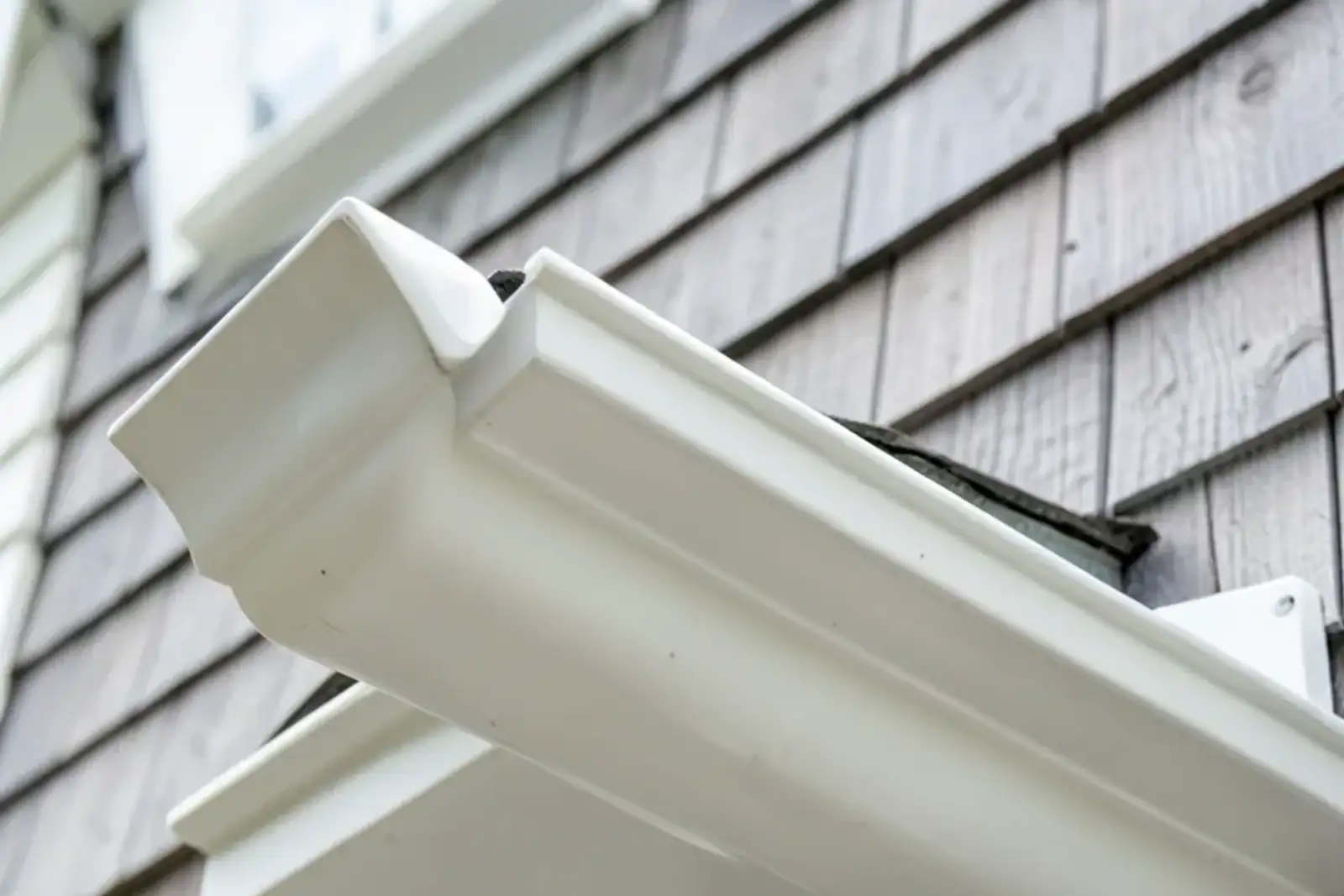
Most of the differences come down to shape. The flat back of a K-style bolts to a flat fascia. A half-round has a rounded bottom and hangs out on brackets.
| K-style | Half-round | |
|---|---|---|
| Shape | Flat back, flat bottom, decorative front like crown molding | Half of a pipe with a rounded bottom |
| Capacity at the same width | A 5-inch run is rated for about 5,520 sq ft of roof, a 6-inch for about 7,960 | Less water than a K-style of the same nominal width |
| Mounting | Hangers on a flat fascia | Brackets or straps, which can also hang from rafters |
| Downspouts | Rectangular, usually 2x3 or 3x4 inches | Round |
| Materials | Aluminum and steel are common | Aluminum, steel and copper |
| Cost | Lower | Higher, because of the material and the bracket hardware |
The capacity figures come from a sizing chart at 1 inch of rain per hour. A steep roof or heavier rain lowers them.
How each profile handles a New Hampshire year
New Hampshire gives gutters about 45.9 inches of precipitation and about 53.8 inches of snow a year in Hampstead (BestPlaces). Spring melt and a fall nor'easter are the heaviest water events, and capacity matters most then.
The folded front of a K-style adds stiffness, which helps under a heavy snow load. The rounded bottom of a half-round lets leaves and grit move toward the outlet instead of settling in a flat corner. Neither shape fixes an ice dam. That comes from attic heat melting snow that refreezes at the eave, and insulation and ventilation are the cure.
Half-round carries a hanging-hardware question too. Brackets sit at intervals, so a long run needs enough of them to stay straight with a load of wet snow in it.
Which houses suit which profile?
Match the gutter to the trim and the roof, not to a catalog photo.
- Colonials, capes, ranches and split-levels with a flat fascia. K-style fits, hangs cleanly and handles the most water.
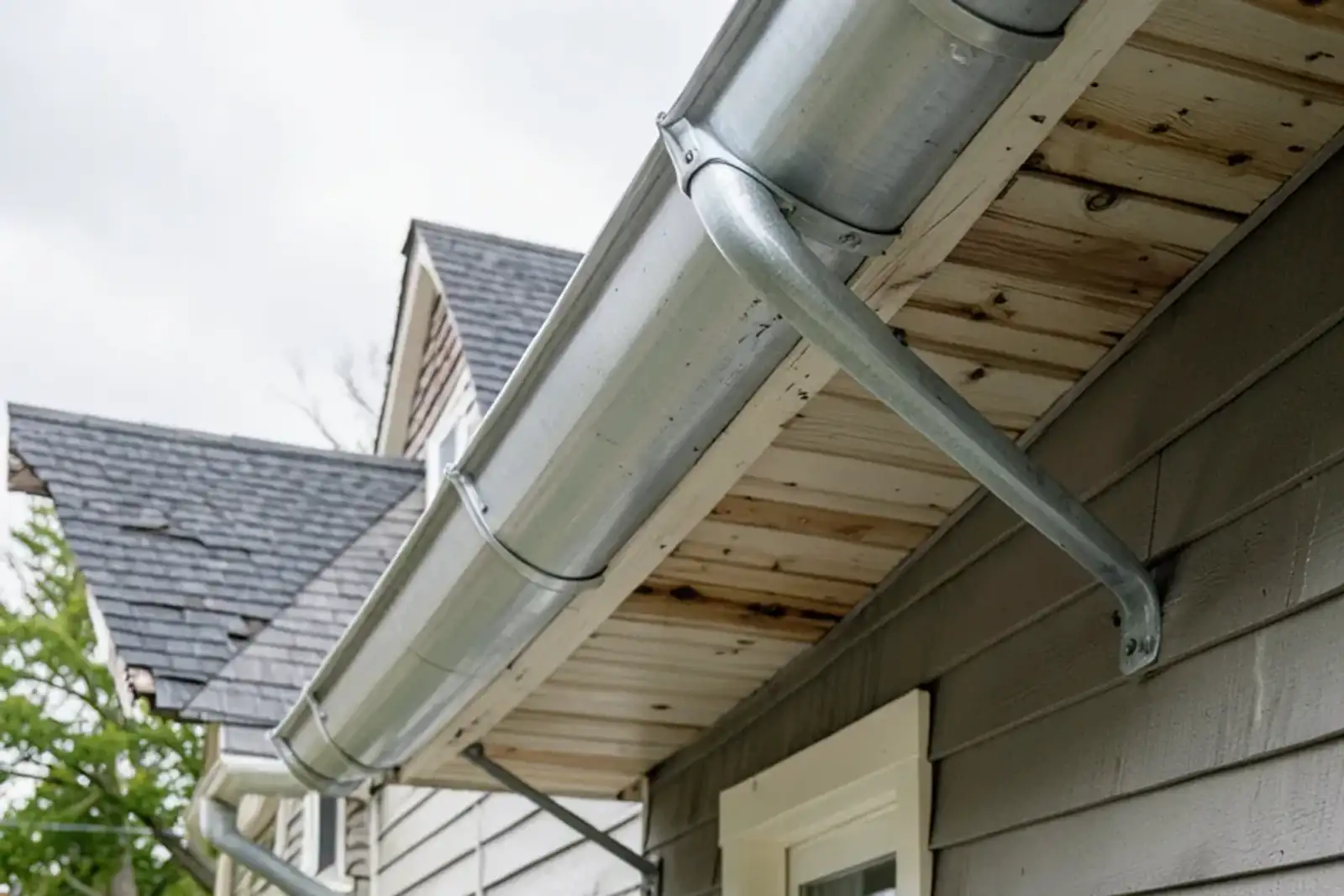
- Period homes with exposed rafter tails or no fascia board. Half-round can mount to the rafters, where a K-style has nothing flat to bolt to.
- Historic districts. Ask the town before changing the visible profile. Amherst Village is a historic district, and the median home in town was built in 1978 (ACS 2020-24), so both situations come up in the same town.
- Large roofs and valleys. Capacity decides this one, and K-style in a 6-inch size usually wins.
We cover Amherst, about 35 minutes from Hampstead by our estimate (25 miles).
A worked example: two roofs, two answers
Take a simple gable cape with about 1,200 square feet of roof draining to each long side. A 5-inch K-style is rated for about 5,520 square feet at 1 inch of rain per hour, so the gutter has wide margin. On a roof like that, a half-round that carries less water may still do the job, and the choice can follow the look of the house.
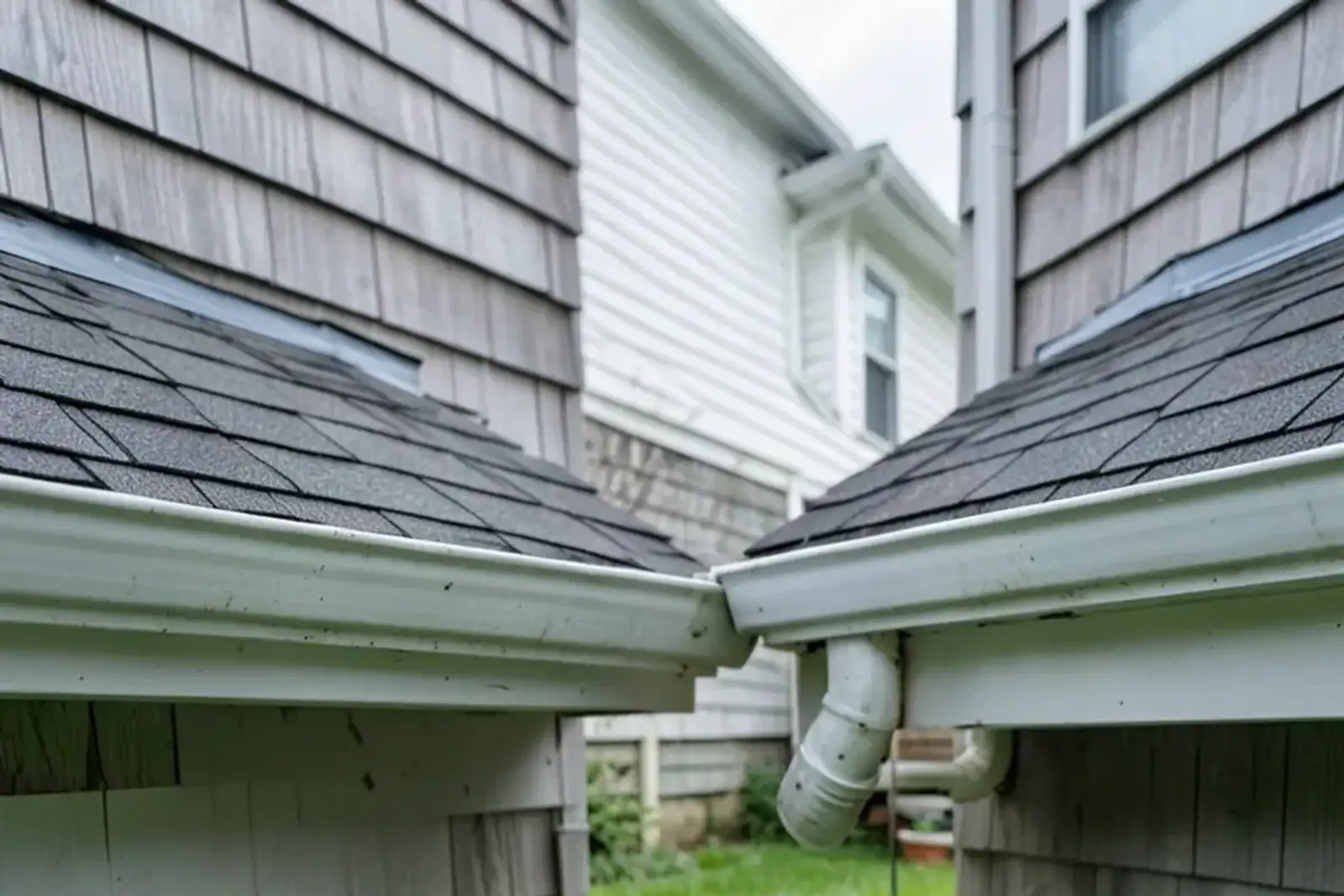
Now take a two-story colonial with 150 feet of eave, a long steep plane on the back and a valley that funnels water to one corner. Charts rate the whole run, but a valley dumps its share at a single point, and a steep pitch speeds water past the lower roof edge. Here capacity decides, and a 6-inch K-style, rated for about 7,960 square feet, is the safer pick. If the owner still wants half-round, the profile has to be sized up, and the roof area decides whether that is enough.
Length sets the downspout count either way. SMACNA treats 50 feet as the practical maximum run per downspout, so 150 feet needs at least three, and the valley corner may call for a fourth. Swapping that house from K-style to half-round means three or four new round downspouts, new outlets and new corners, plus brackets along the full 150 feet. That is a bigger quote than K-style for K-style, and each added line is on paper.
A crew's rule for choosing a profile
Look at the fascia before you look at brochures. A straight, sound fascia board takes K-style without fuss. A rotted or missing one has to be fixed whatever profile goes on.
Changing profile also changes the downspouts. A round downspout does not connect to a rectangular outlet, so a swap means new outlets, new corners and new downspouts together. Budget for the whole system.
The most common sizing mistake is choosing on looks and then discovering the roof sends more water than the gutter can carry. If the roof is large, steep or has valleys, size the gutter first and the style second.
Hardware is where the profile shows its real cost. Hanger or bracket spacing sets how well a run holds a wet snow load, and in snow country closer is better than the minimum. Hidden hangers on a K-style sit inside the trough and are usually set about two feet apart or tighter. Half-round brackets are visible from the street, so spacing is also a look decision, and a long run with too few of them bellies between supports.
Pitch matters more than profile. A run needs a slight fall toward each downspout, commonly about a quarter inch per 10 feet. A half-round has less depth to spare, so a run that is a little off pitch holds standing water sooner. Ask how the crew will check pitch before hanging, whichever shape you choose.
Color, trim and how it reads from the street
Profile is the visible part, but color does as much for the look. Gutters come in white, black and other colors, and a dark gutter on a light clapboard house reads as a deliberate trim line. K-style takes color well because the flat front gives paint and finish an even surface.
Half-round reads as a thin, quiet line under the eave, which suits a house with little trim. It can look wrong on a boxy, modern roofline. Stand across the street and picture each one before you decide.
Cleaning and upkeep: which profile is easier?
Half-round is easier to clear, and K-style holds more before it overflows. Those two facts pull in opposite directions, so weigh them against the trees around the house.
The smooth, rounded bottom of a half-round gives a gloved hand nothing to catch on. A K-style has a flat bottom and inside corners where wet oak leaves and pine needles settle and pack. That packed layer is the first thing a cleaning crew scoops out, and it is why the same K-style that carries more water also asks for a firmer scrape.
The catch is the outlet. A half-round of the same width moves less water, and its round outlet is small, so a fist of needles can stop the flow in either profile. If the lot is heavy with white pine, think about how the run will be kept clear before you pick a shape. Guards are cut to a profile, so ask about fit for whichever one you choose.
What does each profile cost?
K-style costs less, and half-round costs more. Third-party estimates for Hampstead installs run $421 to $3,599 (Today's Homeowner), and profile and material are two reasons the range is that wide. Those are not our prices. Our own pricing comes in writing once we have seen the house.
Ask any installer to itemize the linear feet, the profile, the size, the number of downspouts and the hanger spacing. Two quotes for different profiles are hard to compare without that.
Questions to settle before you choose
- Is the fascia flat, straight and sound?
- Does the town review exterior changes on this street?
- Is the roof large, steep or full of valleys?
- Are the current downspouts round or rectangular?
- Is the budget for the gutter alone, or for the full set of outlets and downspouts?
Getting a profile decision made for your house
Start with the fascia, the roof area and the trees, and let the look follow. For most houses here that points to K-style in a 5-inch or 6-inch size, and for an older home with exposed rafters it may point to half-round.
Our seamless gutters page covers the product we install, and the K-style gutters page covers the profile most homes need. Half-round is not on our list of confirmed services, so our half-round gutters page explains how we would assess one before quoting. Call (208) 464-4195 and tell us about the house, and we will talk through which profile fits.
Quick answers
Is half-round better than K-style for an older home?
Only when the house calls for it. A period home with exposed rafter tails, no flat fascia or a historic-district review often looks right with half-round. A house with a flat fascia board, which covers most New England colonials, capes and ranches, usually does better with K-style because it carries more water for the same width.
Do K-style gutters hold more water than half-round in a New Hampshire storm?
For the same nominal width, yes. K-style has a boxier cross-section, and a 5-inch run is rated for about 5,520 square feet of roof at 1 inch of rain per hour. A steep roof or a heavy downpour lowers that, so ask any installer what roof area the quote was sized for.
How long do K-style and half-round gutters last?
Life depends more on the metal, the hanger spacing and how well water drains than on the profile. A common residential aluminum thickness is listed at 20 to 30 years, and a heavier gauge is used in snow-load settings. Ask the installer what thickness the quote assumes and how far apart the hangers will sit.
Can I switch from K-style to half-round gutters on my Hampstead house without changing the fascia?
Sometimes, but plan on changing more than the trough. A half-round hangs on brackets or straps and needs solid wood behind them, so a soft or stained fascia has to be fixed first. The downspouts also change from rectangular to round, along with every outlet and corner. Call and tell us what the house has now.
Is half-round easier to keep clear of pine needles and oak leaves in a New Hampshire fall?
Somewhat. The smooth, rounded bottom gives wet leaves and needles less to catch on than the inside corners of a K-style, so a hand scoop or a downspout flush moves them faster. But a half-round of the same width carries less water, and a packed round outlet clogs just as hard. Homes under white pines need regular cleaning either way.
Sources
- Today's Homeowner, Hampstead NH gutter installation cost estimates
- Residential gutter sizing chart, K-style roof area ratings
Questions about your gutters?
25 Glenwood North Rd #16, Hampstead, NH 03841
(208) 464-4195
Mon–Sat 8am–6pm · Sunday closed