

Gutter Guards
Micro-Mesh vs. Screen Gutter Guards
Micro-mesh stops more debris than a basic screen, including pine needles, shingle grit and seed pods, and it costs more. A screen keeps out whole leaves and is the cheaper start. The right pick depends on what the trees over your roof drop and how steep the roof is.
- ★ 5.0 on Google · 29 reviews
- Serving since 2024
- Based in Hampstead, NH
Published and updated November 2, 2026 · By the Lanes Gutters crew, Hampstead, NH
On this page
Fine mesh beats a screen on small debris, and a screen beats fine mesh on price and on shedding a hard rain. That is the trade. The rest of this page works through which side matters on your roof.
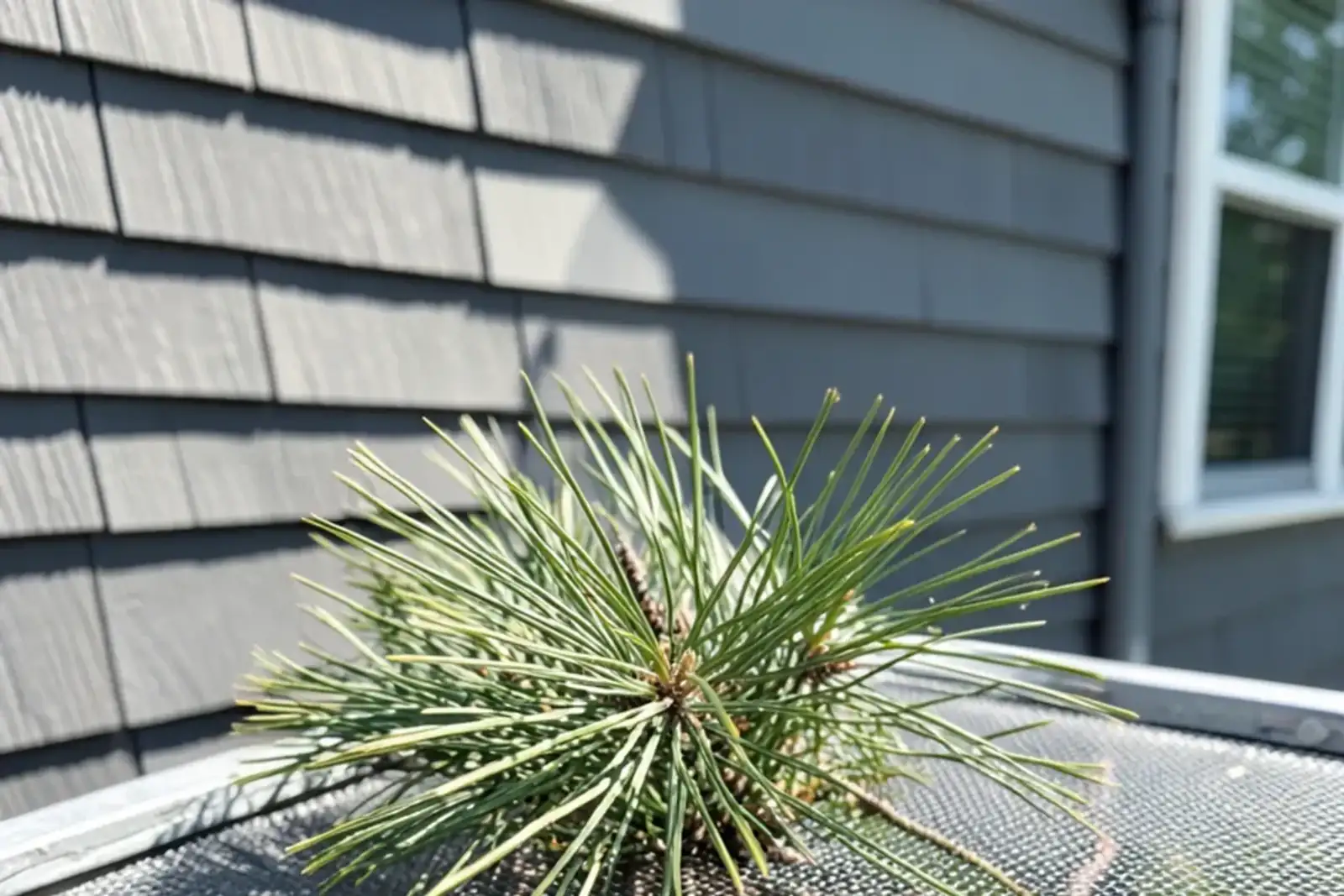
Which one keeps out pine needles?
Fine mesh does. A needle is thin enough to pass through or lie sideways in the openings of a basic screen, then it sits in the gutter and slowly packs the downspout. Mesh with very small openings holds needles on the surface, where wind and rain carry some of them off.
Screens do better with whole leaves. Maple, oak and birch leaves land on a screen and mostly blow off or dry and curl away.
Independent testing points the same way. This Old House's published test of guards for pine needles ranked micro-mesh among the best performers, while the screen and coarse mesh products it tried let through a wide share of needles. The test used a particular set of products, so read it as a direction and not a promise for any roof.
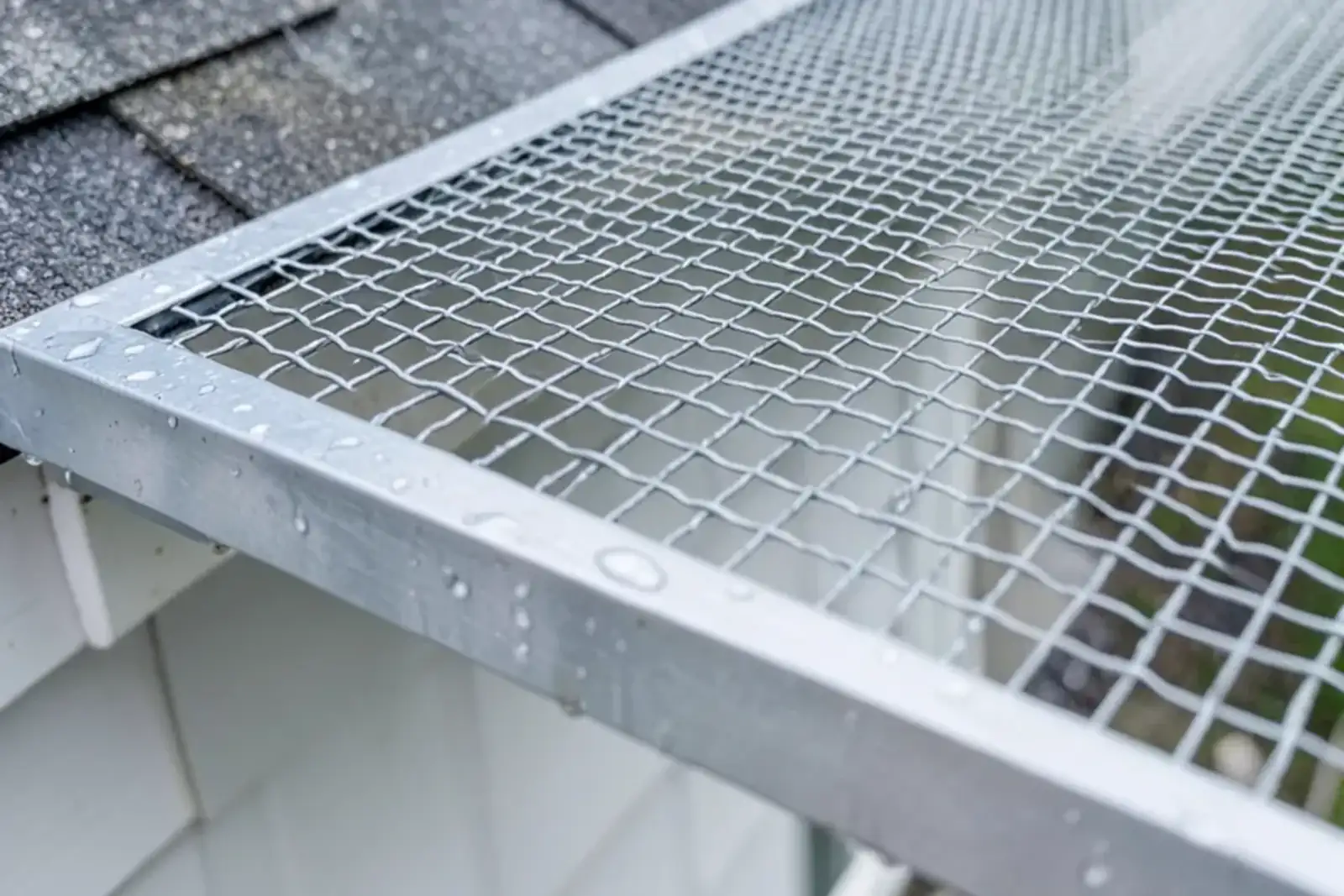
Which handles a downpour better?
A basic screen drains fast because its openings are large. Fine mesh relies on water sticking to the surface and flowing in, and in a very hard rain on a steep roof some water can shoot over the front instead.
That matters most under a long, steep roof with no break in the slope. Under a low roof or a roof with a shallow pitch, the difference is small. Ask any installer how the product copes at your roof's pitch and run length.
Debris by debris
- Whole leaves. Both work. A screen is usually enough.
- Pine needles. Fine mesh clearly ahead.
- Seed pods and maple "helicopters". Fine mesh keeps more out, but both can collect them on top.
- Shingle grit. Fine mesh stops most of it. A screen lets it through, and it settles at the bottom of the gutter as sludge.
- Pollen and tree dust. Fine mesh can film over. A screen lets it pass.
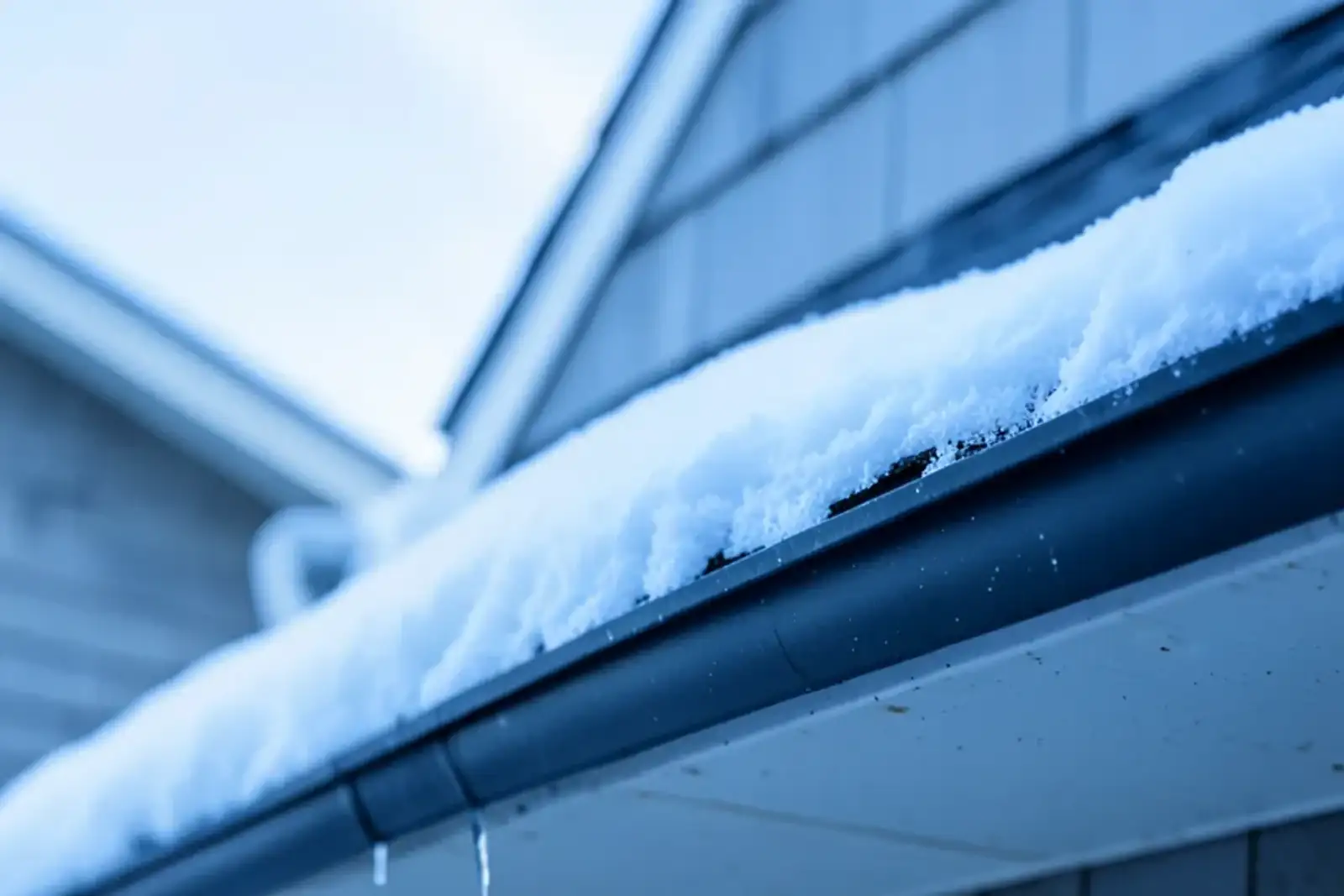
What snow and ice do to each
Neither product keeps ice dams from forming, and neither one works as a heater. Snow slides, packs and freezes on top of a guard just as it does on a roof edge. In Hampstead, with about 62 snow-cover days a year (Dwellics), a guard has to carry that load.
Stiff frames and good fastening matter more than the mesh. A thin screen can bow under a slab of snow, and a fine mesh that sits loose can lift. Ask how the guard is fastened and whether it needs the roof edge, the gutter lip or both.
What a crew checks before choosing a guard
Start from the gutter, not the guard. A guard over a sagging or leaking gutter hides the problem until the fascia shows it, so a gutter that holds its pitch comes first.
The second check is the downspout. Guards keep debris out of the gutter, so the downspout sees less, but a downspout that is already too small will still choke in a hard rain.
The third is the trees. Stand under the branches and look at what is on the roof. That tells you more than any brochure.
What each one needs from you
Neither product is set-and-forget. A screen needs the odd sweep with a hand or a soft brush to knock off leaves and sticks. A fine mesh needs a gentle brushing a couple of times a year, and more often under pines or after the maple seeds fall, because the fine surface can film over.
Skip a pressure washer. It can bend a thin mesh and push grit through. A hose and a soft brush are enough, and a check at the downspout outlet in spring will show whether anything is getting through.
Where guards fail
Guards fail in a few predictable places, and none of them is the mesh itself. A guard without support sags between hangers and collects debris in the dip, which gives you a smaller version of the original problem. A gap at the shingle edge lets small debris slide behind the guard and into the gutter. A gutter that is out of pitch holds water under the guard where nobody can see it.
Pine needles also mat. Over a season a thin layer builds on the surface of fine mesh, dries into a skin and sheds water over the front edge. A brushing before the first hard fall rain keeps that layer from forming, and it takes a few minutes per run from the ground or a safe ladder.
Think about where the debris actually comes from, too. A house with white pines on one side and nothing on the other may only need fine mesh on the pine side. That is a reasonable way to spend less, as long as the runs fed by the other side are still checked.
What do they cost?
Prices are third-party estimates, not ours. One source puts guards at $192 to $355 for 54 feet of gutter (Homeyou, 2026). A Hampstead-area provider lists $229 to $329 for up to 150 feet. Fine mesh usually sits at the higher end of any range. A written price from us follows a look at the roof and gutters.
Cleaning runs about $1.10 per linear foot, so roughly $220 for 200 feet. That is the cost a guard tries to cut. Our companion piece on whether gutter guards are worth it in NH walks through that arithmetic.
A worked example: 150 feet of gutter
Take a ranch with 150 feet of gutter under two big white pines. At the roughly $1.10 per linear foot cited above, one cleaning runs about $165, and two a year is about $330. A Hampstead-area provider lists $229 to $329 for guards on up to 150 feet. On those third-party numbers, guards cover their cost in a year or two, if they actually remove a cleaning visit.
Here is the honest part. Under pines a screen may not remove a visit, because needles lodge in it, so the saving never arrives. Fine mesh is more likely to cut one visit a year but still wants a brushing, and it may cost above the range quoted. Do the math for the trees you have, not for a brochure. If a written quote lists the guard type, the footage and how it attaches, you can run the same sum against it.
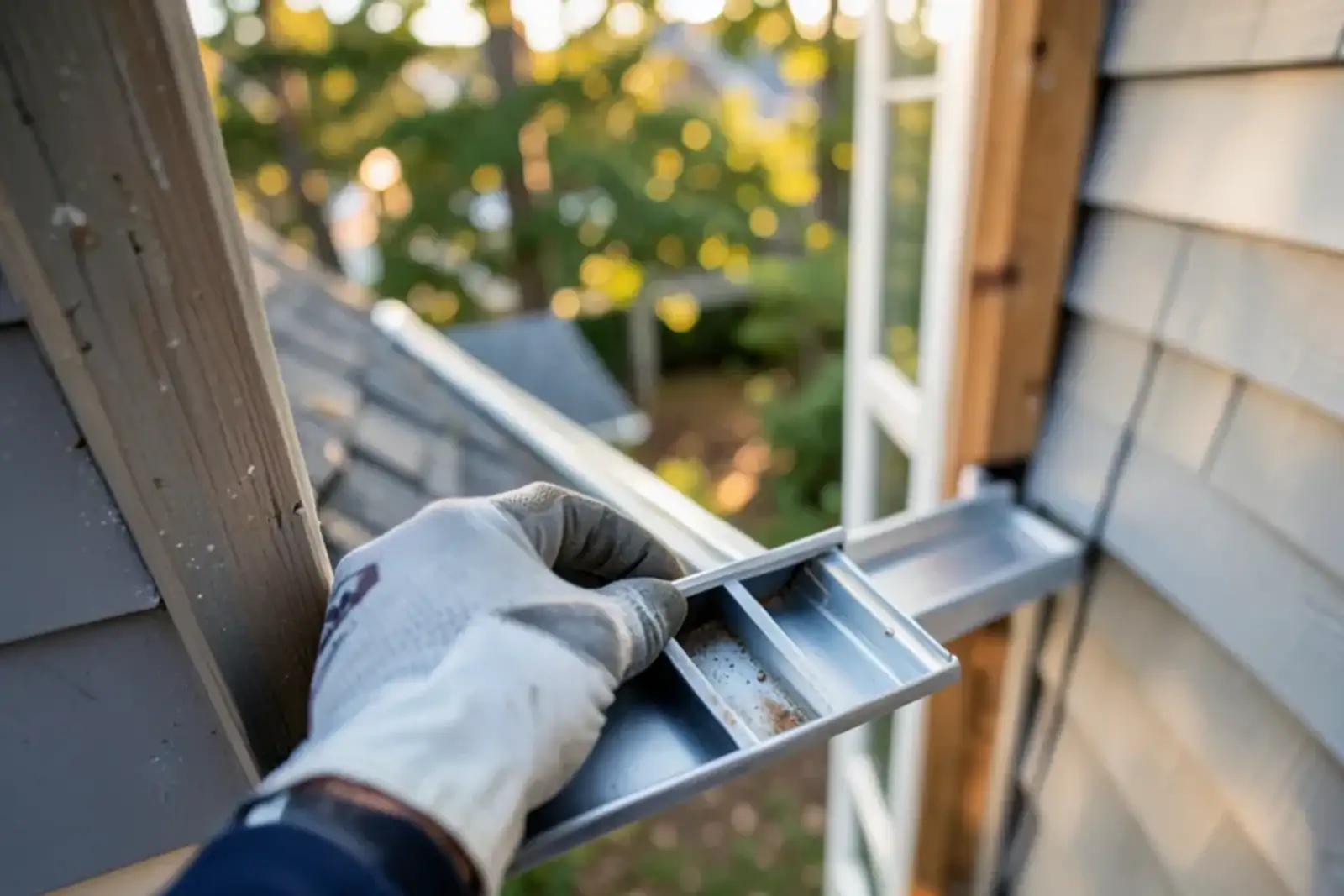
How the guard attaches matters
Some guards slide under the first course of shingles, some clip to the gutter lip, and some screw into the fascia. Each has trade-offs. A guard that lifts shingle tabs can raise questions about the shingle maker's terms, so ask before you buy and check the roofing paperwork.
A guard that clips to the lip is simpler on the roof. It must grip well enough to survive a heavy snow slide. Ask any installer how the product attaches and what happens in a January thaw.
A quick way to decide
- Mostly whole leaves from broadleaf trees: a screen is usually enough.
- Pine, hemlock, seed pods or an asphalt-shingle roof shedding grit: lean toward fine mesh.
- A steep roof with a long, uninterrupted slope: ask how the product handles runoff before paying more.
- A gutter that is old or out of pitch: fix it first.
Making the call for your roof
Look at the trees, the roof pitch and the shape of the gutter before you spend more. Whole leaves from broadleaf trees point to a screen. Pines and grit point to fine mesh, with a brushing built into the year.
We cover Pelham, about 20 minutes from Hampstead by our estimate (16 miles). Our gutter guards overview lists what we do, screens and guards included. Fine mesh is not on our confirmed list, so see the micro-mesh gutter guards page for how we would assess it. Call (208) 464-4195 with a few details about the trees and roof, and we will talk through which guard fits.
Quick answers
Does micro-mesh stop pine needles better than a screen?
Yes, that is where fine mesh earns its price. Needles are thin enough to slip through or lie crosswise in the openings of a coarse screen, while the small openings of a fine mesh keep most of them on top, where wind or rain can move them. Neither one is maintenance-free in a heavily wooded yard.
Which gutter guard style suits a wooded Pelham lot?
Pelham has many commuter colonials on wooded lots, with a median build year of 1987, so the tree type decides it. Oak, maple and birch leaves are fine with a basic screen. Heavy pine, seed pods or shingle grit point toward fine mesh. Call us with a few details about the trees and roof.
How often does a fine mesh gutter guard need cleaning?
Plan on a gentle brushing a couple of times a year, more often under pines, and a look at the downspout outlet each spring. A fine mesh keeps out more debris than a screen but its surface can film over with pollen and grit. A hose and a soft brush are enough.
Do I still need to clean gutters after installing micro-mesh or screen guards in Southern NH?
Yes, though less often. Guards keep most debris out, but pine needles, pollen film and shingle grit still build up on top and at the downspout outlet. Check the outlet each spring and brush the surface in fall. A gutter that never gets looked at can fail quietly under its guard, so inspect it once a year.
Can fine mesh gutter guards sag or lift under a New Hampshire snow load?
Yes, if the mesh lacks support or loose fastening. Without a stiff frame or backing, fine mesh can sag in the middle and collect debris, and a heavy slide can lift a poorly clipped edge. Hampstead sees about 62 snow-cover days a year, so ask how any guard is fastened and what carries the load.
Sources
- Homeyou, gutter guard cost estimates, 2026
- This Old House, gutter cleaning costs, 2026
Questions about your gutters?
25 Glenwood North Rd #16, Hampstead, NH 03841
(208) 464-4195
Mon–Sat 8am–6pm · Sunday closed