
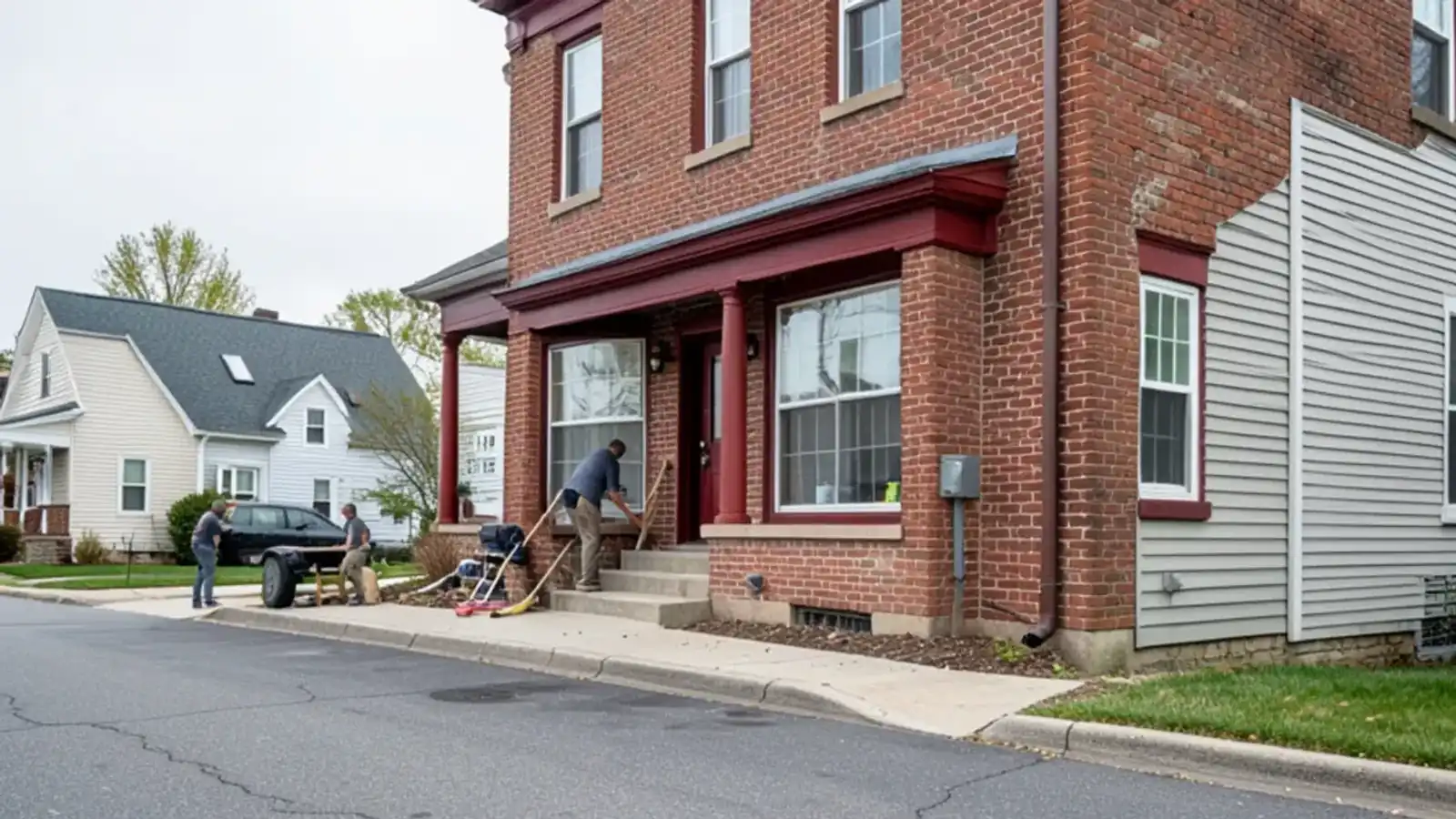
Commercial Gutters
Box Gutters vs. External Gutters on Commercial Roofs
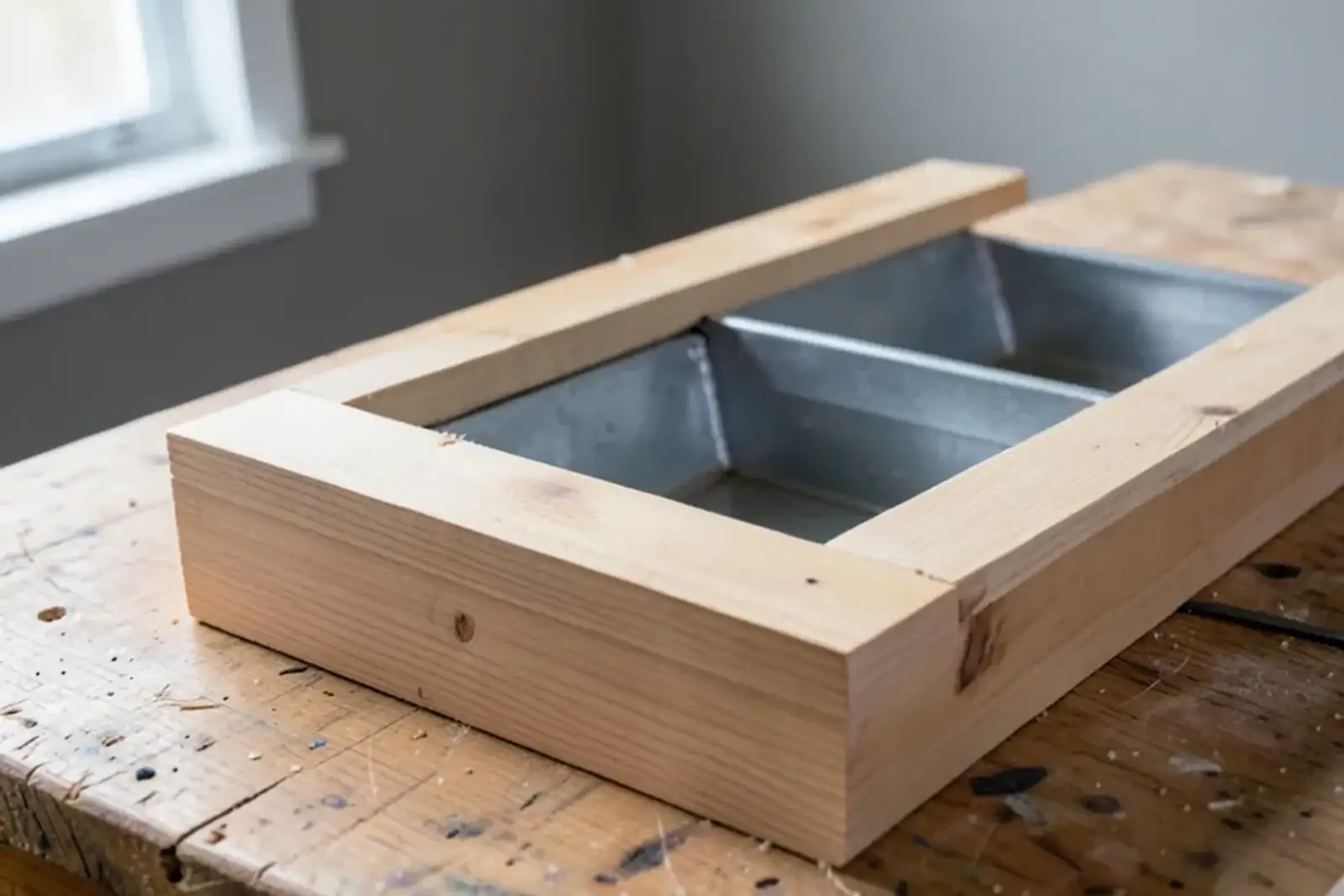
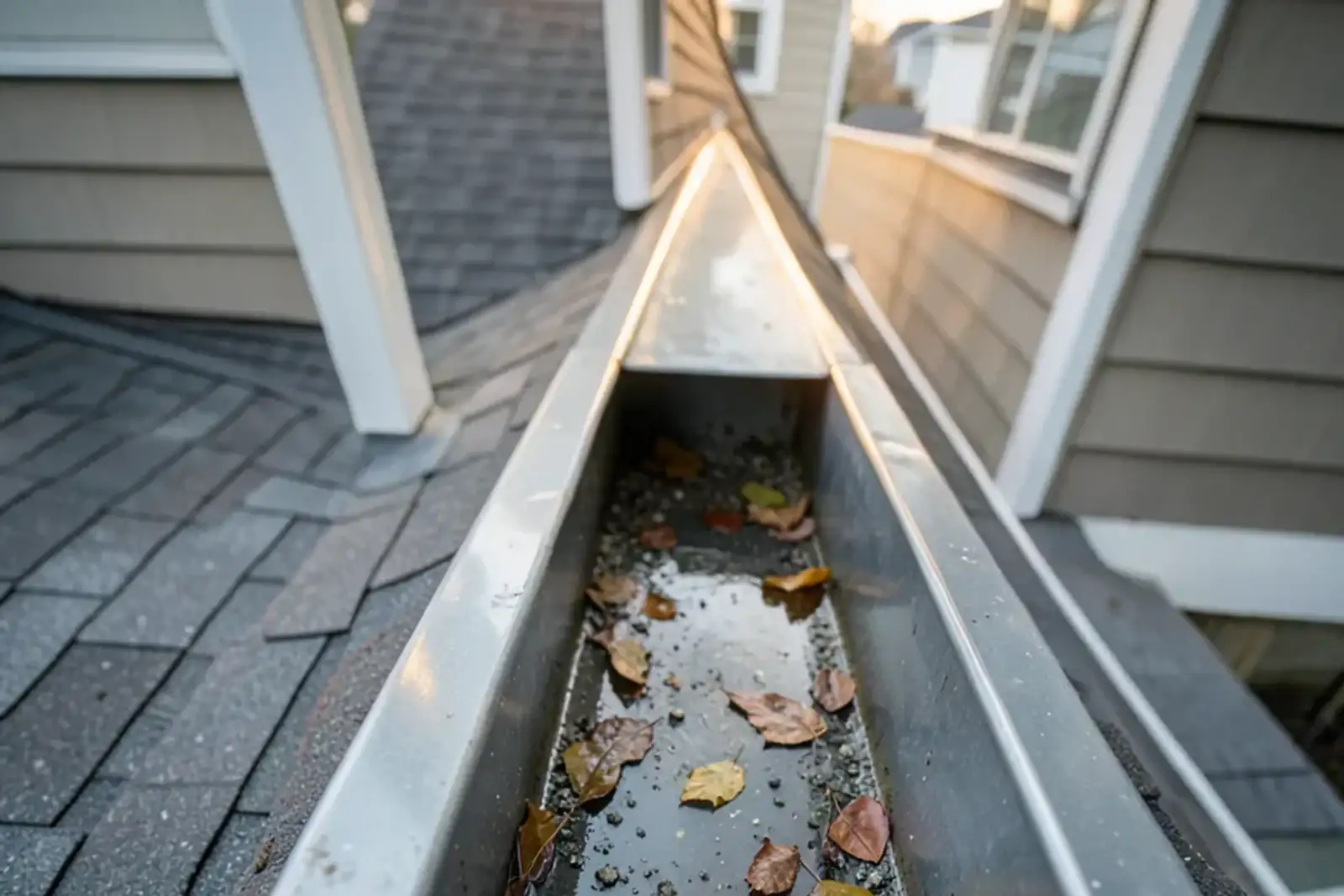
A box gutter is a lined trough built into the roof edge, usually hidden behind a cornice or parapet. An external gutter hangs from the fascia where you can see and reach it. The big difference is what a leak does, since an external gutter drips outside while a box gutter leaks into the building.
- ★ 5.0 on Google · 29 reviews
- Serving since 2024
- Based in Hampstead, NH
Published and updated November 2, 2026 · By the Lanes Gutters crew, Hampstead, NH
On this page
- Box gutter versus external gutter at a glance
- How each type fails
- From the crew: what we would check on a built-in gutter
- What a Yankee gutter is and why New England has so many
- A worked example: three options for a failing built-in gutter
- Which one suits which building?
- Questions to ask any contractor who quotes a box gutter
- Portsmouth and the question of change
- Before you hire anyone for a box gutter
- Common questions
An external gutter is the simpler system to maintain, and a box gutter is the one that does more damage when it fails. The choice usually comes down to the building, because the type was fixed when the roof edge was built and changing it means changing the cornice. Older and architecturally detailed buildings often have a box gutter from the start, and most other buildings have the hung kind.
Box gutter versus external gutter at a glance
| Box gutter | External gutter | |
|---|---|---|
| Where it sits | Built into the roof edge, behind trim | Hung on the fascia |
| Visible from the ground | Usually not | Yes |
| Typical liner or metal | A lining set into a wood or masonry channel | Aluminum, steel or copper |
| Where a leak shows up | In the wall, ceiling or soffit | Dripping outside or at the wall |
| Capacity | Often wider and deeper | Set by gutter size |
| Access for cleaning | From the roof edge | From a ladder or lift |
| Repair | Opening the trim or relining | Reseal, rehang or replace a section |
How each type fails
An external gutter fails in plain view. A seam leaks, a hanger pulls, a run sags. You see the drip, and the repair is usually local.
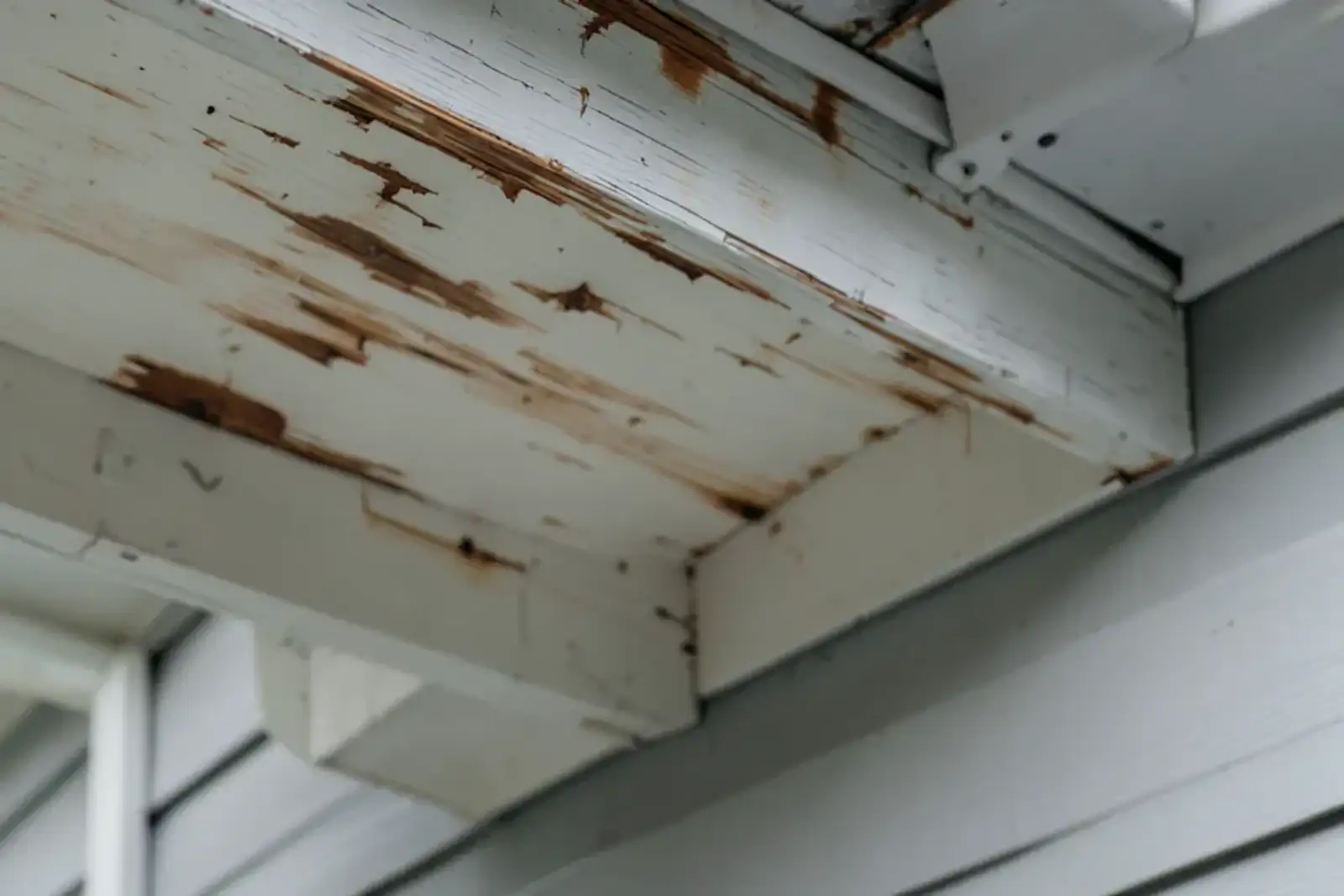
A box gutter fails out of sight. The lining cracks at a seam or corner, the trough ponds, and water works under the trim into the wall. By the time paint peels on the cornice, the wood behind it has often been wet for a long time. Peeling paint, a stain on the soffit or a damp spot on an upper-floor ceiling can all be the first sign.
Winter makes both worse. Snow melts into the trough, freezes overnight and expands. In a hung gutter that pries a joint open. In a box gutter it stresses the lining and the wood around it. Hampstead sees about 62 days of snow cover and 195 days below 50°F in a year (Dwellics), and that is a lot of cycles for a hidden joint.
From the crew: what we would check on a built-in gutter
These are general points, not an account of past jobs. A trade crew looking at a box gutter starts by finding out what the lining is, because the repair depends on it. A metal lining is repaired with metal and a membrane lining with a membrane, and mixing the two is where a lot of repairs fail.
Next comes slope. A box gutter needs to fall toward its outlet, and when it does not, water ponds at the low point and wears the lining there first.
Then the outlets and overflow. If a box gutter backs up, the water has to go somewhere, and without an overflow it goes inside. A good design lets it spill outside.
Here is the order a careful assessment follows, from the ground in:
- Photograph the cornice and walls from the ground. Note peeling paint, stains and efflorescence on masonry.
- Check the top-floor ceilings and soffit from inside for damp spots that line up with the trough.
- Look in the trough on a dry day, from the roof edge or a lift, before anything is cleaned out.
- Clear it by hand and flush the outlets. A trough that stays wet after flushing is ponding.
- Inspect the lining at corners, seams and outlets, then probe the wood below if the lining allows it.
- Write down what is known and what is not, and price the options in writing.
Metal choice is a trade-off in its own right. Dissimilar metals in contact, such as a steel fastener against a copper or aluminum lining, can corrode, so the lining, fasteners and downspout should be chosen as a system. Ask a bidder which metals touch each other. Hidden debris is the other risk: a box gutter fills where nobody can see it, so a ground check proves nothing.
What a Yankee gutter is and why New England has so many
A Yankee gutter is the regional name for a built-in wooden trough set into the cornice and lined with metal, a box gutter in its traditional form. They are found on older homes and on the downtown blocks of New England towns, and they hide the gutter behind the cornice. Many are still doing the job. Others have been relined once or twice, and the layers of repair are part of what an assessment has to work through.
The honest trade-off is that a Yankee gutter keeps the original look, and it needs inspection that a hung gutter does not. A hung gutter leaks where you can see it. The built-in one asks you to look.
A worked example: three options for a failing built-in gutter
Take a brick commercial block with a deep cornice and a lining that has cracked at a corner. This is an illustration, not a job we have done.
- Spot repair. Patch the crack with a compatible material. This is the lowest price today and the shortest life, and it only makes sense when the wood below is sound and the slope is right.
- Reline the trough. Strip the old lining, repair any rotted wood, correct the fall, and install a new lining. The price is higher and the cornice stays as it is. It still needs a yearly look, because the failure mode has not changed.
- Convert to a hung system. Remove the trough, close up the roof edge and hang gutters in front. Leaks then show outside and cleaning gets easier, but the roofline changes, and on a historic building the town may have a say.
The right answer depends on the wood. If the framing is rotted, relining on top of it only hides the problem. Get all three priced on separate lines, with wood repair as its own item, then decide. A building with a flat roof and no historic review often does best converting. A building whose cornice is its character often does best with a careful reline and a yearly check.
Which one suits which building?
Choose by the building's roof and its rules, not by preference. Capacity is another reason the box type survives, since a wide trough carries a lot of water from a big roof, but that only helps if the outlets keep up.
- Flat or low-slope commercial roof: an external gutter is easy to maintain, and a box gutter is common on older masonry buildings with parapets.
- Historic or detailed cornice: the original box gutter is part of the look, and the city may care about changes.
- Building with failing built-in gutter: compare relining the trough with converting to a hung system, and get both priced in writing.
- Roof with heavy snow load: whichever you choose, make sure the downspouts can carry the water out and that nothing discharges over a walkway.
Questions to ask any contractor who quotes a box gutter
A box gutter job costs more than a hung gutter job and is harder to compare, so ask the same questions of every bidder:
- What is the existing lining made of, and how did you find out?
- Will the wood behind it be opened up and checked for rot, and who pays if some has to be replaced?
- What slope will the trough have after the work, and where does it drain?
- Where does the water go if the outlet clogs?
- Is the price written, with wood repair and lining listed on separate lines?
An honest bidder will tell you what cannot be known until the trim comes off. Treat a price that claims to know everything from the ground with some suspicion.
Portsmouth and the question of change
Portsmouth is a Seacoast city with a lot of older buildings, which is where box gutters tend to turn up. Its median home was built in 1959, and 33 percent of homes predate 1940 (ACS 2020-24). Part of the city sits in a historic district, so exterior changes may need the Historic District Commission's say before work starts.
Portsmouth is within our area, a longer trip of about 45 minutes by our estimate. We cannot confirm box gutter work in advance, so call before you plan anything. If you have one, tell us what the building is made of and what you see, and we would assess it and give a written price.
If you manage property and want a general picture of what we handle, read about our commercial gutters or the box gutters page. For failures on a hung system, our commercial gutter repair page explains the usual fixes.
Before you hire anyone for a box gutter
Start by finding out which type you have, and photograph the cornice and the downspouts. Do not let anyone price a relining from the ground alone. Ask for the questions above to be answered in writing, with wood repair on its own line. If the building is in a historic district, ask the town before design decisions are made. Call (208) 464-4195, tell us what the building is made of and what you see, and we will say honestly whether it is something we can assess.
Quick answers
What is the main difference between box gutters and external gutters?
A box gutter is built into the roof edge and hidden by trim, while an external gutter hangs off the fascia. External gutters are easy to see and reach. Box gutters hold more water and look cleaner, but a leak runs into the wall or ceiling. Both need cleaning, and both need the water to leave through the downspouts.
Can a box gutter be replaced with an external gutter on a Portsmouth building?
Sometimes, but not always. Portsmouth has a Historic District Commission, and changes to a building's exterior details may need city approval first. Ask the city before you settle on a design. We would look at the building and quote what it needs, and we cannot confirm box gutter work in advance, so please call first.
How do you know if a box gutter is leaking into a commercial building?
Look for peeling paint or brown streaks on the cornice, a stain on the soffit, damp plaster or a ceiling spot on the top floor, and water at the downspout after rain stops. Because the trough is hidden, a ground check misses most problems. Someone has to look at the trough itself, from the roof edge, on a dry day.
Is a box gutter or an external gutter better for snow country like New Hampshire?
Neither wins outright. An external gutter shows trouble early and costs less to fix, but ice can bend it. A box gutter holds more water, yet snow and ice melt into a hidden trough, and a failed lining leaks into the building. For a plain commercial roof we would lean external. For an original cornice, we would inspect before advising.
What is a Yankee gutter?
A Yankee gutter is the New England name for a built-in wooden trough set into the cornice and lined with metal. It is a box gutter in the traditional form. Many were built on older homes and public buildings in the region, and the lining is what keeps water out of the wood. If you think you have one, have the lining and slope looked at.
Sources
- American Community Survey 2020-24, Portsmouth NH housing age
- Dwellics, Hampstead NH climate data
- General trade and building-guide descriptions of box gutters, linings and relining, reviewed November 2026
Questions about your gutters?
25 Glenwood North Rd #16, Hampstead, NH 03841
(208) 464-4195
Mon–Sat 8am–6pm · Sunday closed