

Gutter Cleaning
Fall Gutter Checklist for New Hampshire Homeowners
This fall gutter checklist runs in three passes for a New Hampshire home, ahead of leaf drop, after it, and before the first hard freeze. Each pass is a short list you can tick off in a weekend. The goal is a gutter that is empty, tight and draining when the ground freezes.
- ★ 5.0 on Google · 29 reviews
- Serving since 2024
- Based in Hampstead, NH
Published and updated November 2, 2026 · By the Lanes Gutters crew, Hampstead, NH
On this page
- Pass one: before the leaves fall
- Gear to have ready
- Pass two: after the leaves are down
- Pass three: before the first hard freeze
- What a crew looks at first
- Should you fix seams and hangers in the fall?
- Londonderry homes and the fall list
- A short fall gutter checklist for one weekend
- Booking the fall pass for you
- Common questions
Work from the top of the house down, and do each pass on a dry day. The first pass costs almost nothing, the second takes the most time, and the third is where problems show.
Pass one: before the leaves fall
Do these in September or early October, while the weather is easy and the gutters are still mostly clear.
- Trim branches that reach over or touch the roof, back to a few feet clear
- Clear last season's leftover debris from the trough
- Look for sagging runs, gaps at the fascia and loose hangers
- Check that every downspout is attached at each joint
- Confirm extensions and splash blocks are still in place
- Repair or note any seam that wept in summer storms
Trimming first saves a lot of work later. A branch that clears the roof by a few feet drops far fewer leaves and needles into the trough.
Gear to have ready
Gather this before you climb, so you are not coming down for a missing item:
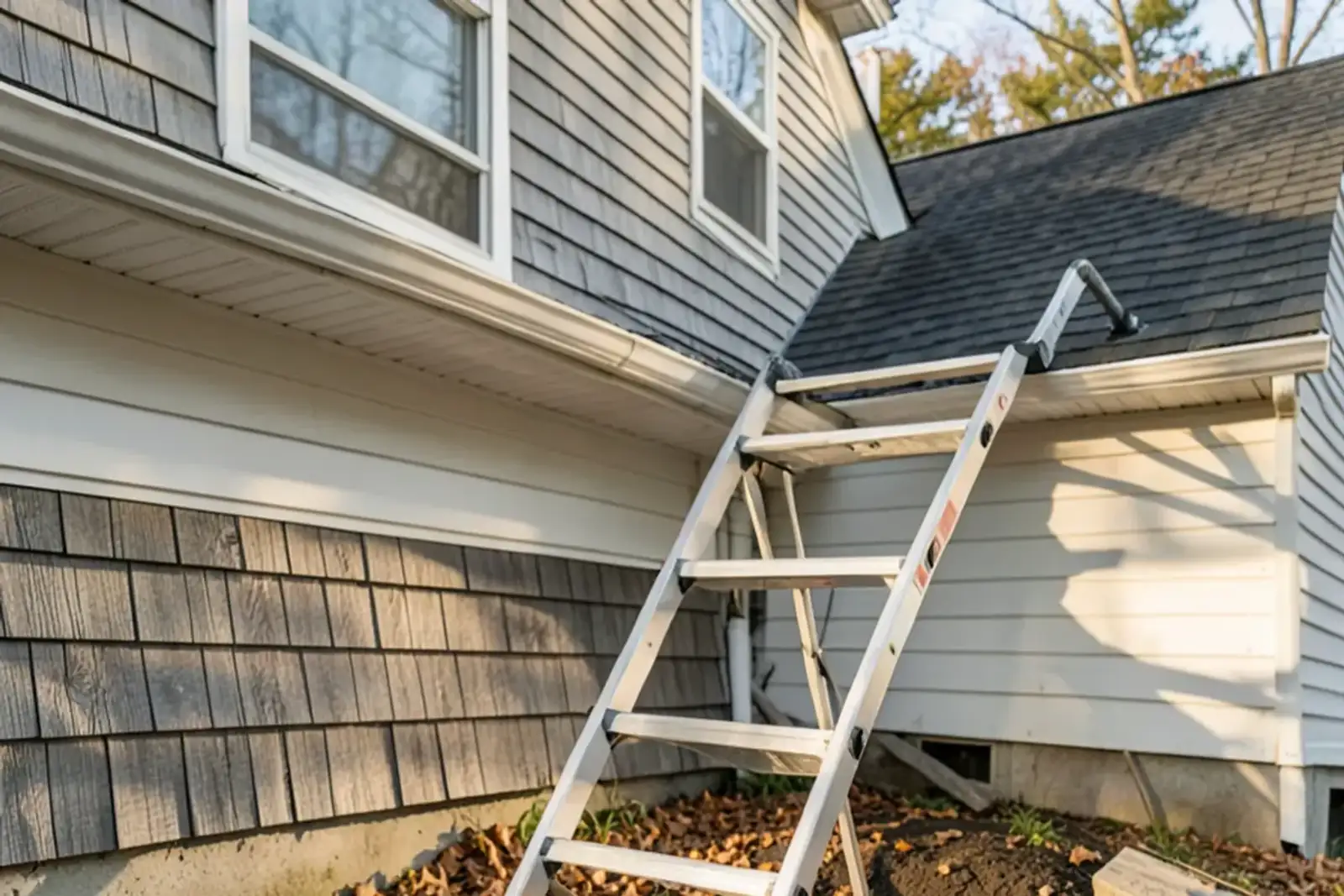
- Sturdy extension ladder rated for your weight plus tools, with a standoff
- Waterproof gloves with a good grip
- Gutter scoop or small plastic trowel
- Bucket with a hook, or a heavy bag clipped to the ladder
- Garden hose with a spray nozzle
- Eye protection, since grit and old sealant flake off
Skip the metal tools that scrape. They scratch the finish and gouge the seams, and a scratched trough corrodes sooner.
Pass two: after the leaves are down
This is the main clean, usually late October to mid-November. Set a ladder on level ground, with a standoff if you have one, and keep your hips inside the rails.
- Scoop the debris out with a gutter scoop or gloved hands, and bag it as you go.
- Wash the trough clean with a hose, working toward the downspout.
- Run water into each outlet and watch the bottom of the downspout.
- If water backs up, clear the elbow or the straight run.
- Check the trough for standing water after it drains.
- Tighten any hanger screws that spin.
- Rinse the roof edge and valley of the last leaves.
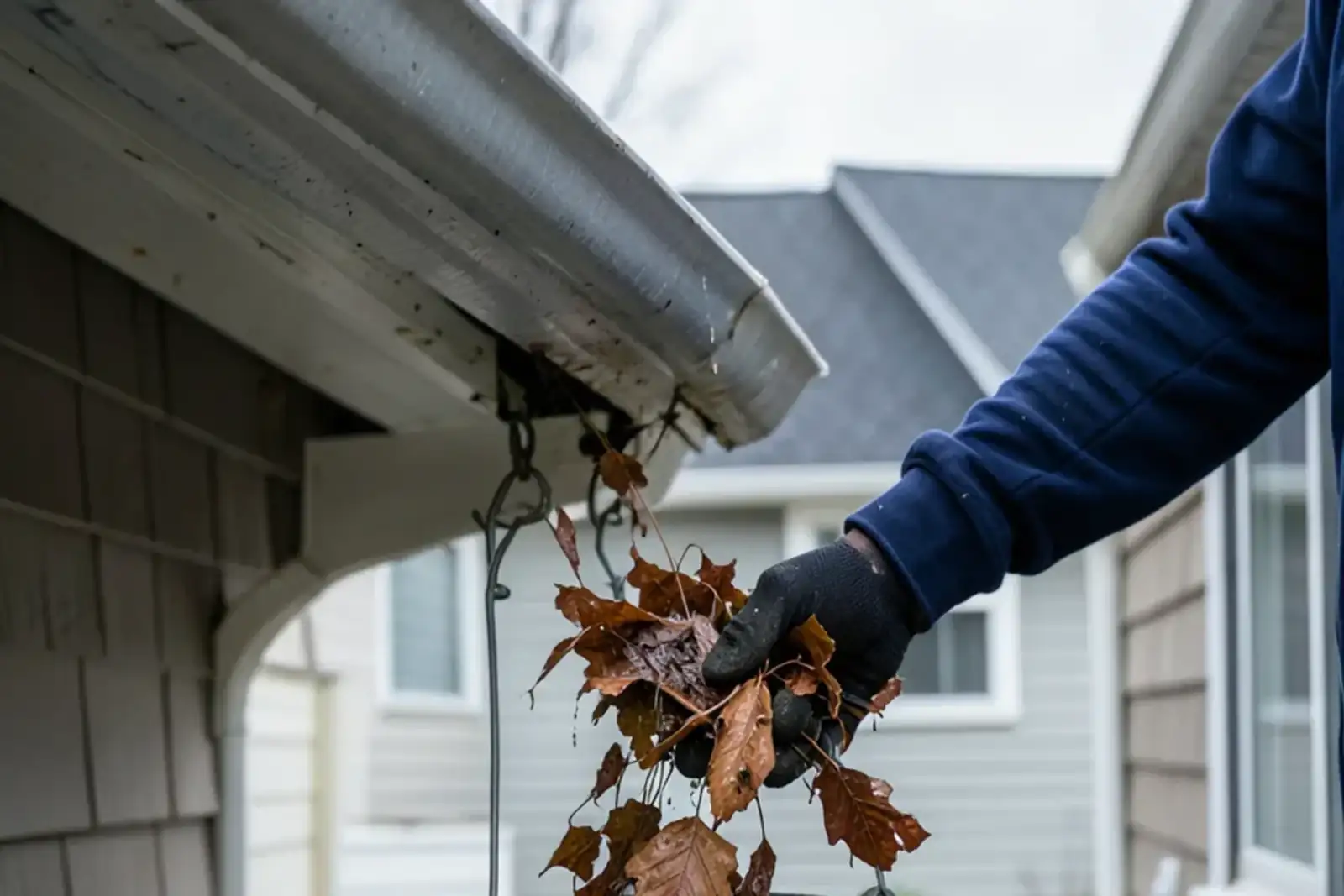
Wet leaves are heavier than they look. Go slowly, and do not lean off the ladder to reach one more handful. Move the ladder instead. If the roof is two stories, steep or ringed with trees, hire the work out rather than pushing the limit of your ladder. Our guide to how often to clean gutters covers when that second fall visit makes sense.
Pass three: before the first hard freeze
By now the gutter is clear. These tasks make sure it stays that way and drains when it is cold.
- Run a hose test and confirm water reaches the end of every extension
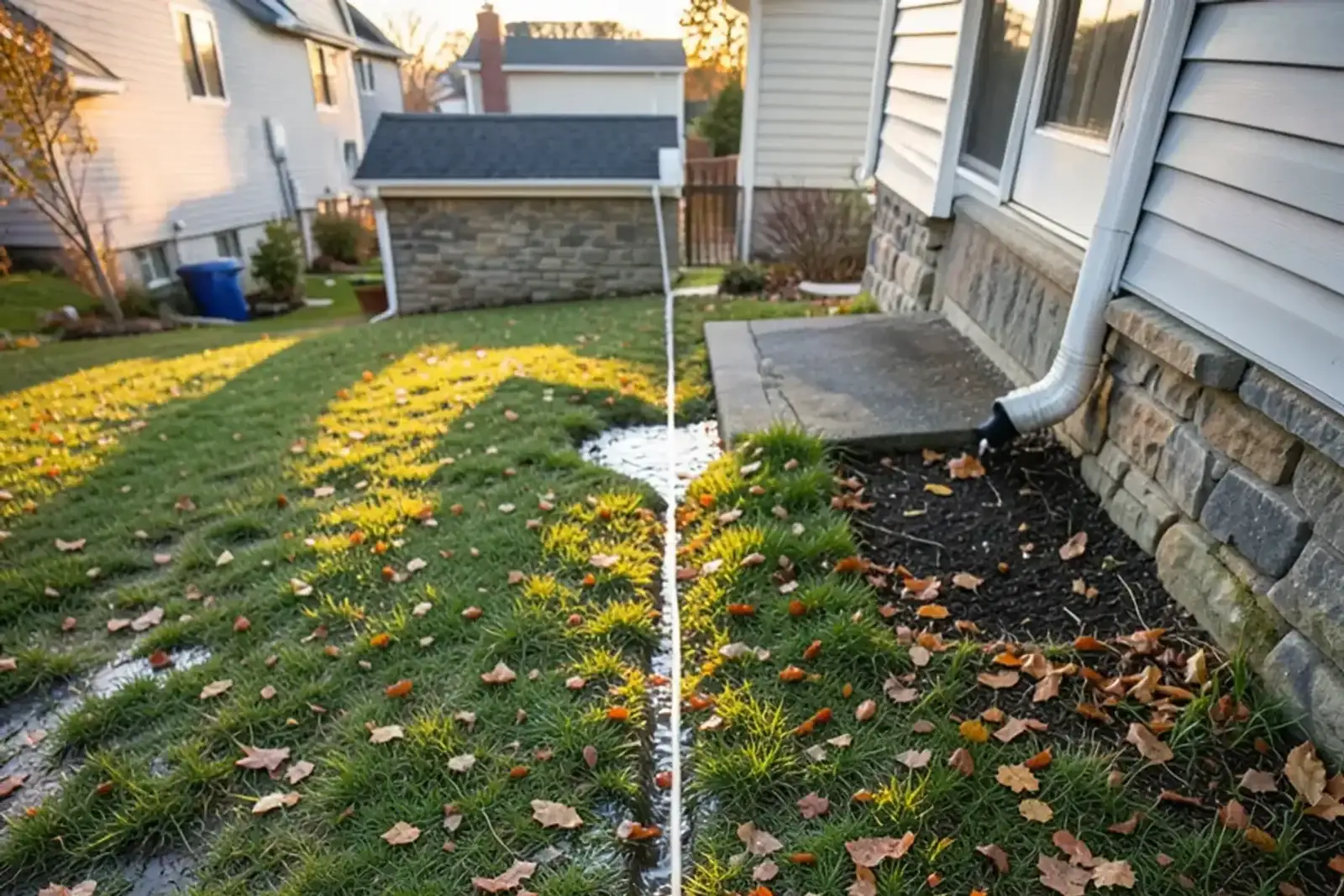
- Check that the ground at each downspout slopes away from the foundation
- Look at the outlets and corners for drips, not just the trough
- Make sure nothing is blocking the downspout at ground level, such as stacked firewood or a flower bed edge
- Walk the roofline from the yard and note any dips in the line
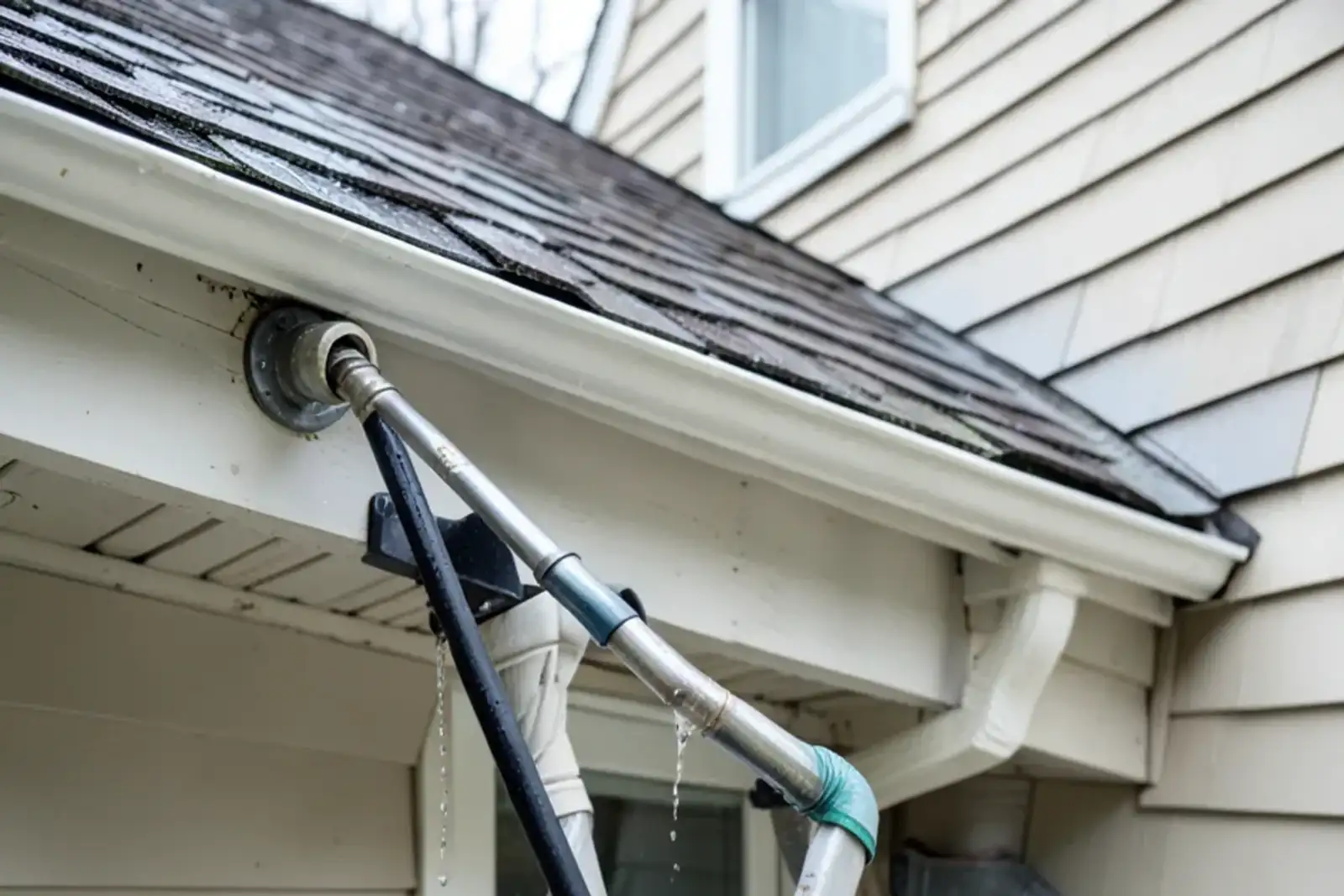
Do the hose test with a helper if you can, one person at the top and one watching the outlet. Water should arrive at the end of the extension within a minute or so of the hose running, with no leaks at the elbows. If it trickles, there is still a plug somewhere, and a pinhole spray at a joint tells you which fitting to refasten.
A downspout that dumps beside the foundation is the most common leftover. Frozen ground does not soak water up, so it runs back toward the wall. Extend the downspout a few feet from the house and keep the ground sloping away from the wall.
What a crew looks at first
This is the trade's view of why the order matters, not a story about a particular job.
A crew checks the bottom of the downspout before touching the gutter. If water does not leave the pipe cleanly, it does not matter how clean the trough looks, because the next storm will back up through the elbow. The same logic applies to ice. A trough that holds a puddle after a clean freezes into a slab, and the slab is what pulls hangers and bends the front lip.
The other habit is to clean toward the outlet, never away from it. Working from the far end down to the downspout keeps loose grit moving to where it leaves, rather than packing into the corner.
Triage: what to fix now and what can wait
Not everything you find in October needs a crew in October. A rough order:
| What you find | When to act |
|---|---|
| Gutter pulling away from the fascia, or a downspout hanging loose | Before the first snow, since snow load makes both worse |
| A downspout that stays clogged after a flush | Before the first freeze, because it freezes solid |
| A seam that drips in rain | Next dry, mild day, or a repair visit |
| A shallow puddle that drains slowly | Note it and recheck after a thaw |
| Sealant that looks dull or hairline cracked but does not leak | Watch it through winter and plan spring |
| Soft or stained fascia behind the gutter | Book an inspection before reattaching anything |
The point of the table is to separate hazards from chores. Hangers and clogged downspouts are hazards, because ice makes them worse. A faded seam is a chore.
Should you fix seams and hangers in the fall?
Fall is a good time to find these problems and a mixed time to fix them. Sealant needs a clean, dry joint and mild air to cure, and a gutter full of damp leaves is neither. Do the cleaning first, flush the run, and let the metal dry before you judge a seam.
For a drip at a corner, the trade fix is to scrape out the old sealant down to bare metal, wipe the joint dry, and apply fresh gutter sealant along the full seam. A thin smear over old, dirty sealant fails again within a season. If the corner drips again after a proper reseal, the cause is usually pitch or a sagging hanger, and more sealant will not fix it.
Hangers are the bigger fall job. The trough should be fastened into solid wood, at spacing that suits the roof, and a hanger that spins in a soft hole needs a longer fastener or a new hole in sound wood. If the board itself is soft, the fix starts there. A small repair now is far cheaper than a gutter that lets go under the first heavy snow, which in Hampstead averages about 53.8 inches a year (BestPlaces). Our guide to gutters pulling away from the fascia shows what the repair involves.
Londonderry homes and the fall list
Londonderry is an orchard town near Manchester-Boston Regional Airport, with a median home built in 1986 and about 86% owner-occupied (ACS 2020-24). A house from that decade often still wears its first gutters, which have been through well over 30 winters. At that age, the hanger check in pass one and the pitch check in pass three are the tasks most worth your time.
We cover Londonderry from our Hampstead base, roughly 15 minutes away by our estimate. If you would rather book the whole list, our seasonal gutter cleaning page describes how a fall visit works, and the main gutter cleaning page covers the rest. Details for the area are on our Londonderry service page.
A short fall gutter checklist for one weekend
Do these four, in this order:
- Clear the trough and flush every downspout.
- Reattach any loose downspout or extension.
- Tighten loose hangers.
- Move anything stacked at the base of a downspout.
That covers most of what causes winter damage. The rest can wait until a thaw, but call us if you spot a sagging run, since snow load will make it worse.
A weekend example for a 150-foot colonial
This is an illustration of pacing, not a record of a job. Say the house has about 150 feet of gutter, two downspouts on each side, and a row of maples at the back.
- Saturday morning: bring the gear to the lawn, set the ladder on firm ground, and clean the back run first. That is where the maple leaves landed, so it holds most of the debris.
- Saturday afternoon: do the other runs, flush each downspout, and write down any hanger or seam you notice. Stop when the light fades, because a ladder in the dusk is how people get hurt.
- Sunday: run the hose test, extend the two downspouts that dump near the foundation, and move the firewood stack that was blocking one outlet.
Two days is realistic for one person working carefully. A crew doing the same house moves faster, but the order of the work is identical.
Booking the fall pass for you
Plan the main clean for the first three weeks of November, flush every downspout while you are at it, and keep a list of anything that needs repair. If the list has a sagging run, a stubborn clog or fascia that feels soft, those are jobs for a crew before the first heavy snow, not a weekend project. Our seasonal gutter cleaning page explains how a fall visit runs, and a clear gutter is also the first step in any plan for ice at the eaves.
Call Lanes Gutters at (208) 464-4195, tell us the footage and the number of stories if you know them, and we will give you a written price.
Quick answers
When is the best time to do a fall gutter checklist in New Hampshire?
Wait until most leaves are down, usually late October to mid-November, then finish before the ground freezes. Oaks hold leaves into November, so a cleaning in early October can mean a second pass. Check your own trees and plan the main clean for after they are bare.
Should I reseal gutter seams in the fall in Londonderry, NH?
Only if a seam is actually dripping, and only on a dry day. Most gutter sealants need a clean, dry joint and mild air, roughly 40°F or warmer, so a cold November morning in Londonderry is a poor time. If a seam weeps in cold weather, note it, clear the trough, and plan the reseal for the next mild day.
How far should a downspout extension run from a Londonderry foundation?
Aim for at least four to six feet, and farther if the ground is flat or slopes toward the house. The goal is to leave the water well past the backfill zone, where soil is looser and water finds its way back to the wall. Londonderry lots on flat sand and gravel often take a longer extension than a hillside lot.
Is it safe to clean wet leaves from gutters in November?
Only from a stable ladder on level ground, and not in rain, frost or wind. Wet leaves are heavy, and a ladder that skids on frosty grass is the real hazard. If you wake to frost, wait until the ground is dry. Roofs that are two stories, steep or covered with leaves are better left to a crew.
Do Londonderry homes need to clean gutters before winter?
Yes. Londonderry has many 1970s to 1990s subdivisions, and the original gutters on those houses are often at or past 20 years. Wet debris freezing in an older trough puts extra load on the hangers, so a pre-freeze clean and a hanger check matter more on those homes.
Sources
- ACS 2020-24, Londonderry median year built
Questions about your gutters?
25 Glenwood North Rd #16, Hampstead, NH 03841
(208) 464-4195
Mon–Sat 8am–6pm · Sunday closed