
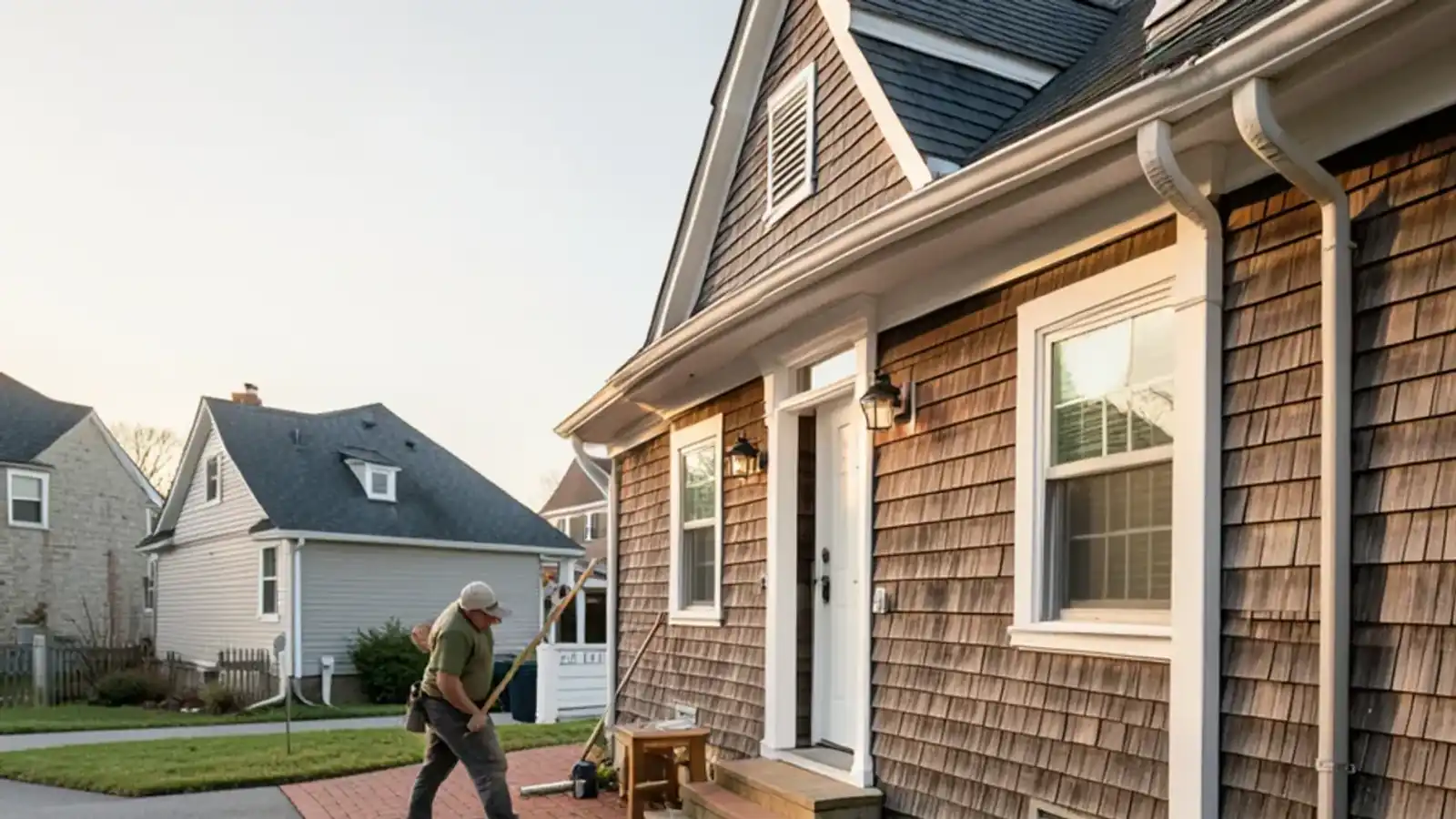
Seamless Gutters
Gutter Choices for Historic Portsmouth and Exeter Homes
Gutters for historic homes in New Hampshire start with a phone call to the local historic commission, not a trip to the supply house. In Portsmouth and Exeter, visible exterior changes can need approval, so confirm the rules first and choose a profile and metal that fit the house second.
- ★ 5.0 on Google · 29 reviews
- Serving since 2024
- Based in Hampstead, NH
Published and updated November 2, 2026 · By the Lanes Gutters crew, Hampstead, NH
On this page
- Start with the commission, not the catalog
- Half-round gutters: the profile that matches older eaves
- Copper: patina and cost
- Box and wood-lined gutters: built into the cornice
- How do the options compare?
- Is a modern K-style gutter ever the right answer?
- How to decide for your house
- What a crew looks at on an old eave
- Reaching Portsmouth and Exeter
- Common questions
Portsmouth has about 1,300 properties inside its Historic District, and the commission adopted design review guidelines for them in April 2016. Exeter reviews exterior changes under Article 8.0 of its Zoning Ordinance, the Historic District Regulations. Both towns also have pre-1940 homes outside any district, where the gutter question is simply one of taste and durability.
Start with the commission, not the catalog
Check with the local historic commission before changing visible exterior details. That includes gutters on a front elevation, and it includes downspouts that run down a street-facing corner.
Past Portsmouth action sheets show how it plays out. Commission records include approvals of aluminum gutters on some buildings, wooden gutters kept on another and existing copper downspouts left in place. The outcome turned on the building, not on a blanket rule. Exeter's forms list three possible results for any application: disapproved, approved as submitted, or approved with conditions.
A quick, practical sequence:
- Photograph every elevation and the gutter or cornice detail up close.
- Call the Portsmouth Planning Department or the Exeter Building Department and ask whether your property is in the district and whether your plan needs review.
- Bring a written description of the profile, material and color.
- Hold the order until you have an answer.
What the records show about gutter decisions
Portsmouth's action sheets and minutes give a feel for the range. A 2009 sheet shows an approval to replace wooden gutters with aluminum on condition that the old wooden ones stay. Minutes from April 2010 note that the commission had recently approved wooden gutters and downspouts on a property on Gates Street. A 2002 application to swap copper gutters for aluminum on a Fleet Street elevation was withdrawn before a decision. None of that sets a rule for your house, and these are old records. They do show that the answer turns on the building, the elevation and the detail, and Exeter's forms list three possible outcomes.
A hearing adds time before work can start. We could not confirm current meeting schedules or fees for either town, so ask when you call.
Half-round gutters: the profile that matches older eaves
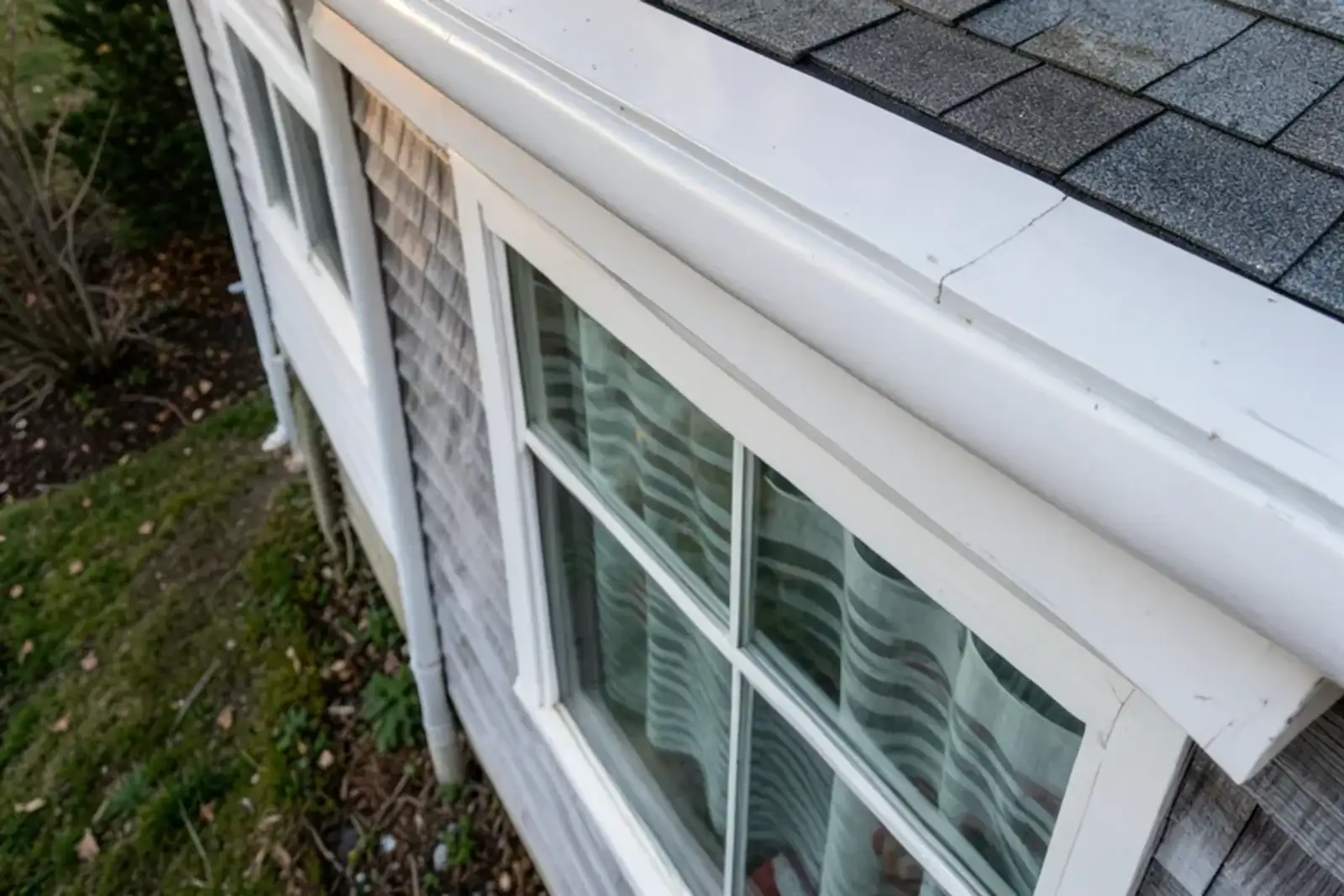
A half-round gutter is a smooth semicircle hung from the fascia on brackets. It shows no front face, which is why it suits older houses that were built before the modern K-style existed. The curve is easy to read from the street.
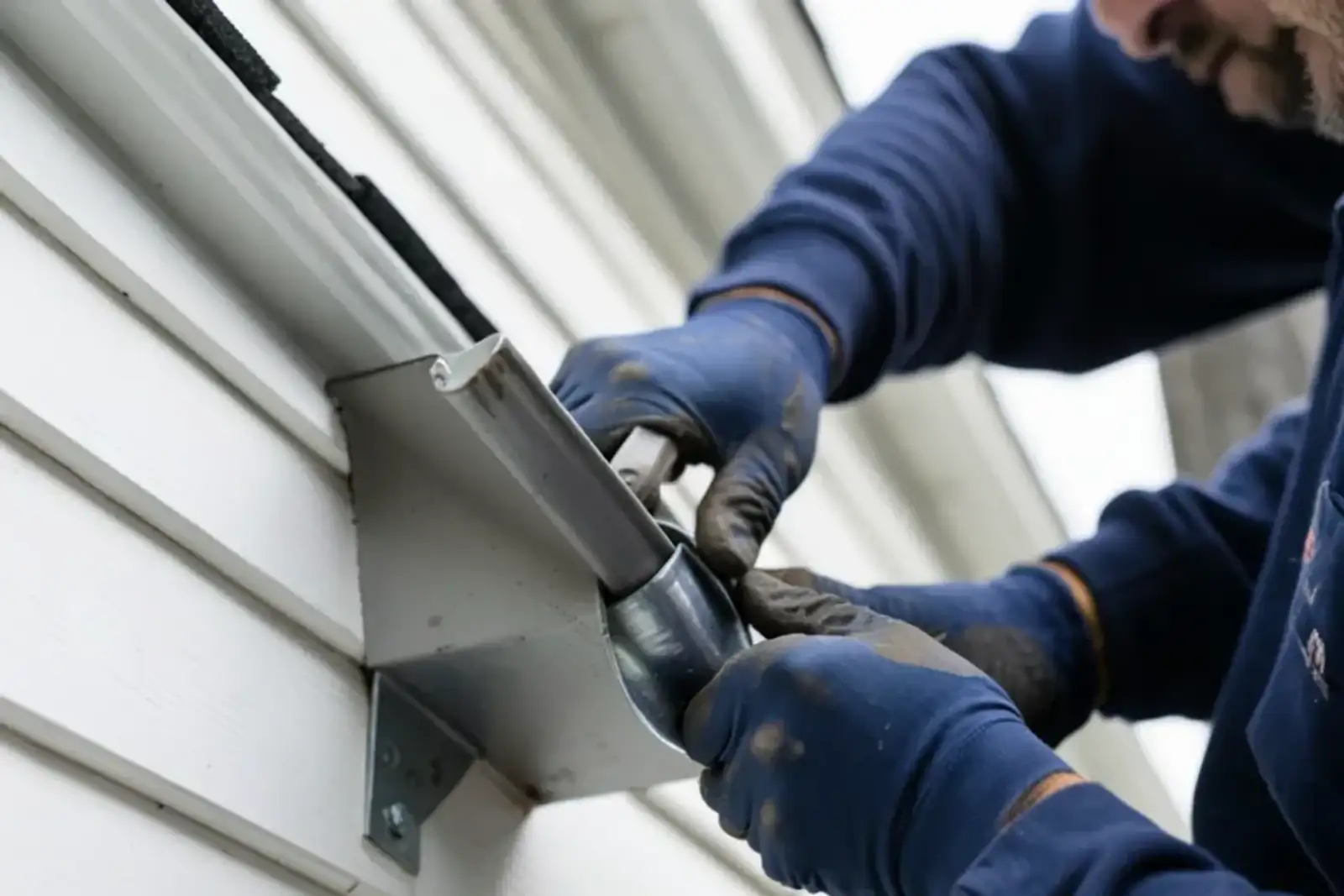
The trade-offs are practical. For the same width, a half-round moves less water than a K-style, so large roofs may need a wider size or extra downspouts. Brackets cost more than hidden hangers and need careful spacing to hold their line.
There is also a snow-load question. A half-round run on exposed brackets has to carry the same wet snow that bends a K-style hanger, and Hampstead alone averages about 54 inches of snow a year (BestPlaces), and Seacoast roofs get storm snow of their own. Ask whoever quotes it how far apart the brackets will sit and what they are screwed into. A bracket on soft fascia pulls out the same as a hidden hanger does.
Copper: patina and cost
Copper weathers from bright metal to brown and then to green over years, and it is a traditional material on high-quality older buildings. Portsmouth commission records mention existing copper downspouts that were kept when other gutters changed.
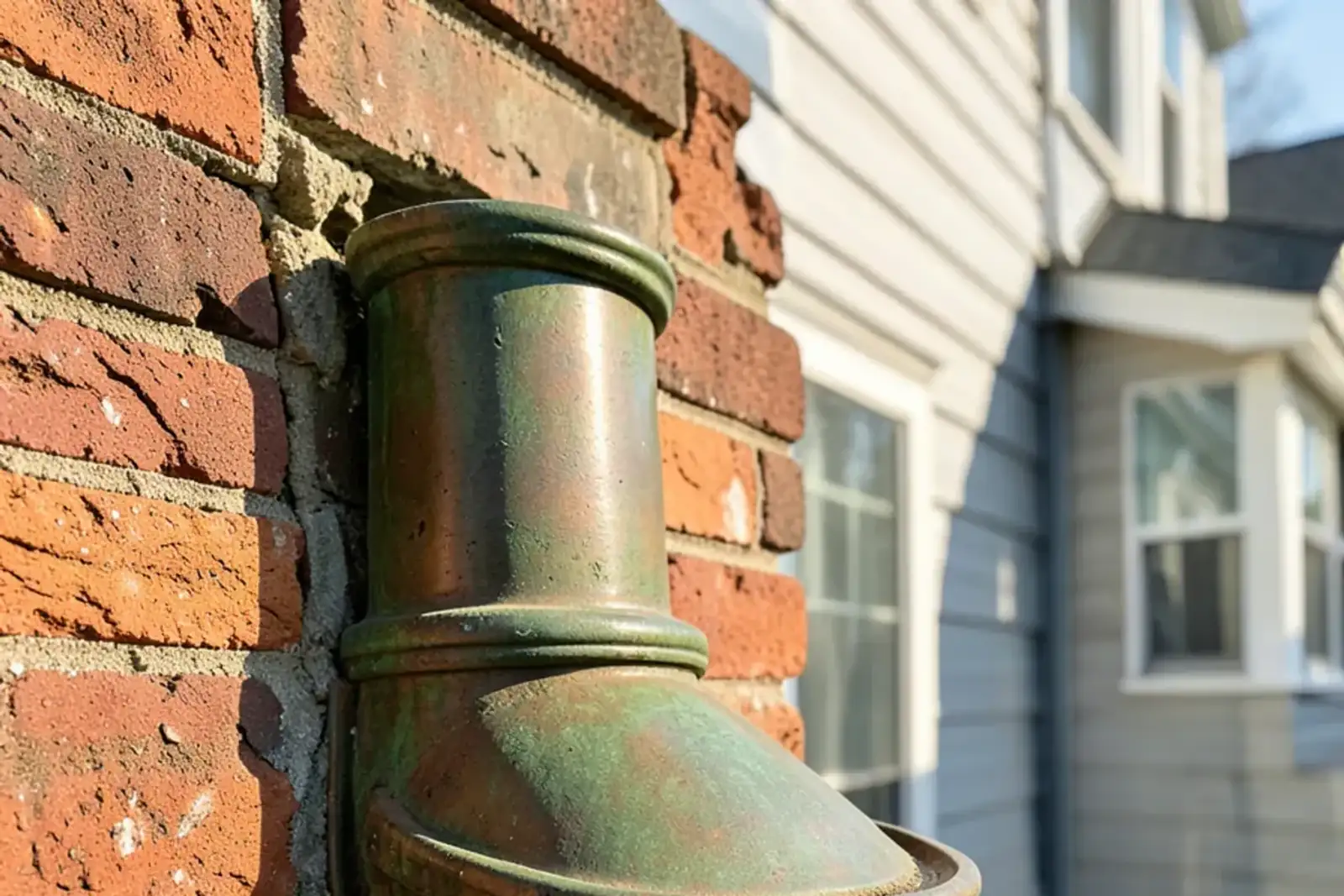
Two cautions. Copper costs far more than aluminum, and it must not touch aluminum or steel, which can corrode in contact with it. Runoff also carries dissolved copper that can stain a light wall or paving below.
Copper joints are traditionally soldered, and soldering is a trade skill of its own. If a quote for copper does not say who solders the joints and where the seams will sit, ask. Also ask what the run is fastened with, since a steel screw in copper will rust and streak.
Box and wood-lined gutters: built into the cornice
Many 18th and 19th century houses carry their gutter inside the cornice. Sometimes it is a wooden trough lined with metal, called a Yankee gutter in New England. Box gutters are a related built-in type, set into the roof edge or behind a parapet. Water runs along a hidden channel to an outlet, and the whole detail is part of the house's profile.
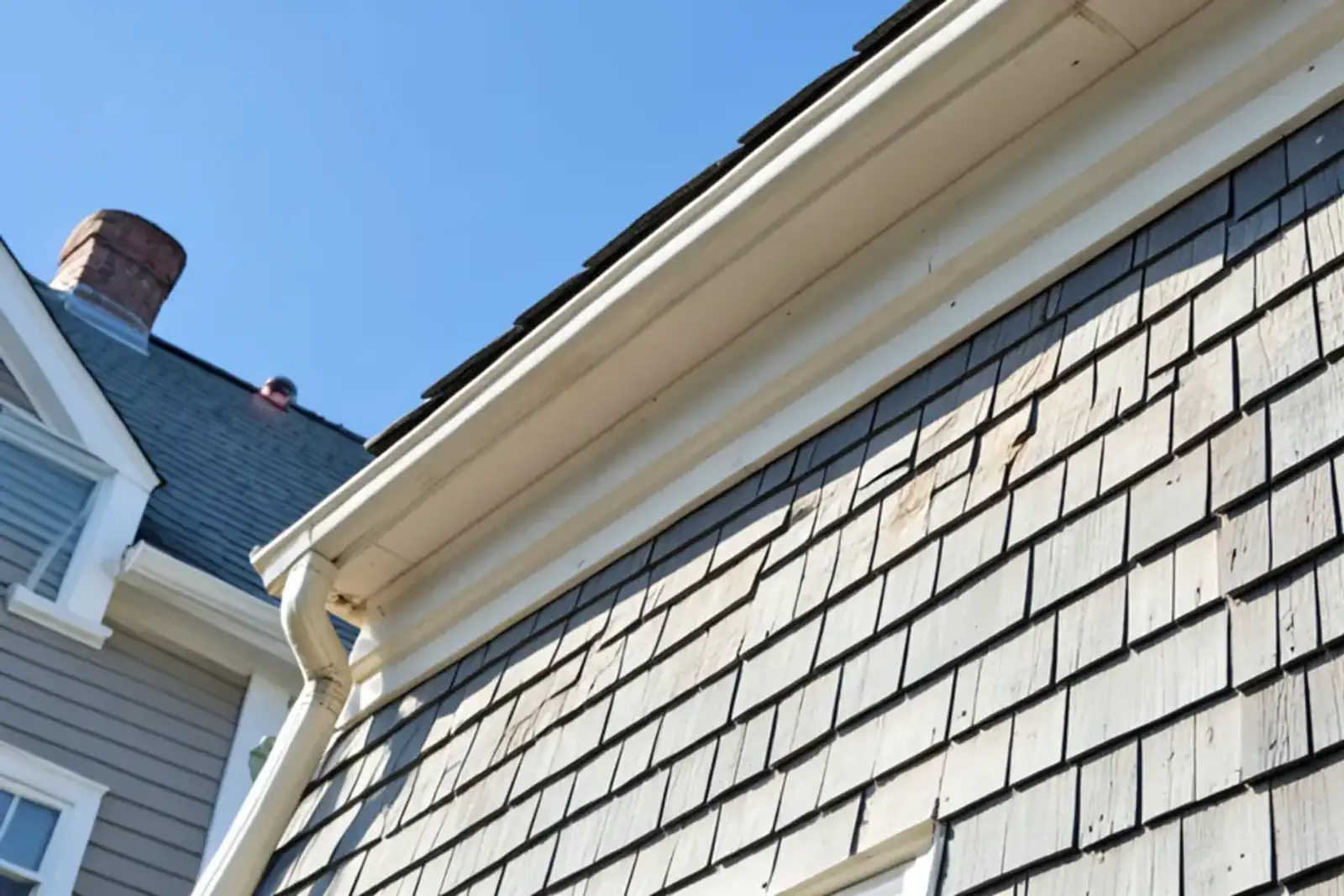
These systems fail at their lined seams and outlets, and the damage shows up in the wall below. Keep them clear of debris, and have a roofer or carpenter inspect the lining before blaming the downspout.
Warning signs a built-in gutter is leaking
A trade article on built-in gutters (Roofing Magazine) lists the signs. Look for these, inside and out:
- Peeling paint or soft, decayed wood in the cornice under the gutter
- Dark stains or mildew on the wall below
- Water stains or damaged plaster in the attic or the top-floor ceiling
- Pinholes or cracks in the lining at joints and folds
The same article warns never to patch a lining with roofing tar or other bituminous compounds. Tar hides the true condition, corrodes metal, cracks, and cannot be removed without destroying the lining. It also says tin and terne-coated steel linings are prone to fail, and that a well-detailed system can last 60 to 100 years or more depending on the lining. A proper repair means opening the roof edge, fixing the framing and relining, which is work for a roofer experienced with old buildings. In winter, never chip ice out of one with a sharp tool.
How do the options compare?
| Option | Look | Main trade-off |
|---|---|---|
| Half-round | Curved, no front face | Lower capacity, bracket cost |
| Copper | Ages from bright to green | Price, staining, metal contact |
| Built-in or box | Hidden in the cornice | Lined seams leak, harder repair |
| K-style aluminum | Modern flat-front shape | Often not a match for the original |
We do not list copper, half-round or box gutters among our services. Lanes Gutters works in seamless gutters, cleaning, repair and guards. If you want to know what we can quote for your house, call and ask. This post explains the options so you can ask any installer the right questions.
Is a modern K-style gutter ever the right answer?
Sometimes. A K-style run is the common modern shape, it comes in 5-inch and 6-inch sizes, and a 6-inch carries about 44% more than a 5-inch at the same rain rate. That helps on a big roof. On a back or side elevation that the street cannot see, a commission may weigh it differently than a front facade. Only the commission can say, which is why the call comes first.
Color matters as much as shape. A gutter painted to match the trim reads as part of the house, and a bright contrasting run draws the eye. Bring a paint sample or a photo of the trim color to the conversation.
How to decide for your house
Work through these questions before you request a price for anything:
- Is your house in a historic district? If so, call the commission first.
- Is the existing gutter original to the house, or a later add-on?
- Is it visible from the street, or only from the back?
- Is the problem the gutter, or the board, lining or roof edge behind it?
- What can the house afford over twenty years, not twenty days?
A cheap fix on a leaking built-in gutter costs more in the end than a repair that opens the roof edge once. A new run on a back elevation is a very different decision from the front of a house the street admires.
What a crew looks at on an old eave
From our crew: on a house this age, the gutter is rarely the first problem. Old fascia boards soften where water has run behind a loose run. Rafter tails rot behind them. Old roof lines are not always straight, so a gutter that follows the roof can look like it sags when it is draining fine.
We would check the board it hangs on, the pitch with a level, and the flashing under the shingles before settling on material. Installing a new run on soft wood only hides the problem.
Ladders are the other worry on old houses. Antique gutters, especially half-round and copper, do not take a ladder resting on them, and clapboard marks easily. A ladder with stand-offs, or a ladder set on the ground beside the work, protects both. On a three-story Seacoast house, that can be the difference between a tidy visit and a dented front run.
Reaching Portsmouth and Exeter
In Portsmouth, 33% of homes were built before 1940 (American Community Survey, 2020-24). It is roughly a 45-minute drive from Hampstead by our estimate, and Exeter about 25. Visits at that distance are booked ahead. Read about Portsmouth and Exeter, or see our overview of seamless gutters, the page on aluminum gutters and the page on half-round gutters.
We would rather tell you what we can and cannot quote than guess about a historic house. If you are weighing a repair, a K-style run on a back elevation or a question about the board behind your gutter, call (208) 464-4195.
Quick answers
Do I need approval to replace gutters in the Portsmouth historic district?
Possibly. Portsmouth's Historic District Commission reviews exterior changes in the district, and its past action sheets include gutters and downspouts. A like-for-like repair may be treated differently from a new material or profile. Call the city's Planning Department before you order anything, and ask whether your property and your plan need review.
Which gutter profile suits a historic Exeter home?
It depends on the house. Half-round and built-in styles are tied to older architecture, while K-style is the modern default. In Exeter, historic district applications go to the commission through the Building Department, so take photos and a profile sketch there first and let the commission say what it will accept.
What is a Yankee gutter on an old New Hampshire house?
It is a gutter built into the roof edge, usually a wooden trough set at the cornice and lined with metal. Portsmouth has many older homes, and 33% of its houses date to before 1940. The lining is the weak point, so a leak often shows up as stained or soft wood below it. A roofer familiar with old buildings should inspect it.
Does Lanes Gutters install half-round, copper or box gutters?
We do not list those among our services, so we will not promise them. Our work is seamless gutters, cleaning, repair and guards. If you want to know what we can quote for an older house, call and describe it. For a house in a historic district, get the commission's answer before you ask any installer for a price.
Sources
- Historic District Commission Design Review Guidelines, City of Portsmouth
- Portsmouth Historic District Commission action sheets, 2009 to 2018
- Exeter Historic District Commission, Certificate of Appropriateness application
- Built-in Gutters Should Be Carefully Inspected, Restored and Maintained, Roofing Magazine
- Portsmouth Historic District Commission minutes, April 14, 2010
- American Community Survey 2020-24, Portsmouth and Exeter housing
Questions about your gutters?
25 Glenwood North Rd #16, Hampstead, NH 03841
(208) 464-4195
Mon–Sat 8am–6pm · Sunday closed