
Gutter Installation
What Rockingham County Floods Teach About Downspouts
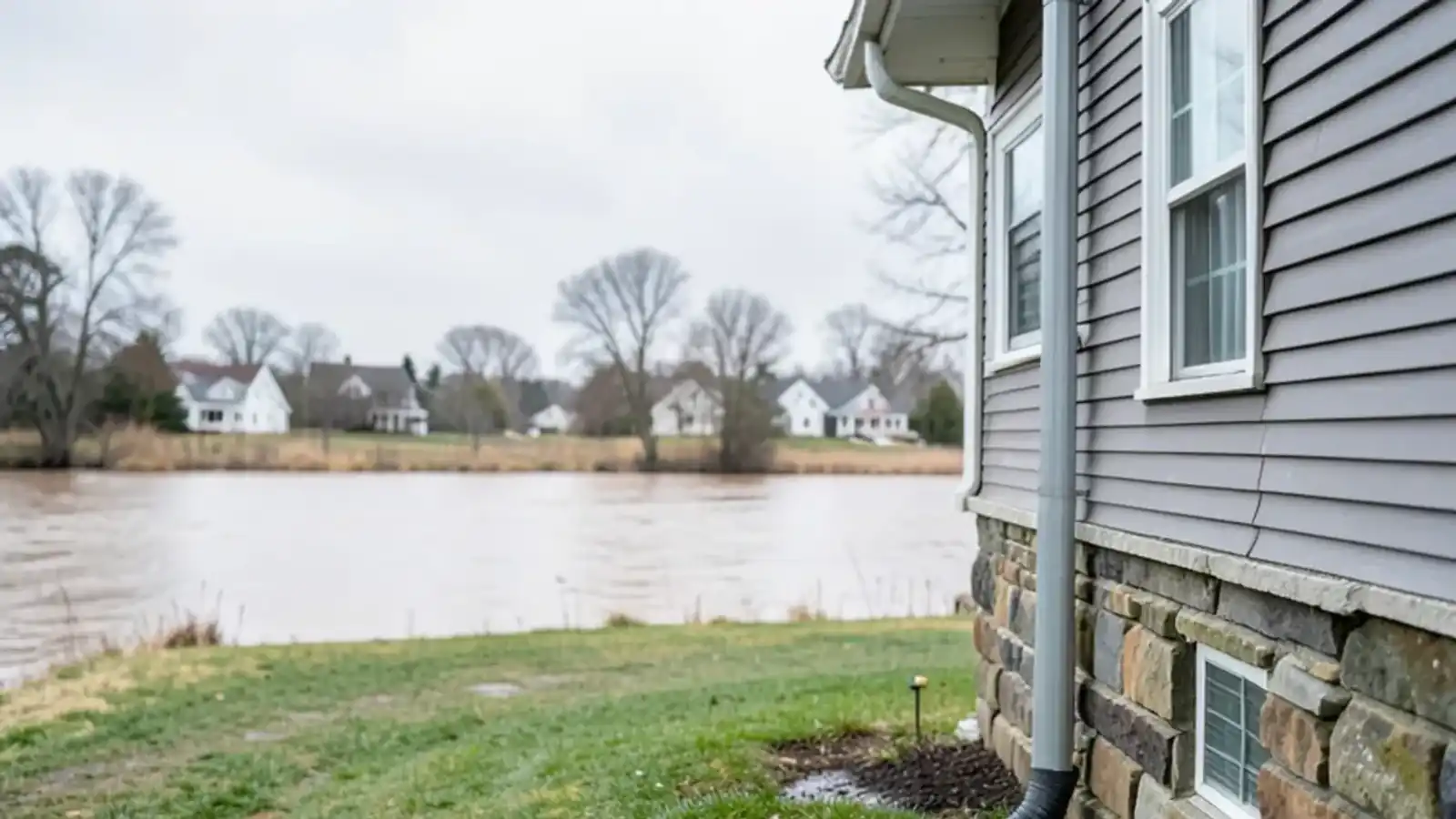
Rockingham County flooding in May 2006 and April 2007 was river flooding, and no gutter stops a river. What gutters and downspouts control is the roof water that arrives at your foundation, and a wet basement often comes from both at once. Where downspouts end is the cheapest drainage fix you have.
- ★ 5.0 on Google · 29 reviews
- Serving since 2024
- Based in Hampstead, NH
Published and updated November 2, 2026 · By the Lanes Gutters crew, Hampstead, NH
On this page
- What happened in 2006 and 2007?
- What do river floods have to do with gutters?
- How much water does a roof send to the foundation?
- A downspout checklist for wet-ground lots
- What a crew checks first at a wet foundation
- Is a bigger gutter part of the answer?
- Are buried drain lines worth considering?
- Dig Safe and permits first
- Where we work
- Common questions
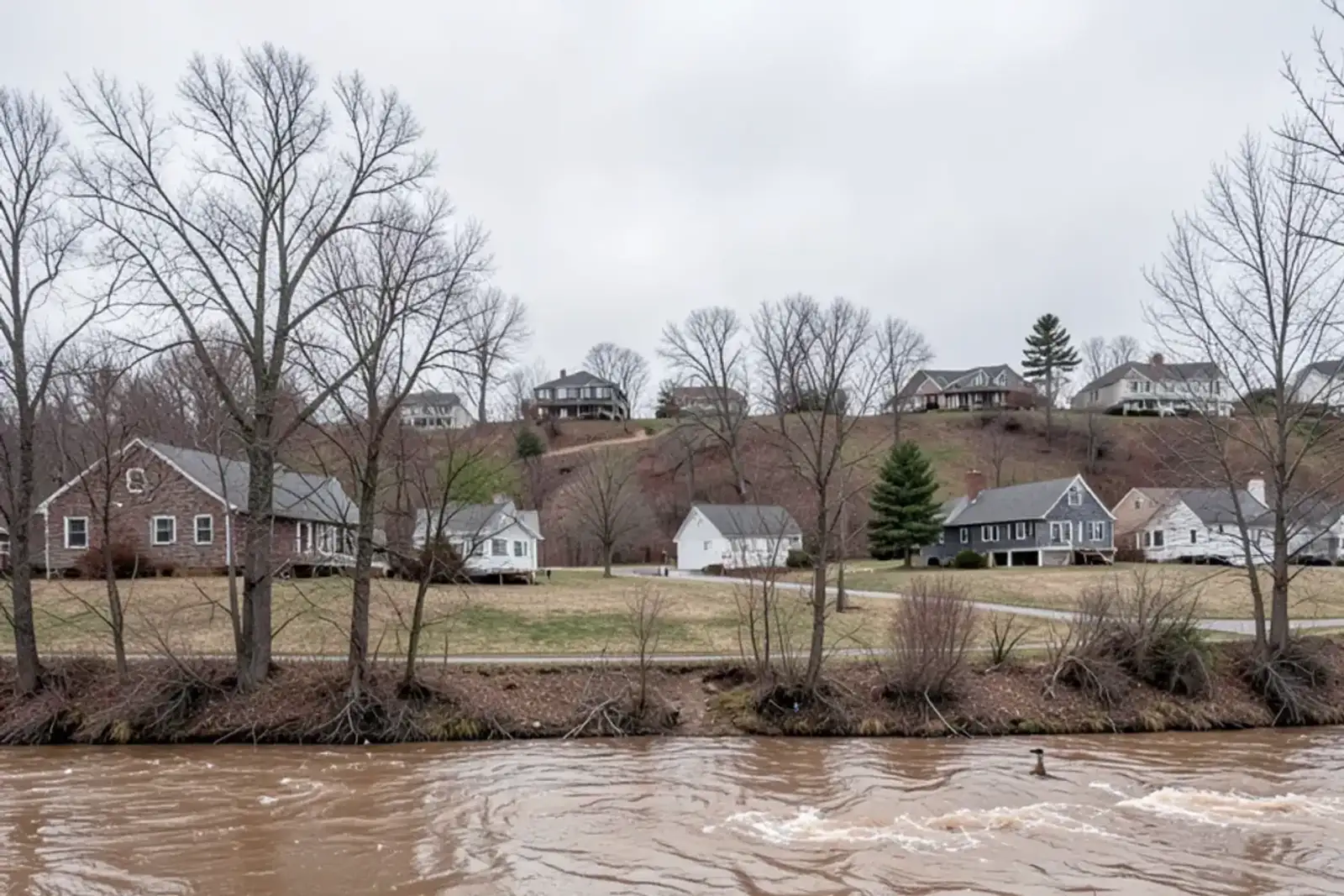
Two federally declared disasters struck Rockingham County within 11 months. The first was the mid-May 2006 flood, often called the Mother's Day flood, and the second was the April 2007 nor'easter flood. They had different causes (Insurance Journal), but both put rivers over their banks and water into basements across southern New Hampshire.
What happened in 2006 and 2007?
| Event | Declaration | What the record shows |
|---|---|---|
| May 2006 flood | FEMA-1643-DR, May 25, 2006 | Rockingham among the declared counties; worst flooding in Rockingham, Strafford, Merrimack and parts of Hillsborough (USGS) |
| April 2007 flood | FEMA-1695-DR, April 27, 2007 | A coastal storm stalled offshore and dropped 4 to 8 inches of rain in three days (National Weather Service) |
On April 18, 2007, the Lamprey River at Newmarket peaked at 8,450 cubic feet per second, against a normal 654 for that date (USGS). The Lamprey also flooded Raymond, Epping and Newmarket in those years.
The numbers behind the table are large. The USGS says as much as 14 inches of rain fell across central and southern New Hampshire from May 13 to 17, 2006, and that peak flows at 14 long-term streamgages were the largest ever recorded there. For April 2007, the USGS describes a stalled coastal storm that dropped up to 7 inches on central and southeastern New Hampshire, and Insurance Journal reports that fast-melting snow added to it. Rockingham County was among the hardest hit both times.
What do river floods have to do with gutters?
Not as much as roof water does on an ordinary day. A river flood fills low ground and nothing on a house stops it. But floods do two useful things for a homeowner. They show which parts of a lot hold water, and they leave soil saturated for weeks.
Saturated soil cannot take more water. That means every gallon from the roof in the days after a flood pushes against a foundation that is already wet. A gutter system that sends roof water away from the house keeps your own contribution small.
Why April is the risky month
The 2007 flood combined heavy rain with melting snow, and that combination is why the roof matters in April. A roof that holds a winter of snow lets it all go in a few warm days. Frozen or still-saturated ground cannot soak it up, so the water has to go somewhere. A downspout that was iced shut or knocked loose in February sends it straight down against the foundation.
Hampstead averages about 54 inches of snow a year (BestPlaces), so this is not a one-off. Walk the outlets in March, before the thaw, and clear snow and ice from the base of each downspout so the first melt has a path.
How much water does a roof send to the foundation?
One inch of rain on one square foot of roof makes about 0.62 gallons. On a roof with a 1,000-square-foot footprint, one inch of rain means roughly 620 gallons. The April 2007 storm brought four to eight inches over three days, so that same roof shed about 2,500 to 5,000 gallons.
In May 2006, with as much as 14 inches over five days, the same roof footprint would have shed about 8,700 gallons. Roof pitch does not change the math, because the rain is counted on the footprint.
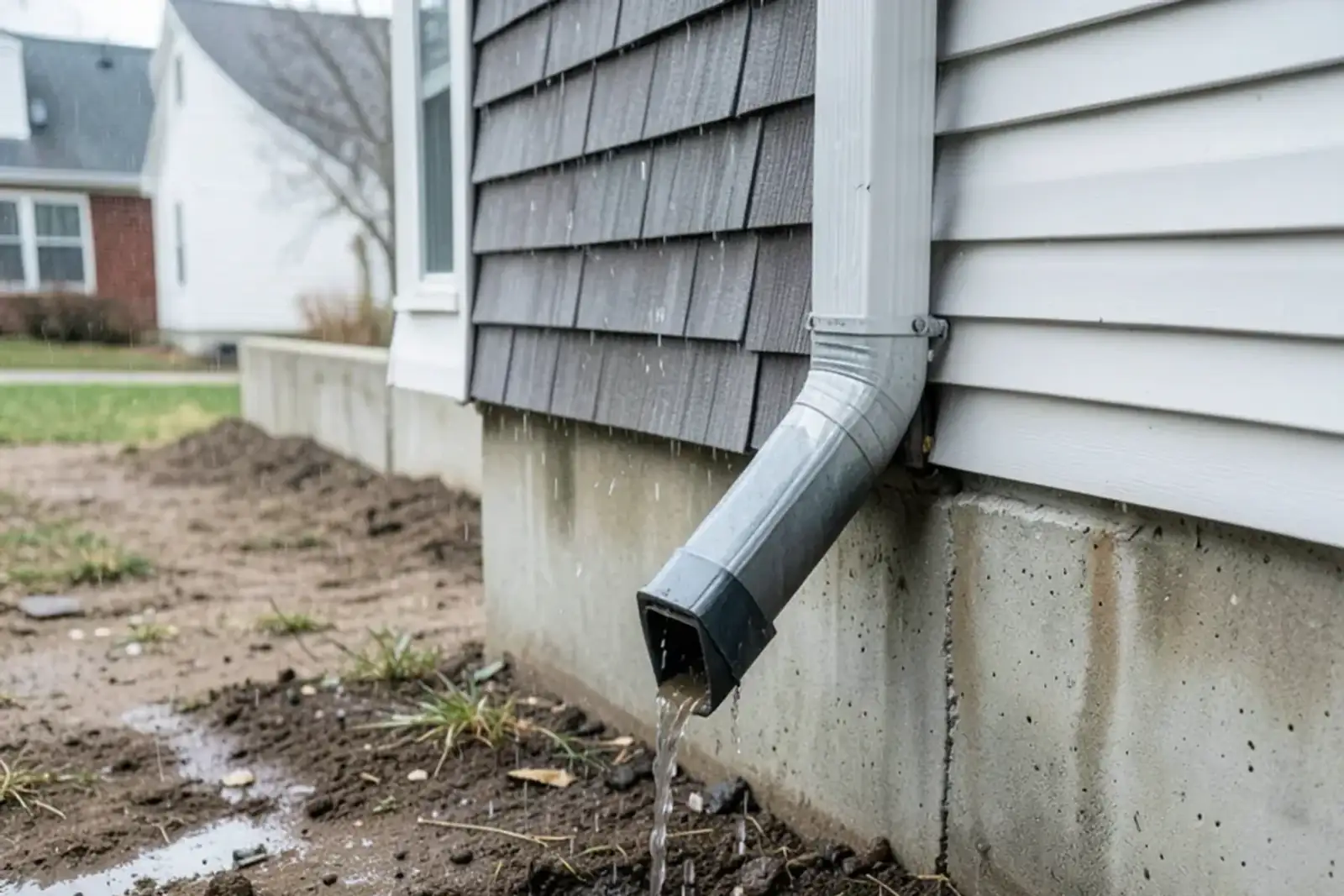
Every gallon went to a handful of downspouts. A short downspout drops that water within a few feet of the wall.
A downspout checklist for wet-ground lots
Work through these in order, and fix the first one that fails:
- Clean the gutters and flush each downspout so water actually reaches the ground.
- Look at each downspout outlet. Water should not splash beside the foundation.
- Add an extension that moves the water well clear of the wall, and farther where the lot slopes toward the house.
- Check the grade. Soil should slope away from the wall, not toward it.
- Check that the water does not run toward a neighbor's yard or a low spot next to the house.
- Leave a way for water to get past a walkway or garden bed without ponding.
How long should an extension be?
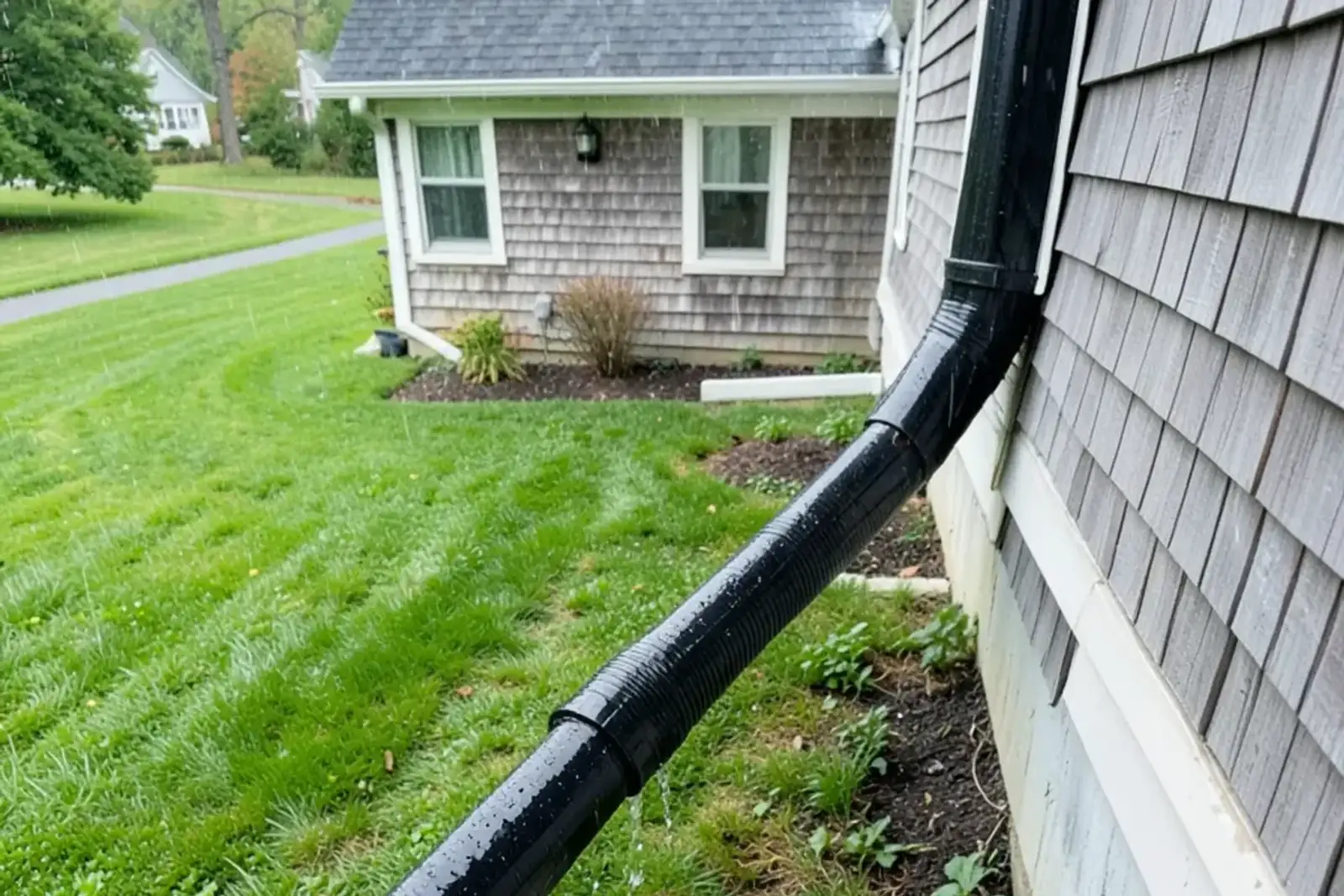
There is no single legal or code distance for a homeowner's extension. Drainage guides commonly give about 4 to 6 feet as a minimum and 6 to 10 feet as a safer target, with more on flat lots, clay soil or ground that slopes toward the house. A splash block, which is usually only a couple of feet long, moves water less far than an extension does. On a lot that already floods, we would lean toward the longer end and make sure the water has somewhere to go once it gets there.
Also look at where the extension ends. Water that is dumped onto a neighbor's lot, a driveway that slopes back to the garage or a low spot beside the house has only moved the problem. And a long run laid across a lawn needs to be visible or marked, so it does not get hit by a mower or tripped over.
After a big storm, walk the outlets
Within a day of a heavy rain, check each of these:
- Any downspout that came off its strap or elbow
- Soil washed out below an outlet, or a new channel running toward the wall
- A gutter run pulled loose by water or debris
- Splash blocks or extensions knocked out of place
- Standing water ten minutes after the rain stops
Photograph what you find. If it is a flood claim, your insurer will have its own rules, and our post on homeowners insurance and gutter damage in NH covers what to ask.
What a crew checks first at a wet foundation
From our crew: when a basement takes on water after rain, we would look for one of four causes first. A downspout clogged and overflowing next to the wall. An outlet that drops straight onto the foundation. A seam that leaks into the same spot. Or grade that slopes toward the house.
All four are cheap to check from the yard, so check them before paying for anything bigger. The fix is often small. An extension, a regrade or a reseal costs far less than waterproofing, and none of it replaces fixing a real foundation crack.
Is a bigger gutter part of the answer?
Sometimes. Capacity ratings climb from 5,520 square feet of roof for a 5-inch K-style to 7,960 for a 6-inch, both at one inch of rain an hour. Steep roofs and hard bursts cut those figures. Over a full 72 hours, four to eight inches is a gentle average, but storms arrive in bursts, and a gutter that overflows in the burst dumps water right at the foundation.
A larger gutter with the right number of downspouts handles bursts better. SMACNA puts the practical limit near 50 feet of run per downspout, so a long roofline needs more than one.
Are buried drain lines worth considering?
An underground drain line carries downspout water through a buried pipe to a discharge point farther from the house. On lots where an open extension would be in the way, or where water has nowhere to go on the surface, it is one option.
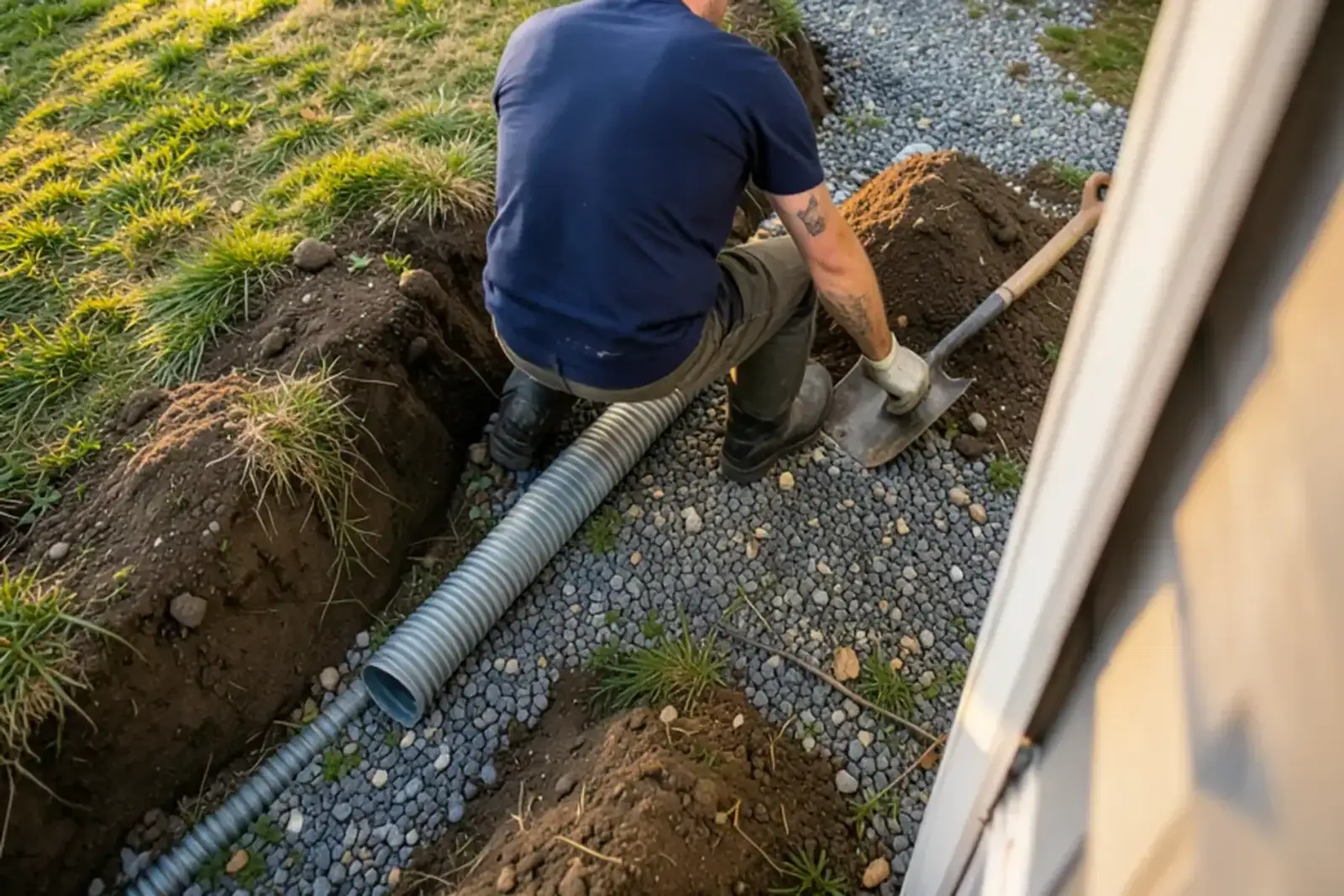
We have not confirmed underground drainage as one of our services. Call and ask how we would assess a lot and what a quote could cover. Whoever does the work, ask these questions:
- Where does the line end, and does that spot drain freely?
- Is there a cleanout for flushing it?
- Has Dig Safe been called?
- Does the town need to see a permit for it?
Dig Safe and permits first
New Hampshire requires a call to 811 at least three business days before digging. Do it even for a shallow trench. Permit rules differ from one town to the next, so phone the town office about your drainage project.
If you live near the Lamprey or another river, you can look up your address on FEMA's Map Service Center to see its mapped flood zone. A mapped zone is not the whole picture, since water can reach a basement from a roof or a high water table far outside any floodplain. Gutters and downspouts do not change a flood zone. They change how much of the water at your foundation came from your own roof.
Where we work
Raymond is roughly a 15-minute drive from Hampstead, by our estimate. Raymond took its flooding from the Lamprey River, and Rockingham County is our home county. See our overview of gutter installation, the page on downspout installation and the page on underground drainage. A written price comes after we look at your lot, and we will tell you if the fix is an extension and a regrade, not a new system. To book a look at a wet-ground lot, call (208) 464-4195.
Quick answers
Can gutters prevent flooding in Raymond, NH?
No. Gutters cannot hold back a river like the Lamprey, which flooded the area in 2006 and 2007. They do control roof water, and a house in Raymond with short downspouts can get a wet basement in an ordinary storm. Long extensions and clear runs reduce that part of the problem.
Do I need Dig Safe to bury a downspout line in Rockingham County?
Yes. Call 811 at least three business days before digging, even for a shallow trench. Buried lines in Rockingham County yards can cross utility lines you cannot see. Ask the town whether your project needs a permit too, because each town sets its own.
How far should a downspout extension reach on a wet Rockingham County lot?
Commonly cited guidance is at least 4 to 6 feet from the foundation, and 6 to 10 feet is a safer target on flat lots, clay soil or ground that slopes toward the house. After the 2006 and 2007 floods left Rockingham County soil saturated, farther is better. The water also needs a place to go once it arrives.
Does a sump pump replace downspout extensions near the Lamprey River?
No. A sump pump removes water that has already reached the basement, while an extension keeps roof water from reaching it. Both can matter on low ground near the Lamprey in Raymond, but the extension is the cheaper first step. A sump pump needs power, and storms are when power fails, so cutting the water load helps either way.
Sources
- Flood of May 2006 in New Hampshire, USGS
- Federal Register, FEMA-1643-DR New Hampshire declaration, May 2006
- Flood of April 2007 in New Hampshire, USGS
- Federal Register, FEMA-1695-DR New Hampshire declaration, April 2007
- Different Causes Found for New Hampshire 2006, 2007 Floods, Insurance Journal
- Flood of May 2006 in New Hampshire, USGS Open-File Report 2007-1122 (rainfall, peak discharges, counties affected)
- Flood of April 2007 in New Hampshire, USGS Scientific Investigations Report 2008-5120 (rainfall, counties, declarations)
- FEMA Map Service Center, flood zone lookup by address
- SMACNA, practical maximum gutter run per downspout
- Dig Safe underground damage prevention, NH Department of Energy
Questions about your gutters?
25 Glenwood North Rd #16, Hampstead, NH 03841
(208) 464-4195
Mon–Sat 8am–6pm · Sunday closed