
Seamless Gutters
Seamless vs. Sectional Gutters: Which Is Better in NH?
Seamless gutters are better for most New Hampshire homes because they have far fewer joints to leak, and joints are where ice and age do their damage. Sectional gutters cost less up front and suit short, simple runs. The deciding number is how many joints your roofline would end up with.
- ★ 5.0 on Google · 29 reviews
- Serving since 2024
- Based in Hampstead, NH
Published and updated November 2, 2026 · By the Lanes Gutters crew, Hampstead, NH
On this page
- Why joints matter more in New Hampshire
- A worked example with real numbers
- Seamless and sectional side by side
- How the two are put up
- Questions to put to any seamless or sectional quote
- When sectional still makes sense
- From the crew: what we would say at the curb
- Salem homes and the replacement question
- How to decide, then call
- Common questions
Count the joints. A sectional system uses pieces about 10 feet long, snapped or riveted together with a slip joint and sealant at each one. A seamless run is formed from a coil of metal to the length the wall needs, so it has joints only at corners, end caps and downspout outlets. That count is the argument, and everything else follows from it.
Why joints matter more in New Hampshire
Each joint depends on sealant, and sealant ages. It dries, shrinks and cracks, and metal moves against it every time the temperature changes. Hampstead spends about 195 days a year below 50°F (Dwellics), so there is a lot of movement and a lot of freeze and thaw.
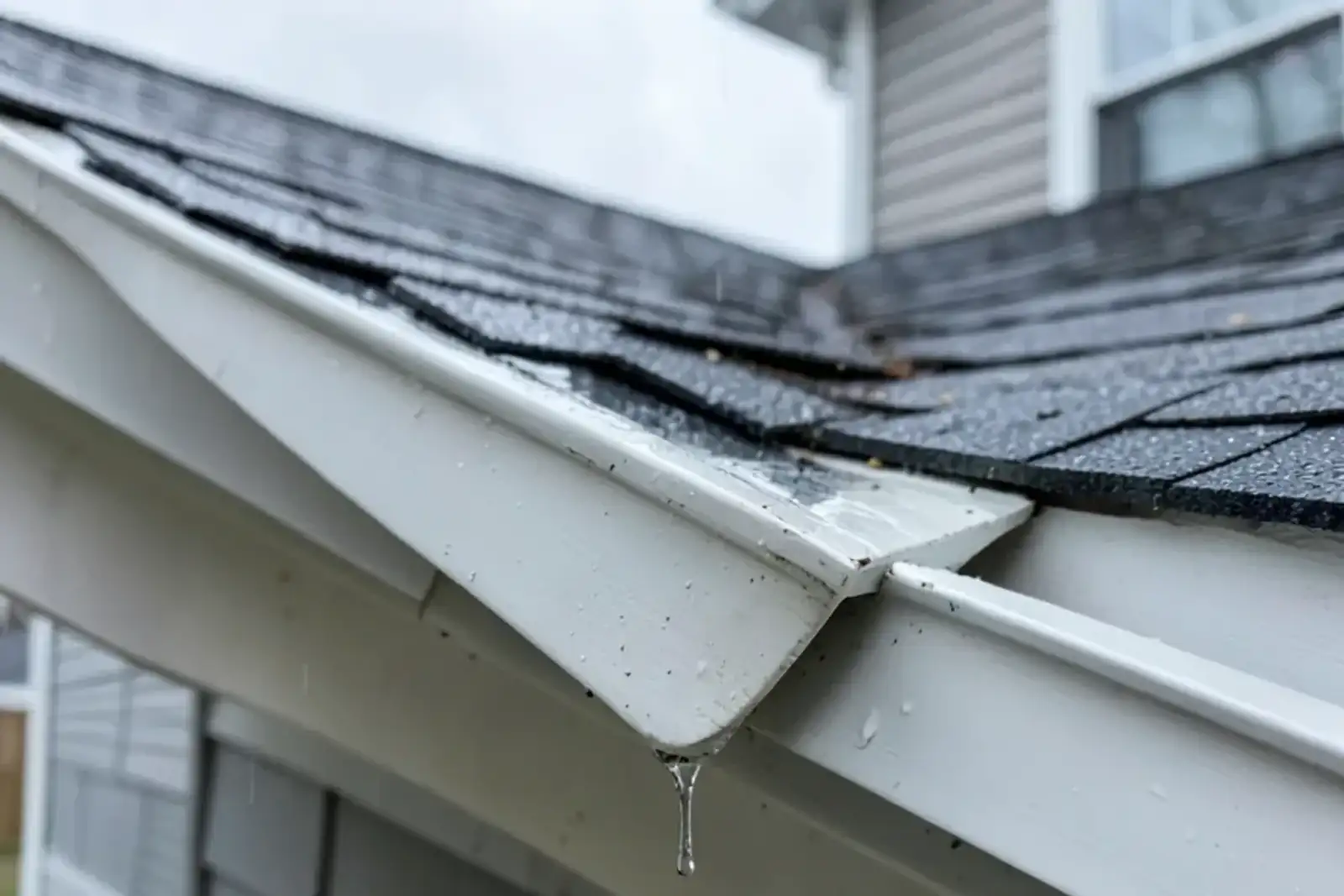
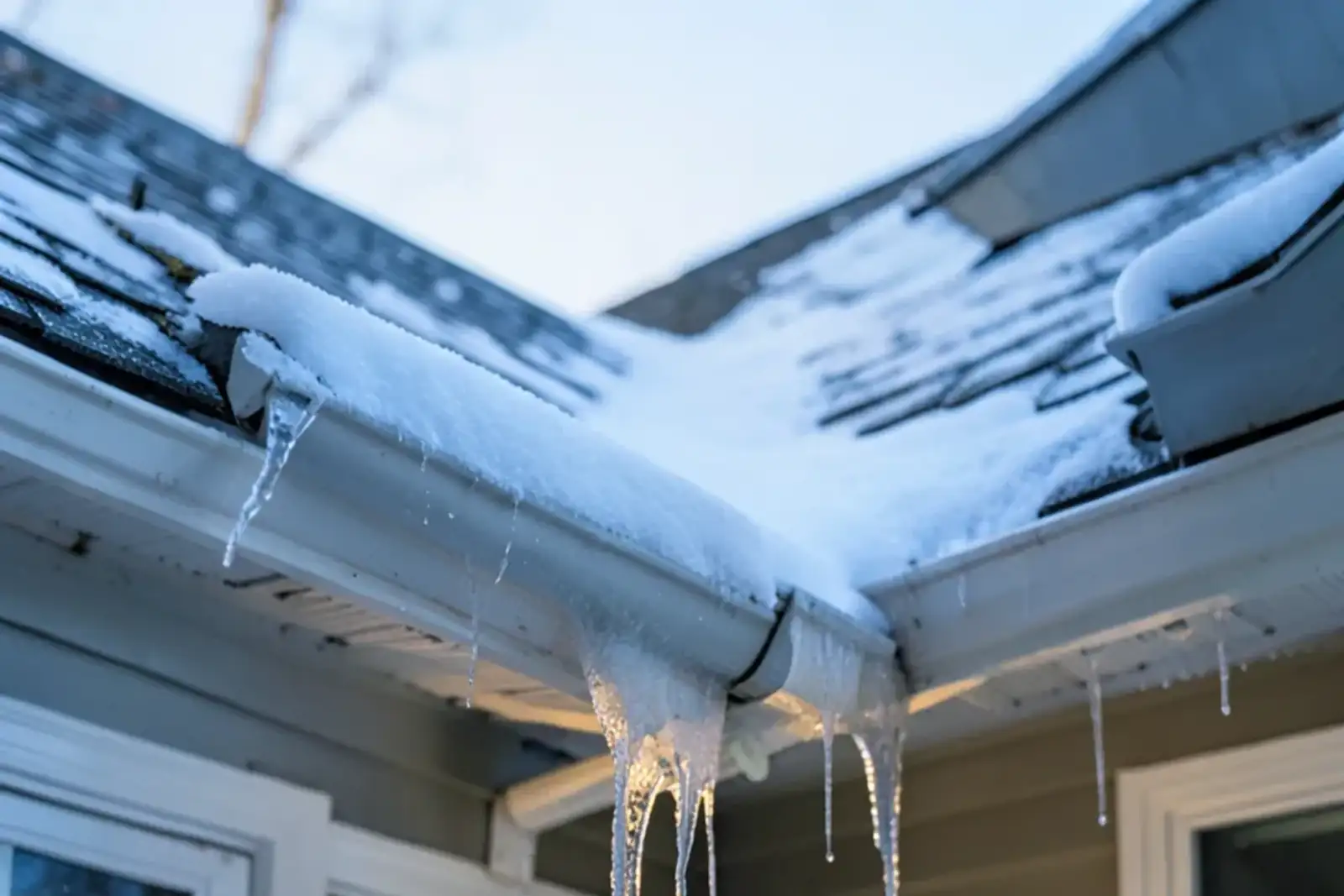
Once water gets into a joint and freezes, it expands and pries the joint wider. Ice in a gutter that no longer drains completely is also heavy, since ice weighs about 57 to 60 pounds per cubic foot. Joints that have loosened are the first places to sag under that load, and a sagging joint holds even more water. Our post on why gutters leak at seams explains the process in more detail.
A worked example with real numbers
One of our reviews describes a 158 ft seamless gutter and front trim on a building. Pierre S. wrote that the work "earned my business". If that run had been sectional, 158 feet in 10-foot pieces would mean roughly 15 slip joints along it. The seamless run has joints at its ends, its corners and its outlets, and that is all.
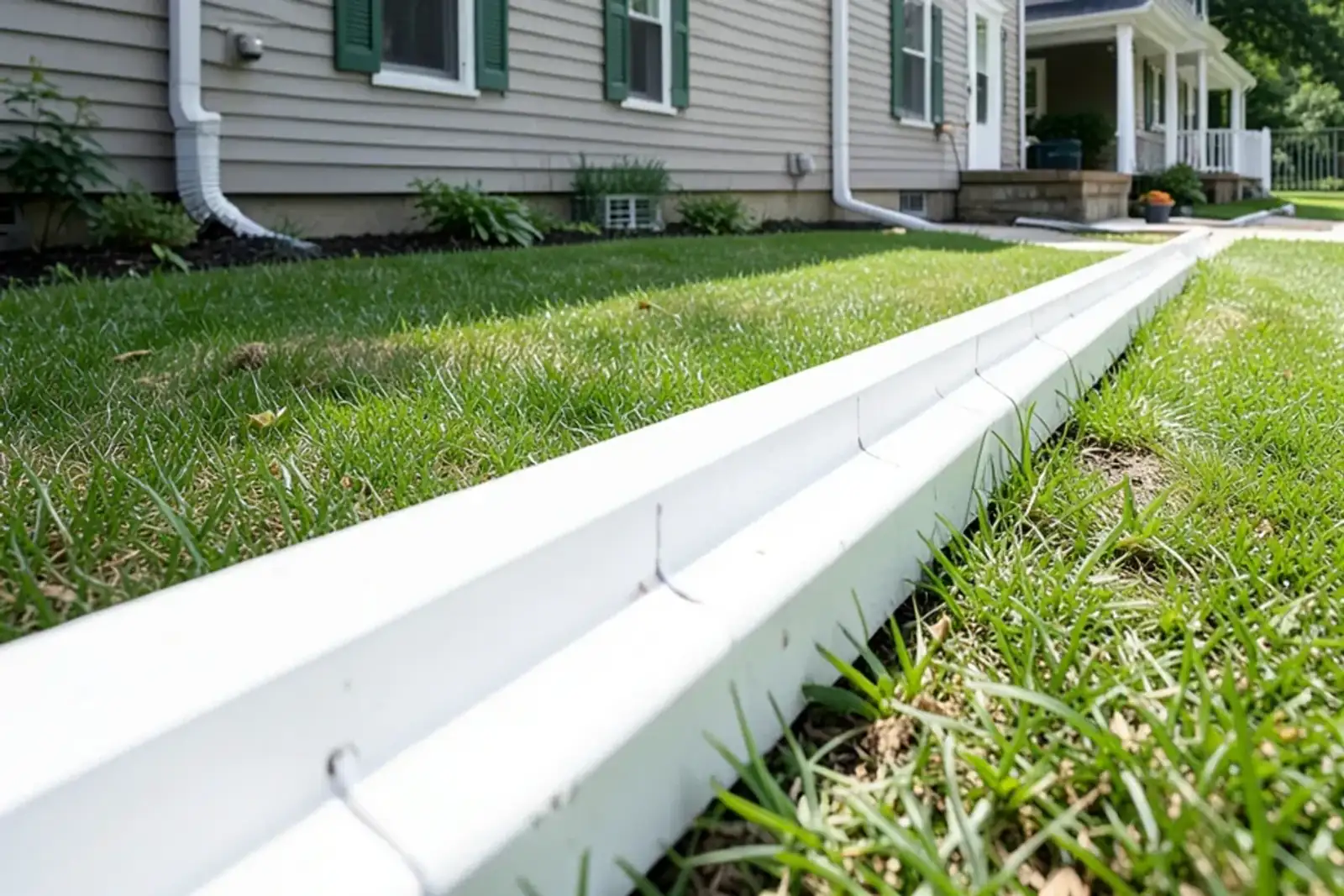
That difference is why seamless is the usual choice for a new installation. It does not mean seamless never leaks, since corners and outlets still need sealant, but there are far fewer chances for a leak.
A second worked example: counting joints on a ranch
This one is an illustration, not a past job. A one-story ranch has gutters on the front and back eaves only, 52 feet each, with a downspout at each end. In ten-foot pieces, each 52-foot side needs five or six sections, which means about five slip joints per side, or ten across the house. Add the end caps and the four outlets and the sectional system has 10 slip joints plus the end and outlet seals. The seamless version is two single pieces of 52 feet. It has no slip joints at all, and the only sealed points are the end caps and outlets. Ten fewer joints is ten fewer places for sealant to dry out over a cold winter.
Now run the same count on a two-story colonial with gutters on four sides and 136 feet of eave. Sectional would be about 14 pieces plus four corners, so the joint count nearly doubles from the ranch. That is why the seamless argument gets stronger as houses get longer and more broken up.
Seamless and sectional side by side
| Seamless | Sectional | |
|---|---|---|
| Joints | Corners, end caps, outlets | Every 10 feet or so, plus corners |
| Typical leak points | A few, mostly at corners | Many, mostly at slip joints |
| Up-front cost | Higher | Lower |
| Install | Formed to length, then hung | Pieces joined along the wall |
| Repair | Reseal a corner or section | Reseal or replace a piece |
| Long-term value | Usually better on long runs | Better on short, simple runs |
How the two are put up
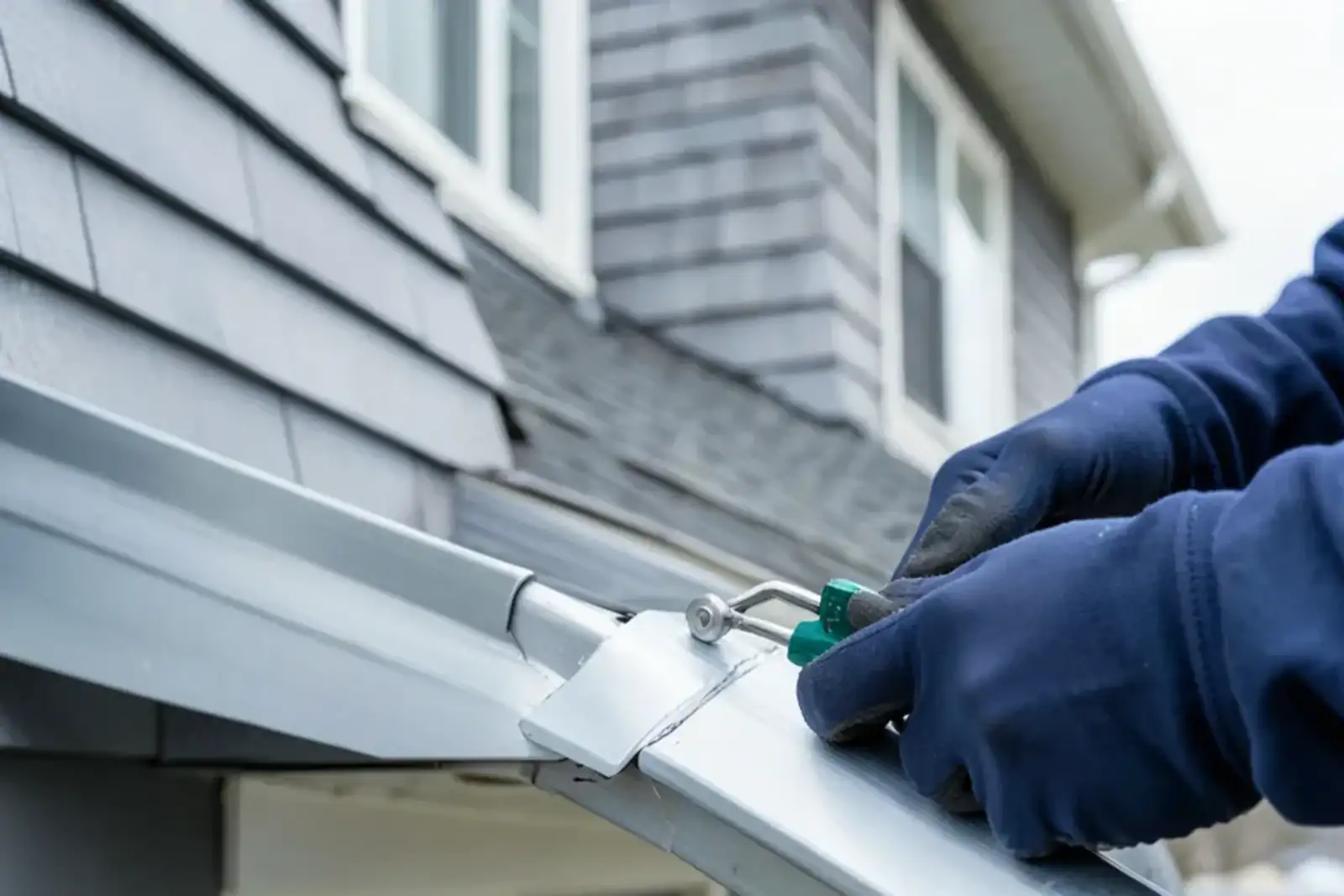
A seamless run is made from a coil of flat metal fed through a forming machine, then cut to the length of the wall. It is lifted onto the fascia as one piece, hung on hangers and given a pitch toward the downspout. Corners are cut and sealed, and end caps are fitted.
Sectional gutter comes in short pieces that are joined on the wall. Each connection needs sealant, and each is a place the line can shift out of pitch. A run that dips between two joints holds water, and that standing water ages the sealant faster.
Seamless is not simply better in every way, and we would rather say so. A long seamless run is awkward to carry and needs clear room to be brought to the wall. A damaged section cannot be unsnapped like a sectional piece. It is resealed, spliced, or cut out and replaced. Repairs are sometimes more involved than on a sectional gutter, and the job needs a crew with the right equipment. Those costs are real, but they come up far less often than the leaks they replace.
Neither type fixes a bad hanger layout. Seamless gutter is longer and heavier per piece, so it needs hangers placed close enough to carry a load of snow and wet leaves.
Questions to put to any seamless or sectional quote
- How many corners, end caps and outlets will the run have?
- What pitch will the gutter hang at, and how is it set?
- How are the hangers spaced?
- Which metal thickness does the quote use? Our post on .027 versus .032 aluminum explains why the answer matters.
- Is the fascia checked, and what happens if it is soft?
Reading lifespan and size claims in a quote
Lifespan claims for seamless and sectional gutters vary from one source to the next, and most come from companies that sell one or the other. The widely listed figure for standard aluminum is 20 to 30 years of service, and that describes the metal. A sectional system tends to need attention sooner because the joints age faster than the metal does. When you read a lifespan number, ask what it assumes about thickness, hangers and maintenance. Our aluminum gutters page covers the metal itself.
Size matters here too. Joints that carry more water work harder, and a 6-inch gutter handles about 44% more roof than a 5-inch, based on common sizing charts of about 5,520 square feet versus 7,960 at one inch of rain per hour. If your roof is large or steep, compare 5-inch gutters and 6-inch gutters before comparing seamless to sectional, since an undersized gutter overflows whichever way it is joined.
When sectional still makes sense
Sectional gutters are not wrong. They fit a few jobs well:
- A short run, such as a porch or a small shed, where the joint count is low anyway
- A tight budget on a house that will be sold or torn down soon
- A temporary fix on a section that has to be replaced and matched later
- A repair on a house that already has a sectional system and is otherwise sound
If the run is long or the house has several corners and a second story, seamless usually earns back the difference.
From the crew: what we would say at the curb
General trade advice, not a story. A sectional system rarely fails everywhere at once. It fails at one joint, you reseal it, and a year later it fails at the next one. That pattern is the signal to stop repairing.
Also look at the fascia. Joints that leak for years soak the wood behind them, and a new gutter hung on rotten wood will not hold. A quote that does not mention the fascia has not looked at the house.
Salem homes and the replacement question
Salem is close to our Hampstead base, around 10 minutes by our estimate. With a median build year of 1977 (ACS 2020-24), many gutters in town are old enough that the sealant has been through decades of winters. Homes of that age tend to need a look at the fascia and the pitch as well as the gutter itself.
Our seamless gutters page covers the product in full. If you are holding a sectional quote, send us the roof layout and we will write a price for the seamless version.
How to decide, then call
Count the corners, measure the longest run and look at the fascia. If runs are long and the wood is sound, seamless is the usual answer in this climate. If the run is short and the budget is tight, sectional can be reasonable, with the joints sealed and checked each fall. Call (208) 464-4195 with the roof layout and any quote you are weighing, and we will price the seamless version in writing.
Quick answers
Are seamless gutters worth the extra cost over sectional gutters in NH?
For most houses with long runs, yes, because every joint removed is one less place for ice and sealant failure to cause a leak. The extra up-front cost buys fewer repairs later. A written price for your own roofline shows the real difference, and we give one after we look at the house.
Can a sectional gutter be replaced with a seamless gutter on a Salem house?
Yes, in most cases the old system comes off and a new continuous run goes on the same fascia. The fascia gets checked first, because wet joints often rot the wood behind them. Salem has many homes from the 1960s and 1970s, so expect to look at the wood before the new run goes up.
Can a seamless gutter still leak, and where?
Yes, at the places they still have joints. Corners, end caps and downspout outlets all rely on sealant, and a hanger that lets go can open a run from the fascia. The difference is count. A seamless run on a Salem ranch has a handful of sealed points, where a sectional run of the same length can have a dozen or more.
Can I mix seamless and sectional gutters on the same house?
You can, but it is rarely a good idea. Pitch, profile and color have to match across the join, and the weaker sectional part will still set how often you are back on the ladder. It makes sense as a stopgap on a section you plan to replace. Otherwise, price the full run in seamless and compare.
Is a sectional gutter easier to install myself than a seamless one?
Yes, sectional pieces are short and are sold for do-it-yourself work, while a seamless run is formed to length and carried up as one piece. The harder part is the pitch, the hangers and the sealant at every joint, which is where most do-it-yourself runs fail. Ladder work above one story is a job to hire out.
Sources
- Dwellics, Hampstead NH climate data
- American Community Survey 2020-24, Salem NH median year built
- General seamless versus sectional comparison guides and cost articles, reviewed November 2026 (mostly published by gutter sellers, so used for the shared points only)
Questions about your gutters?
25 Glenwood North Rd #16, Hampstead, NH 03841
(208) 464-4195
Mon–Sat 8am–6pm · Sunday closed