

Gutter Repair
Why Your Gutters Leak at the Seams
Gutters leak at the seams because sealant ages, metal moves with temperature and ice pries joints apart. In New Hampshire all three happen every year. A leak at one joint is usually a small repair, but repeat leaks often point to a bigger problem.
- ★ 5.0 on Google · 29 reviews
- Serving since 2024
- Based in Hampstead, NH
Published and updated November 2, 2026 · By the Lanes Gutters crew, Hampstead, NH
On this page
The short answer is that the joint failed, not the gutter. Metal gutters rarely leak through the middle of a run. They leak where two pieces meet, which is why the drip shows up in the same place every storm.
The three reasons seams let go
Most seam leaks come down to age, movement or ice, and on an older house it is usually some mix of the three.
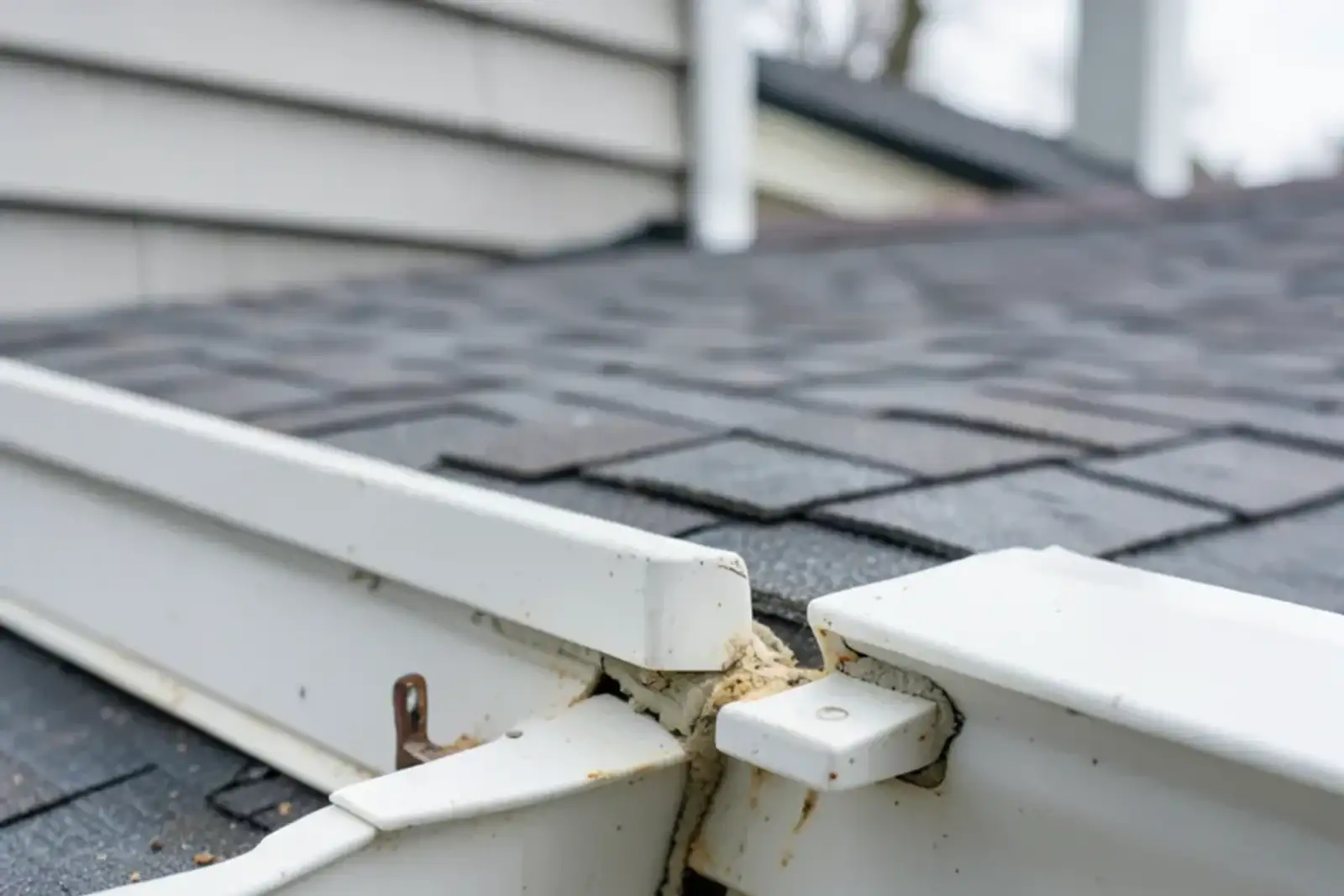
Sealant gets old. Gutter sealant is exposed to sun, standing water and temperature swings for years. It hardens, shrinks and cracks. Once there is a hairline gap, water finds it.
Metal moves. Aluminum expands as it warms and contracts as it cools. Over a long run that movement adds up, and it works at every joint. A gutter here goes from below zero to a warm roof in the sun, sometimes within weeks.
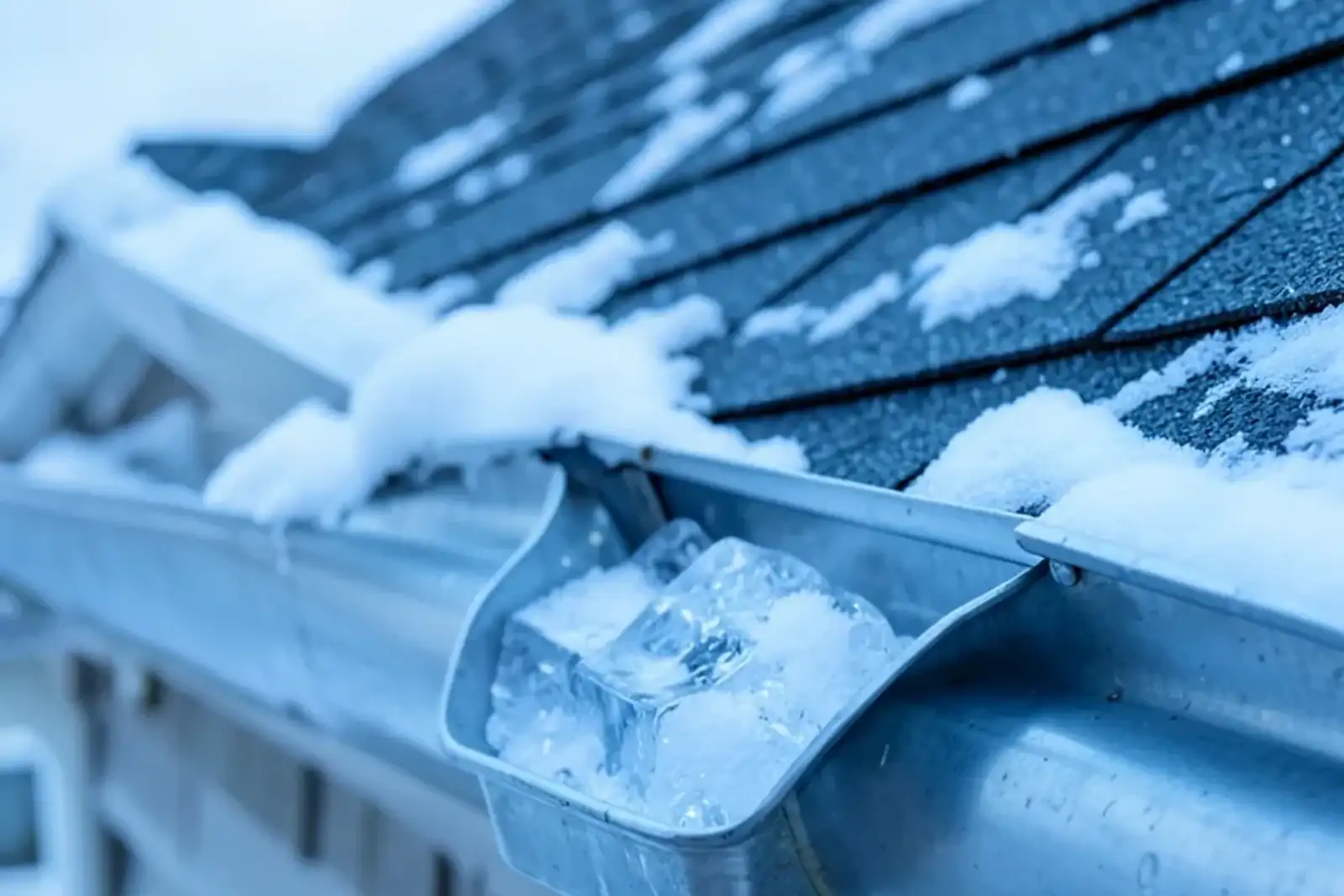
Ice pries joints open. Water that gets into a joint and freezes expands. Each freeze pushes a little harder. Hampstead spends about 195 days a year below 50°F (Dwellics), and that gives ice plenty of chances. Many homeowners first notice a leak in spring, after the damage was done in January.
What a good corner joint is made of
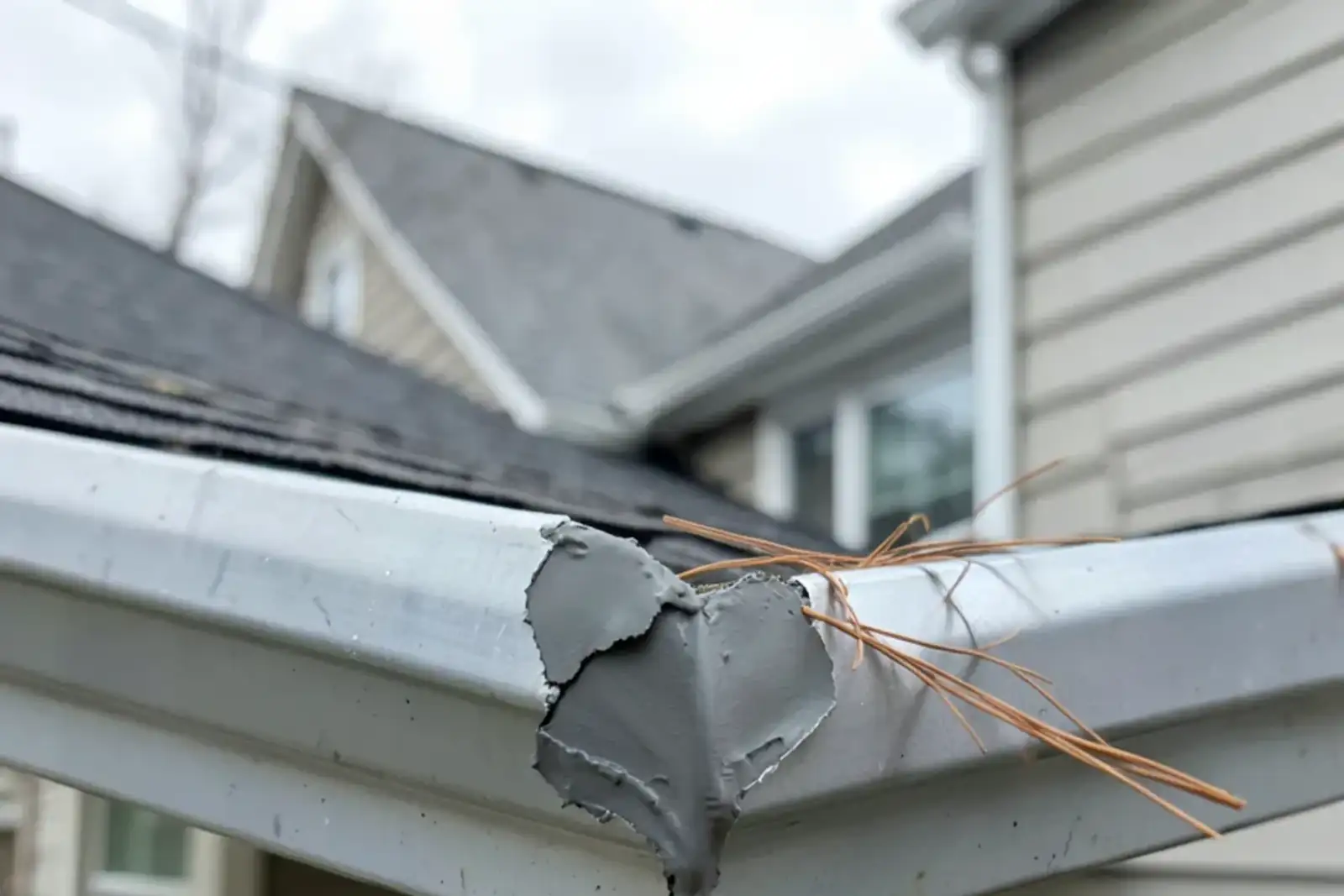
Sealant keeps water out, but it is not what holds a corner together. A properly made corner has the metal lapped and fastened with rivets or screws, and the sealant sits in the lap to close the gap. When the fasteners back out or the metal flexes, the sealant is the first thing asked to bridge a moving gap, and it cannot. That is why a joint that was resealed once may drip again within a season.
Contractor guides often say sealant needs redoing every few years, commonly given as 5 to 10, and exposure to sun and standing water decides where a given joint falls in that range. We have not verified a figure for New Hampshire, so treat it as a rule of thumb.
Fasteners matter too. Steel screws in an aluminum gutter can set up corrosion where the two metals meet, and rust at a corner pushes the joint apart over time. Fasteners that match the gutter metal avoid that, which is a fair question for any installer.
Where to look on your own gutters
You can usually find a seam leak from the ground in the next rain. Stand back and look at these spots:
- Corners. Miters are the most common failure on any gutter.
- End caps. The cap at the end of a run takes the push of all the water behind it.
- Downspout outlets. Water spins through here, and sealant wears out early.
- Section joints. On sectional gutters, every slip joint is a possible leak.
A drip that continues after the rain stops is draining from the gutter, which points to a joint. Water that only spills over the top during a downpour is overflow, and that is a different problem, covered in our guide to gutters overflowing in a storm.
Seam leak or something else?
A few other problems look like seam leaks and need different repairs.
| What you see | Likely cause | What fixes it |
|---|---|---|
| Drip at a joint, continues after rain | Failed sealant | Clean and reseal |
| Water running down behind the gutter | Missing apron or gap at the drip edge | Flashing repair |
| Spilling over the front edge | Clog, undersized gutter or poor pitch | Cleaning, sizing or re-pitching |
| Drips from mid-run with no joint | Pinhole, or a loose spike hole | Patch or refasten |
Bad pitch deserves a special mention. If water sits against a seam instead of running to the outlet, that seal stays wet all the time and fails early. Sealing it again without fixing the pitch only buys a season or two.
How many joints are in the run
Count the possible leak points on one long side of a house to see why seamless helps. Take a 40-foot side. A sectional system, sold in lengths around 10 feet, has about three slip joints along the run, plus two ends and an outlet. A seamless run of the same length has no joints along the straight part at all, only the ends and the outlet. Add a bay or a dormer and every extra corner adds a joint to either type.
That does not make seamless leak-proof. The ends, corners and outlets still carry the load, and they are where seamless gutters leak when they do. What it means is that on an old sectional run with several failed joints, resealing fixes the symptom at each one, while replacing it removes most of them for good. The cost of each path is a quote question, and our leaking gutter repair page covers how we would assess it.
Reseal or replace?
A single leaking joint on a sound gutter is a straightforward leaking gutter repair. The joint gets cleaned down to bare metal, resealed and tested with water.
The answer changes when:
- Several joints have failed at once
- The same joint keeps failing after repairs
- The gutter is sectional and past 20 years old
- The metal itself is bent, torn or corroded
At that point, compare a repair price with a replacement price. Replacing a tired sectional system with seamless runs removes most of the joints that were causing the trouble.
What we would tell you on site
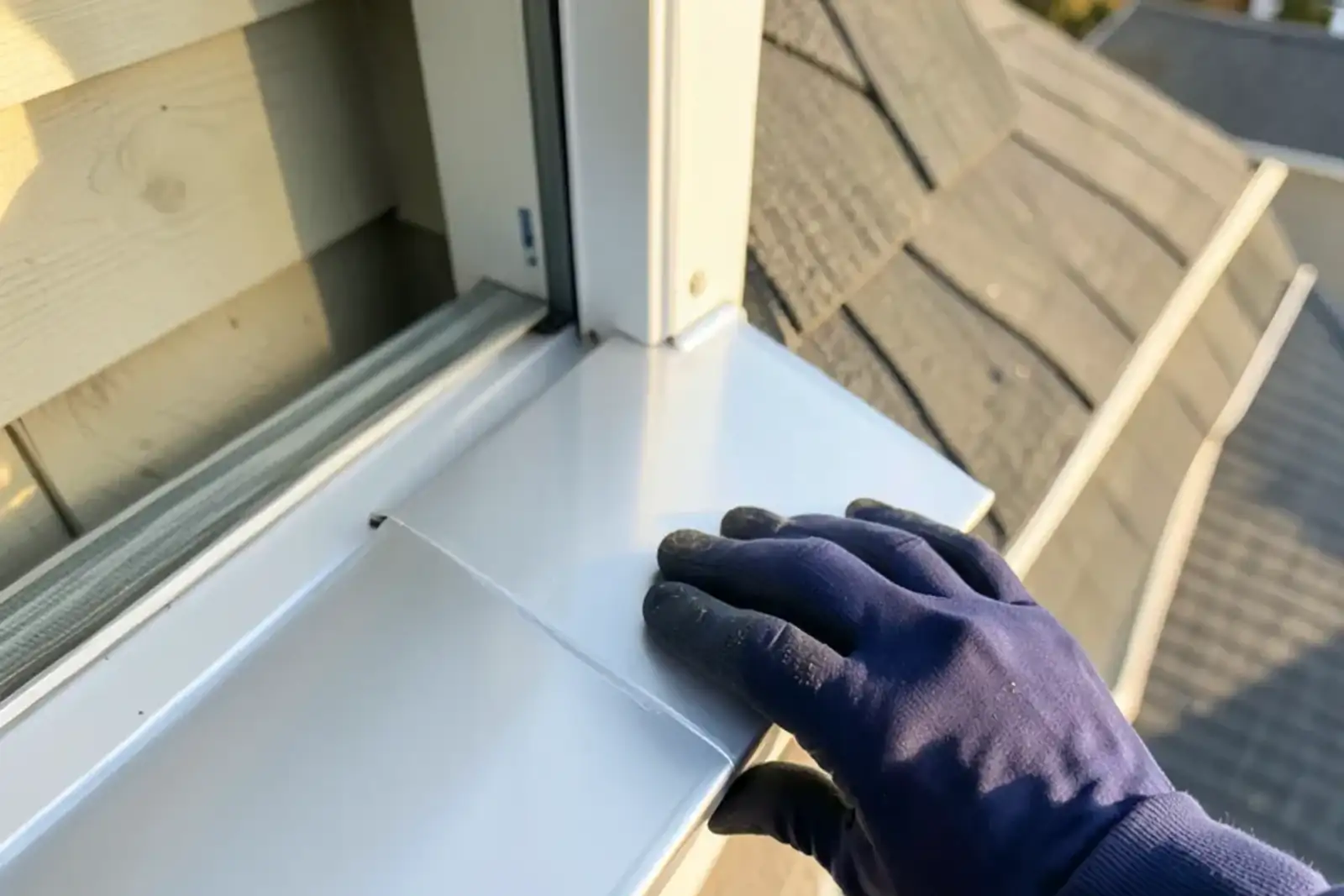
From our crew: the most common mistake we see is fresh caulk run over old caulk. It looks like a repair, it holds for a few months, and it leaves more material to scrape off when it fails. Sealant needs clean, dry metal to stick to, and that surface preparation takes longer than laying the bead.
The second thing we would say is to look beside the leak. A joint that fails early is often a sign that something nearby is wrong, such as a section that has lost its pitch or a hanger that has let go. Houses from the 1970s and 1980s, common across Rockingham County, are the likeliest place to find it.
Testing, timing and what a patch can and cannot do
Sealant needs dry, clean metal and a temperature inside the range on its label. That makes January a poor time to reseal, and it is why we would rather bridge a winter leak than force a repair onto a wet joint. A temporary patch or a bucket under the drip is fine for a few weeks. It will not fix movement.
After any reseal, give the product the cure time its label calls for before water goes through it. Then run a hose slowly into the gutter above the joint and watch it from below. A joint that holds a steady stream is better proof than waiting for rain, and a drip that shows up in the test means the surface was not clean.
Peel-and-stick patches from a hardware store can hold a clean, flat spot for a while. They do not suit corners, which flex, and they are harder to remove when a proper repair is made later.
How to keep seams tight for longer
Sealant lasts longest on a gutter that drains fully and stays clean. Four habits make the biggest difference:
- Clean the gutters after leaf drop, so wet debris does not sit against the joints all winter.
- Check the first few storms after any repair. A drip that returns quickly points to a surface that was not clean or a joint that is still moving.
- Look along each run from the ground once a year. A dip in the line means water is sitting somewhere it should not.
- Tighten or replace loose hangers before snow season, because a section that flexes under load works its seals apart.
None of this takes long, and it costs far less than replacing fascia that has been wet for years. If you would rather have someone else look, a yearly maintenance visit covers the same ground.
When to call
Fix a leaking seam before winter if you can, because a wet joint freezes and gets worse. If it is on a second story, or there is ice about, leave the ladder alone. We work across southern New Hampshire, including Plaistow, and you can read more about what we do on our gutter repair page.
If the leak is behind the gutter rather than at a joint, our gutter flashing repair page explains the gap at the roof edge, and gutter pitch correction covers water that sits against a seam. Photos of the drip, taken in the rain, help a lot on the first call. Call us at (208) 464-4195 and tell us where the water shows up.
Quick answers
Can a leaking gutter damage my house?
Yes, if it is left alone. A steady drip soaks the fascia behind it, stains siding and can wear a trench at the foundation. In winter the same drip builds an ice patch on the walkway below. A small leak is cheap to fix now and more expensive after the wood starts to go.
Do seamless gutters ever leak?
They can, but they have far fewer places to do it. A seamless run has joints only at corners, end caps and outlets, while a sectional system has a joint every 10 feet or so. When a seamless gutter leaks, the cause is almost always at one of those few joints.
Can I fix a leaking gutter seam myself with hardware-store sealant?
Yes, for a low joint on a dry day, and only if you scrape the old sealant off to bare, clean metal first. Most home repairs fail because that step gets skipped. If the joint is on a second story, or the gutter is iced, leave it. Whatever you seal, watch it in the next two storms.
How do you decide between resealing and replacing seams on a Plaistow commercial building?
Count the failed joints and ask why they failed. A few leaks on a sound run suit resealing. Many failed joints on a long, old run point to replacement. One Google reviewer describes us cleaning a 30,000 square foot Plaistow building and then repairing its seams. Long runs move more with temperature, so we look at hangers and pitch too.
Sources
- Dwellics, Hampstead NH climate data
- Contractor and trade guides on gutter sealant, seam repair and reseal-or-replace decisions (web search, November 2026)
Questions about your gutters?
25 Glenwood North Rd #16, Hampstead, NH 03841
(208) 464-4195
Mon–Sat 8am–6pm · Sunday closed