
Emergency Gutter Repair
Storm-Damaged Gutters: What to Photograph and Who to Call
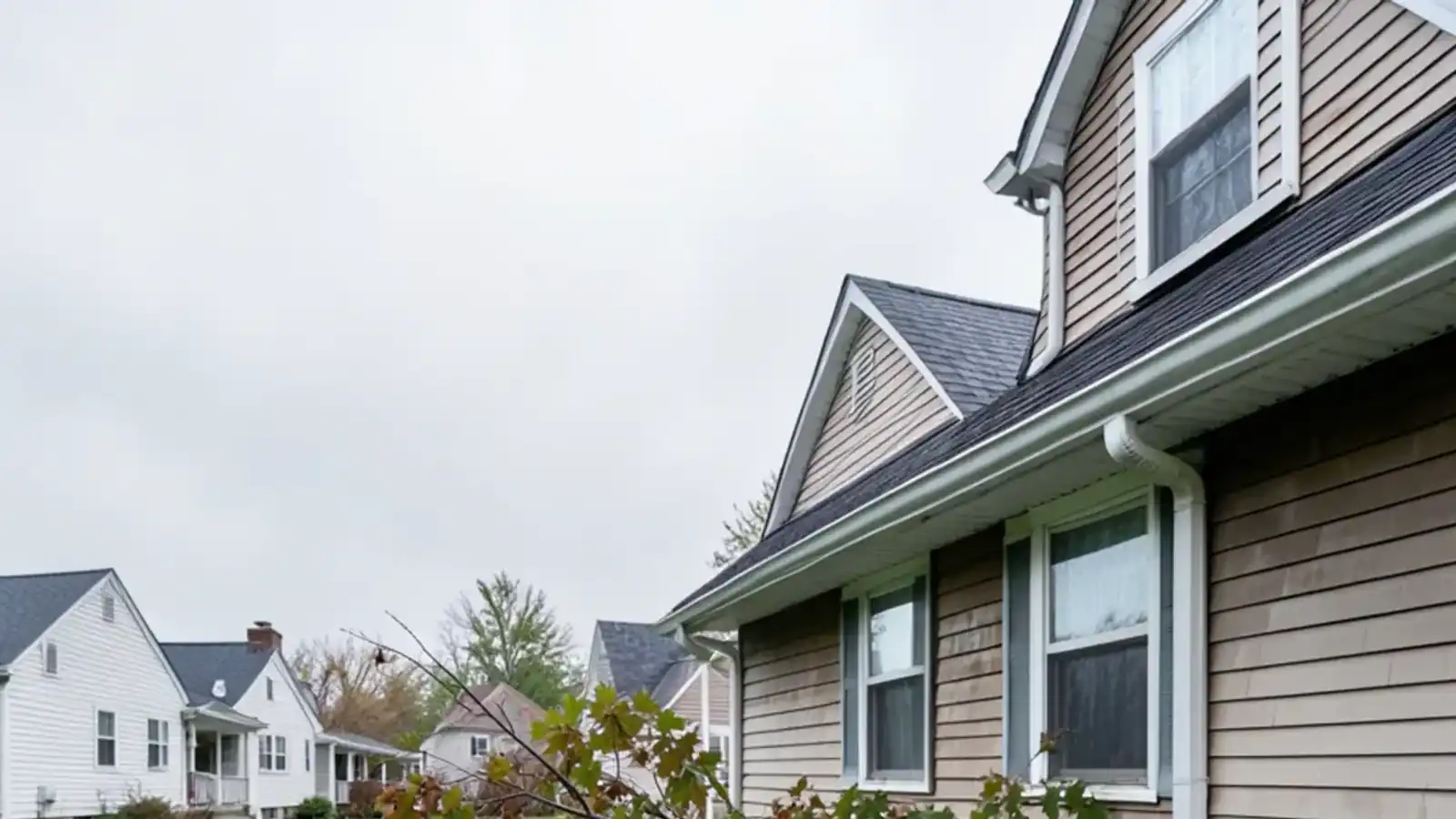
After a storm, a storm damaged gutters checklist has three parts. Make the area safe, photograph everything before you move it, and call the right people in the right order. Do not climb up to look, because most damage can be recorded from the ground with a phone.
- ★ 5.0 on Google · 29 reviews
- Serving since 2024
- Based in Hampstead, NH
Published and updated November 2, 2026 · By the Lanes Gutters crew, Hampstead, NH
On this page
- Storm damaged gutters checklist: first, make it safe
- Photograph before you touch anything
- What to clear, and what to leave
- Who to call, and in what order
- How we read storm damage on a gutter
- Nor'easters and heavy snow
- What the written price should show
- After the storm: the follow-up checks
- Keeping the job small
- Common questions
When a storm hits, work through the checklist below in order. Most of it takes place on the ground. The sequence matters, because photos taken after you clear debris show less than photos taken before. The repair side is on our storm-damaged gutter repair page, within emergency gutter repair.
Storm damaged gutters checklist: first, make it safe
- Stay inside until wind and lightning pass.
- Look for a limb or gutter touching a wire. If so, keep away and call the electric utility.
- Tape off any door or walk below a hanging gutter or loose limb.
- Turn off power at the panel if water is dripping near light fixtures or outlets.
- Leave the roof and the ladder alone. A wet, loaded roof edge is not a place to work.
Photograph before you touch anything
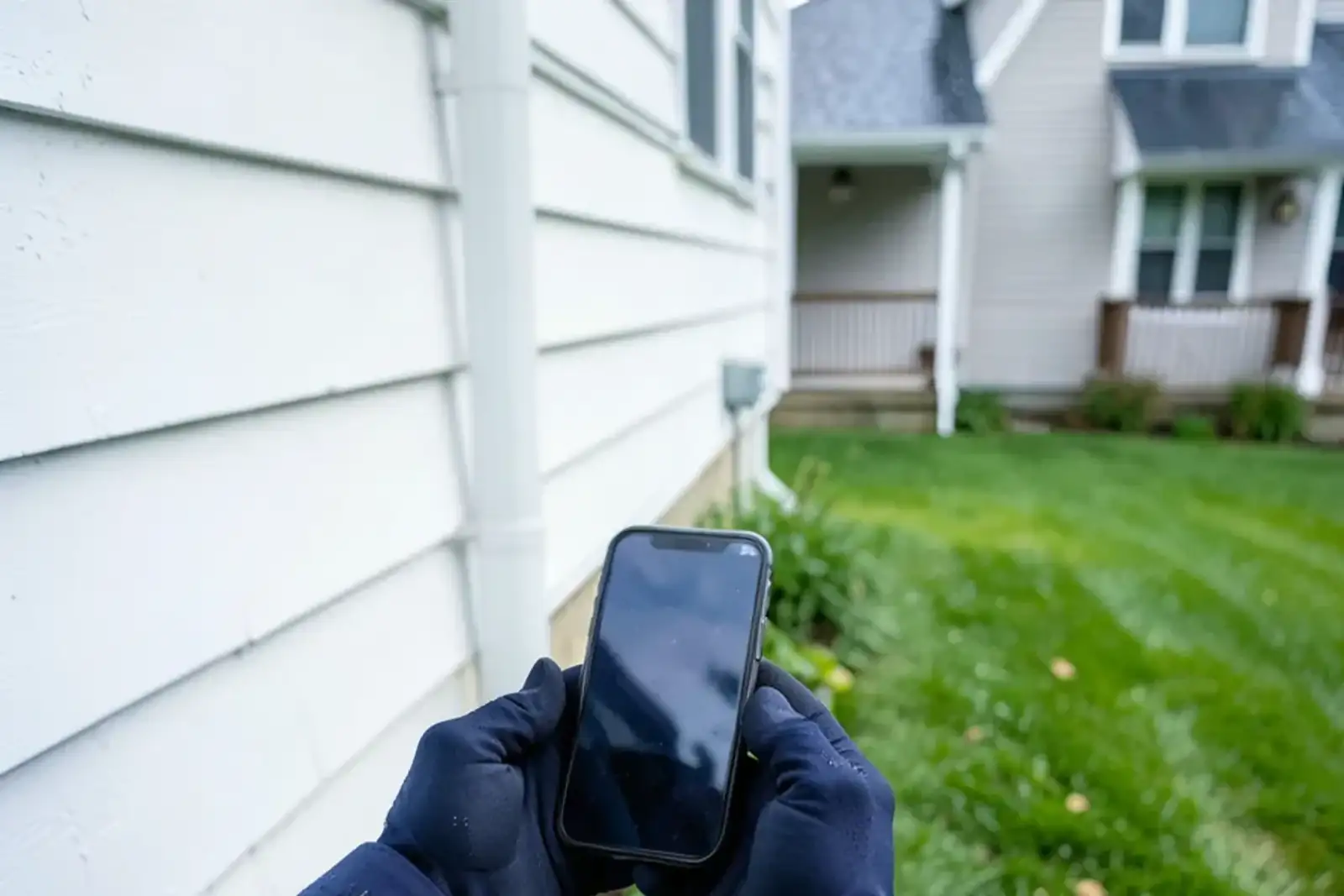
Insurers and installers both work from what you can show. Take photos from the ground in this order:
- The whole side of the house, so the damage is in context.
- Each damaged area, close and from two angles.
- Any limb, branch or debris still lying where it fell.
- Water stains on siding, soffit or ceilings inside.
- Anything that fell and landed on the yard, driveway or a vehicle.
Note the date and time in your phone's notes, with a line on what the storm was, such as high wind or a nor'easter. Do not clear debris until you have the shots.
A sample log, as an illustration
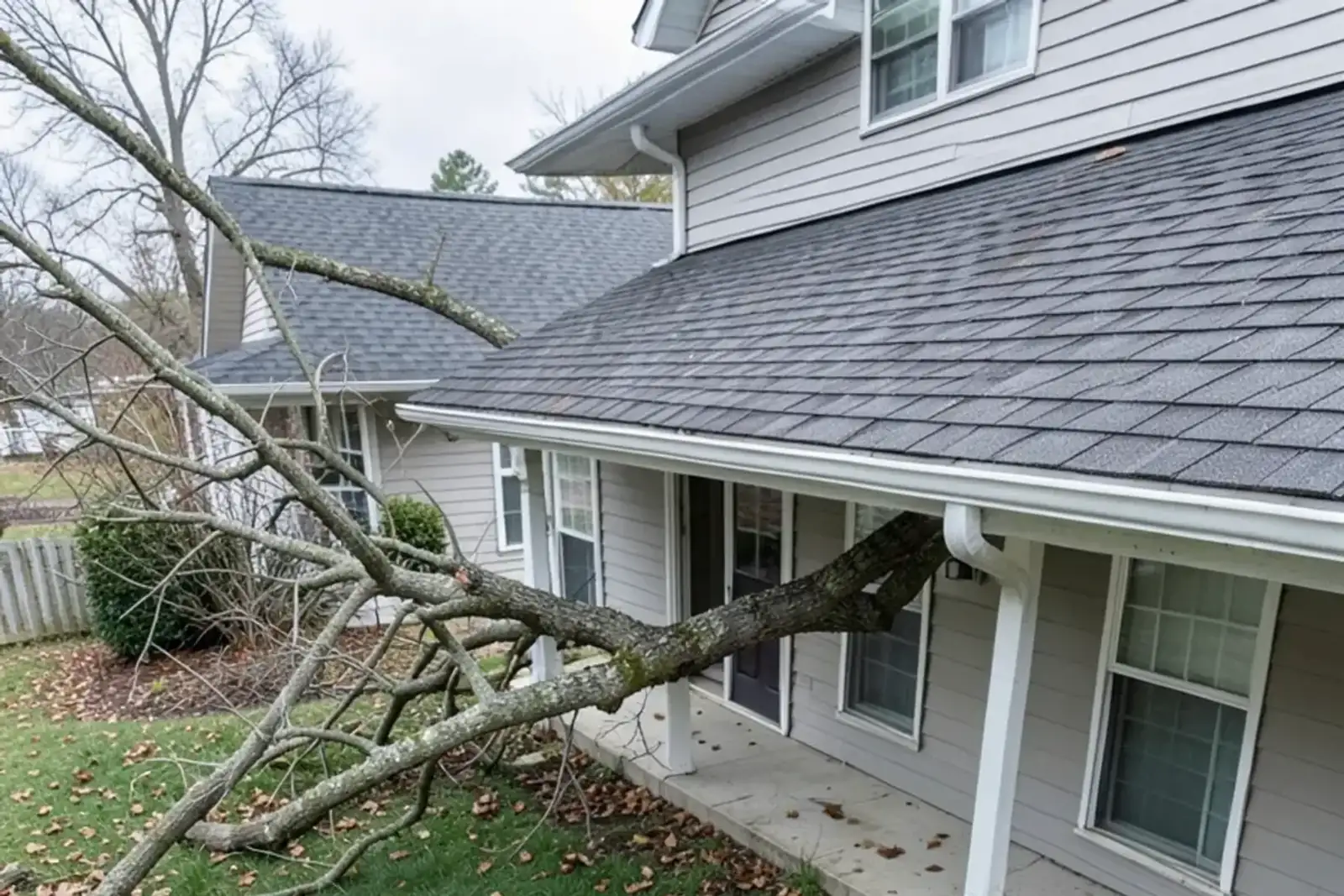
Suppose a wind storm drops a maple limb across the front gutter. A useful set is short and in order. A wide shot of the front of the house shows the limb and the roof edge together. Two close shots of the dented section come from the left and the right. One shot shows the pulled hanger at the end of the dent, and one shows the wet stain on the porch ceiling below. A last shot of the limb on the lawn, taken after it was lifted off, shows its size. That is five to seven images, each with a note of the time. It is enough for an insurer or an installer to work from without a visit.
What to clear, and what to leave
You can safely pick up loose branches and debris from the lawn and walkways, wearing gloves. Leave anything on the roof or leaning on a gutter. A limb hung up on a roof edge may be resting on the only thing holding the gutter up, and lifting it can bring the run down.
| Safe to do yourself | Leave for a pro |
|---|---|
| Clear branches from the lawn and walk | Limbs on or against the roof |
| Place a downspout extension | Hanging or sagging gutter runs |
| Move patio furniture from under the eave | Anything touching a wire |
| Wipe up water indoors | Cutting the gutter or fascia |
Why the tree crew comes before the gutter crew
A limb resting on a roof edge can be under tension. Cut at the wrong point, it springs, drops or drags the gutter with it. That job belongs to a tree service with the right equipment, not to a gutter crew or a homeowner with a pruning saw.
The order also protects the repair. A gutter rehung while a leaning limb is still overhead can be hit again in the next breeze, and the new work is wasted. We would rather price the gutter after the wood is down, with the roof edge in view. The trade-off is time, since tree crews book up after a big wind. In the meantime, photograph the limb, keep people clear and lay a downspout extension on any run that is still working.
Who to call, and in what order
- The electric utility, if anything touches a wire.
- A tree service, if a limb is on the roof or house.
- Your insurer, if the damage is larger than your deductible. Our guide to homeowners insurance and gutter damage covers how that tends to work.
- A gutter crew, for a written price on repair or replacement.
How we read storm damage on a gutter
From our crew, storm damage looks different depending on the cause, and the pattern helps a repair match the problem.
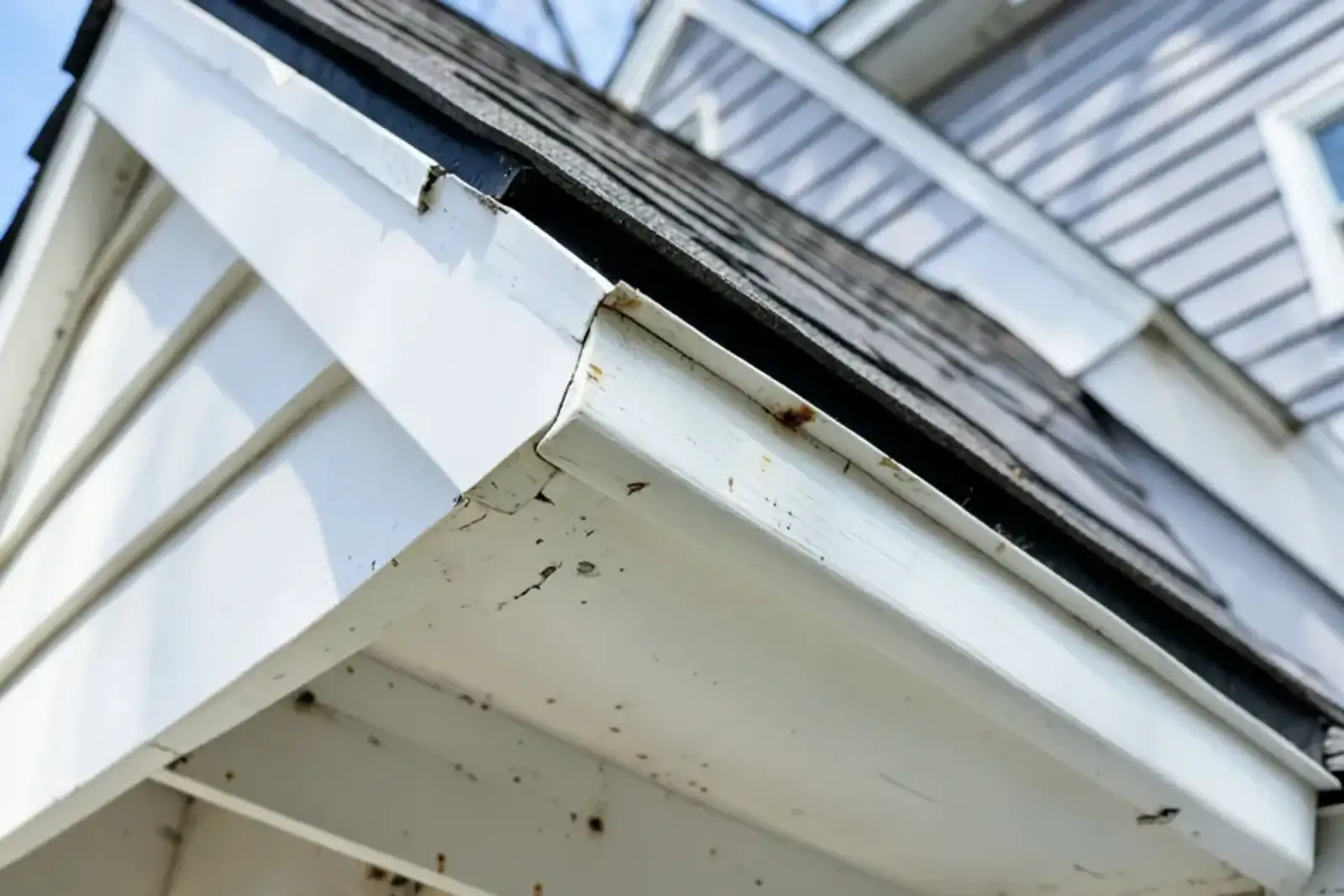
Wind tends to peel the front edge of the gutter outward or lift a corner, leaving a gap at the roof line. A falling limb leaves a dent or a crease at the point of impact, often with a bent hanger beside it. Heavy snow and ice bow the whole run downward between hangers. Flying debris crushes downspouts, which are thin and sit against siding.
Hail leaves round dimples, usually in a line on the front edge and on downspouts, with matching marks on the roof or siding. Light aluminum shows them easily, and a heavier gauge shows fewer. Dents that do not hold water or loosen a seam are often cosmetic, which is worth knowing before you spend money on them.
We look at the fascia behind the gutter next, because wood that was already soft fails first in a storm. A fallen limb gets the blame, but rot often decided the outcome. The written price then lists gutter repair and any wood work separately.
Nor'easters and heavy snow
A winter storm adds weight. Hampstead's yearly snowfall is about 53.8 inches (BestPlaces), and a wet, heavy fall can slide off the roof in one piece. That slide shears off gutter fronts and snow guards, and it can drop onto anyone standing below.
After a big snow, stay clear of the eaves and look for these from a safe distance:
- A gutter pulled forward from the fascia
- A bowed front edge
- Downspouts bent or knocked loose
- Ice hanging from a gutter that has pulled away
If the roof still holds loaded snow, wait. Fixes made under a ready-to-slide load are dangerous for everyone.
What the written price should show
A good price separates what the storm did from what was already wrong. Ask that it list, line by line, the gutter sections to repair or replace, the number of hangers, any downspouts, and any fascia or trim work. It should also say what is not included.
Keep your photos and the price together. If you file a claim, your insurer may want both, and a listed, itemized price makes the conversation simpler. Ours are written once we have seen the job, with wood work on its own line.
After the storm: the follow-up checks
A week later, walk the house in dry weather and look again. Slow leaks, a gutter that sits lower than before and a downspout that no longer drains are the usual late findings. In the next rain, watch each run from the ground.
Raymond sits about 15 minutes from our Hampstead base by our estimate, and the Lamprey River floods of 2006 and 2007 are a reminder to check drainage as well as gutters. Our Raymond gutter service page has more on the town.
Keeping the job small
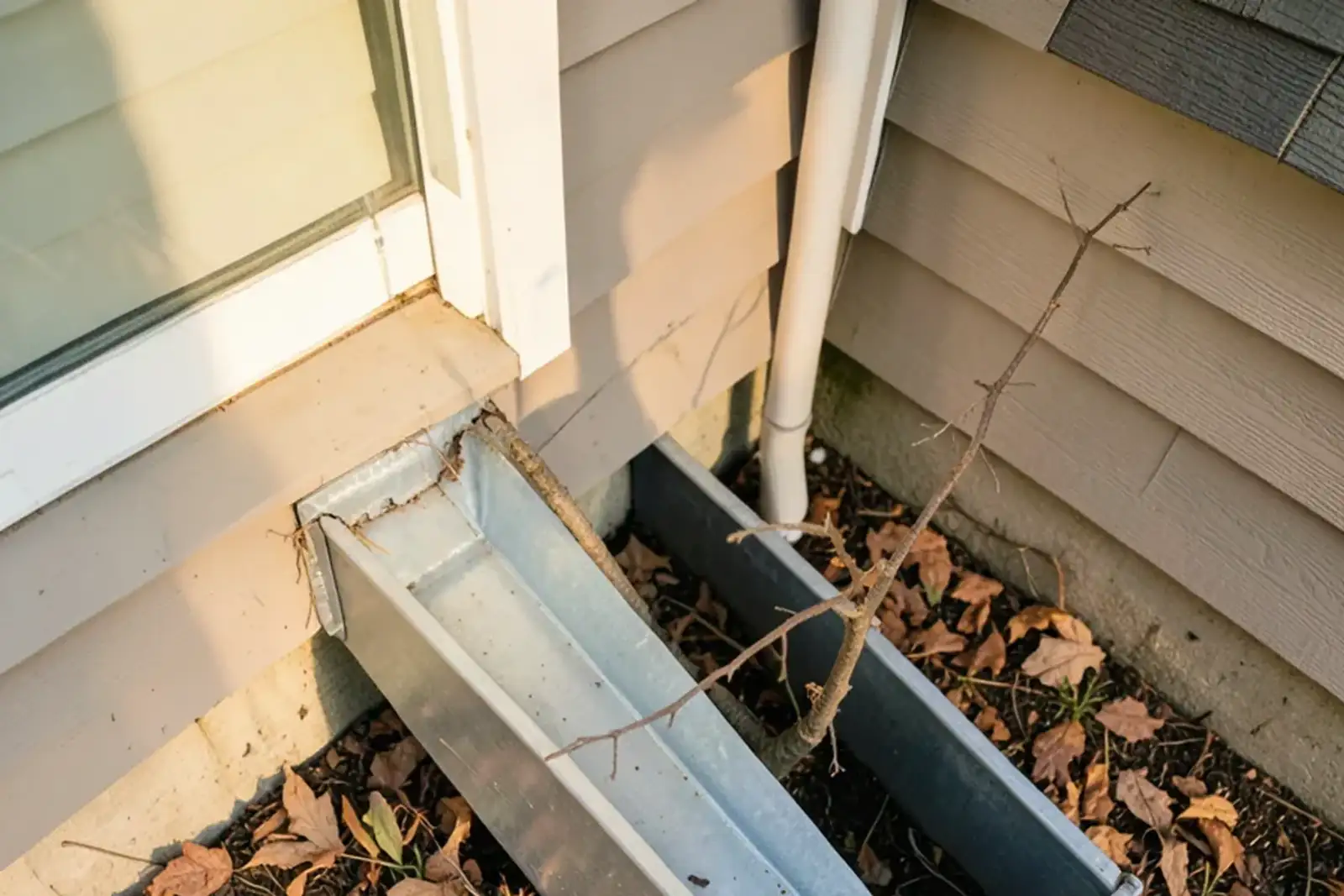
Most storm damage is cheapest when it is caught early. A pulled hanger costs less than a run that has dropped, and a blocked outlet is cheaper than a stained wall. Debris from the storm itself matters too. Leaves and twigs stripped by wind pack the outlets, and the first heavy rain after the storm is when a blocked run overflows. Check that water leaves each downspout, even if the gutter looks undamaged.
Your insurer decides what a claim covers, and the policy decides what applies, so ask before repairs begin and keep the receipts for anything temporary. Keep the photos handy, tell us what the storm did, and call us at (208) 464-4195 for a written price.
Quick answers
What should I photograph first after storm damage to my gutters?
Start with wide shots that show the whole side of the house, then take close shots of each damaged spot, the fallen limb or debris, and any water stains on siding or ceilings. Add the date. Take photos before anything is cleared, since insurers and installers both want to see what the storm left.
Do Raymond homes near the Lamprey River need extra checks after a storm?
Check the ground around the house, not only the gutters. The Lamprey River flooded Raymond in 2006 and 2007, so grading and downspout drainage matter on low lots. After heavy rain, make sure downspouts empty far from the foundation and that no water sits against the wall.
Is it safe to repair storm damaged gutters myself?
Small jobs on the ground, like fitting a downspout extension, are fine. Anything at the roof edge is not. Wet metal, loaded snow and a leaning ladder cause real injuries. If a section hangs or a limb rests on the roof, leave it where it is, photograph it and call for a written price.
Can hail damage gutters in Hampstead, NH?
Yes. Hail dents soft aluminum, and downspouts and the gutter front edge show it first. Look for round dimples in a line along the run, often with matching marks on siding or a screen. Hail that hits a gutter also hit the roof, so ask a roofer to look at the shingles before you assume the damage stops at the gutter.
How long after a nor'easter should a Rockingham County homeowner re-check the gutters?
About a week later, once everything has dried, and again during the next heavy rain. Slow leaks, a run that now sits lower and a downspout that no longer drains often show up only then. Walk each side from the ground, and photograph anything new with the date so the later damage is on record beside the first set.
Sources
- Home-inspection, insurer and contractor post-storm checklists (web search, November 2026)
- BestPlaces, Hampstead NH snowfall
Questions about your gutters?
25 Glenwood North Rd #16, Hampstead, NH 03841
(208) 464-4195
Mon–Sat 8am–6pm · Sunday closed