
Gutter Repair
How to Tell If Your Gutters Are Pitched Wrong
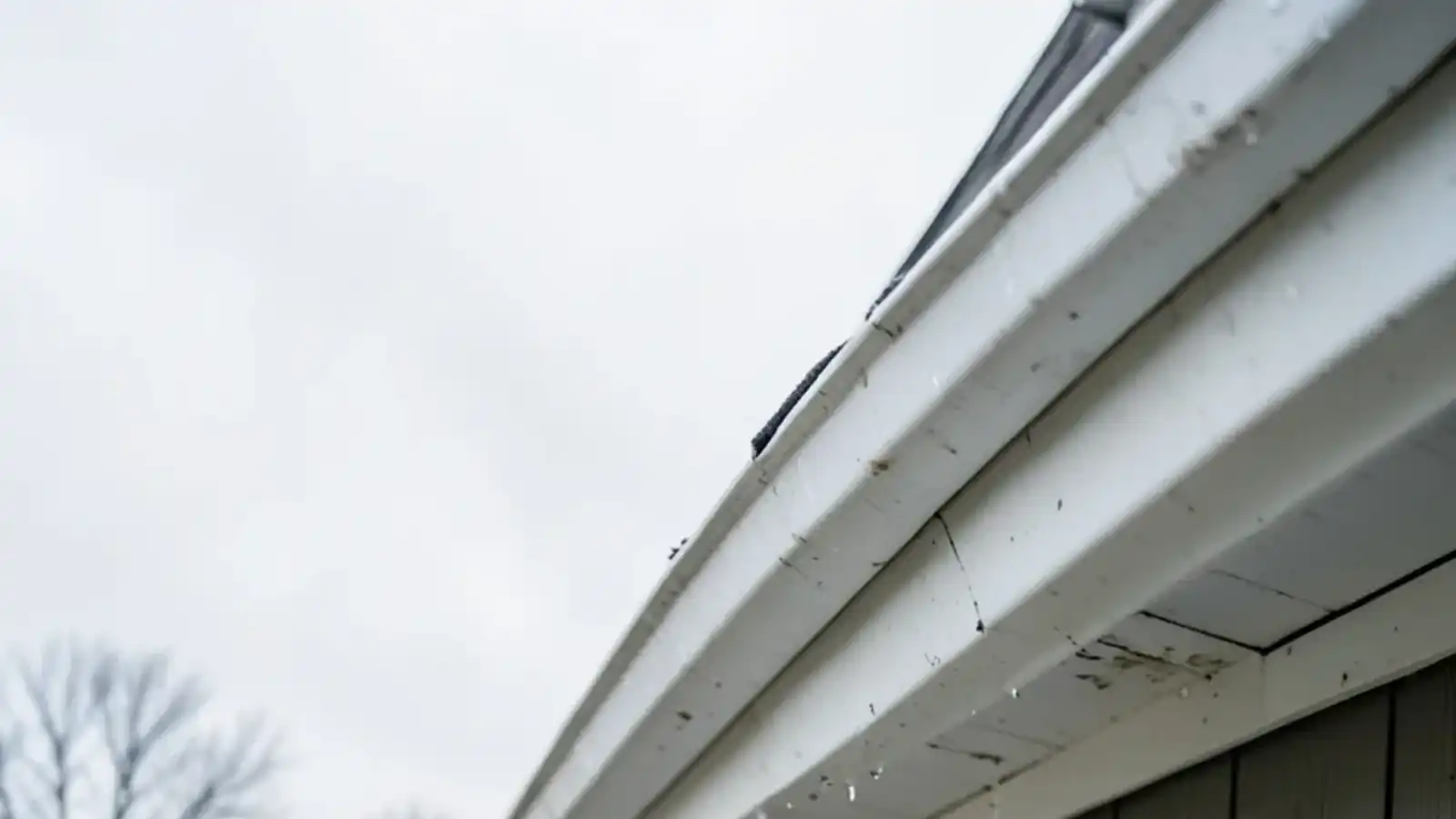
Gutters are pitched wrong when water cannot run to the downspout on its own. The signs are standing water after the rain stops, drips along the middle of a run and icicles that hang from the same stretch every winter. A level and a garden hose will tell you which section is off.
- ★ 5.0 on Google · 29 reviews
- Serving since 2024
- Based in Hampstead, NH
Published and updated November 2, 2026 · By the Lanes Gutters crew, Hampstead, NH
On this page
- What does a gutter with the wrong pitch look like?
- Five checks you can do from the ground
- Gutter pitch wrong, or a clog or sag?
- How much drop does a run need? A worked example
- What we check before we touch a hanger
- How a gutter gets re-pitched
- Is a steeper pitch always better?
- Sandown homes with wooded lots
- When the hose test says call us
- Common questions
The gutter should slope gently toward the downspout. The usual minimum is about a quarter inch of drop for every 10 feet of run, and steeper drains more surely. That is too small to see at a glance, which is why a run can be wrong for years before anyone notices.
What does a gutter with the wrong pitch look like?
Water tells you first. A gutter that drains properly is nearly dry within an hour or two of a storm ending. One that holds water has a low spot or a flat stretch. Watch for these signs:
- Water still sitting in the trough a day after rain
- A line of dirt or algae along the bottom of one section
- Drips falling from the middle of a run instead of a seam
- Peeling paint or dark stains on the fascia below one stretch
- Icicles that form on the same few feet every winter
A single sign can have other causes. Two or three in the same spot usually mean the pitch is off.
Five checks you can do from the ground
Do these on a dry day, in this order:
- Stand back about 20 feet and sight along the front edge of the gutter. A dip or a belly shows up against the straight line of the roof edge.
- Look at the fascia board behind the gutter. A gap between gutter and board, or a board that has bowed, means the run has moved.
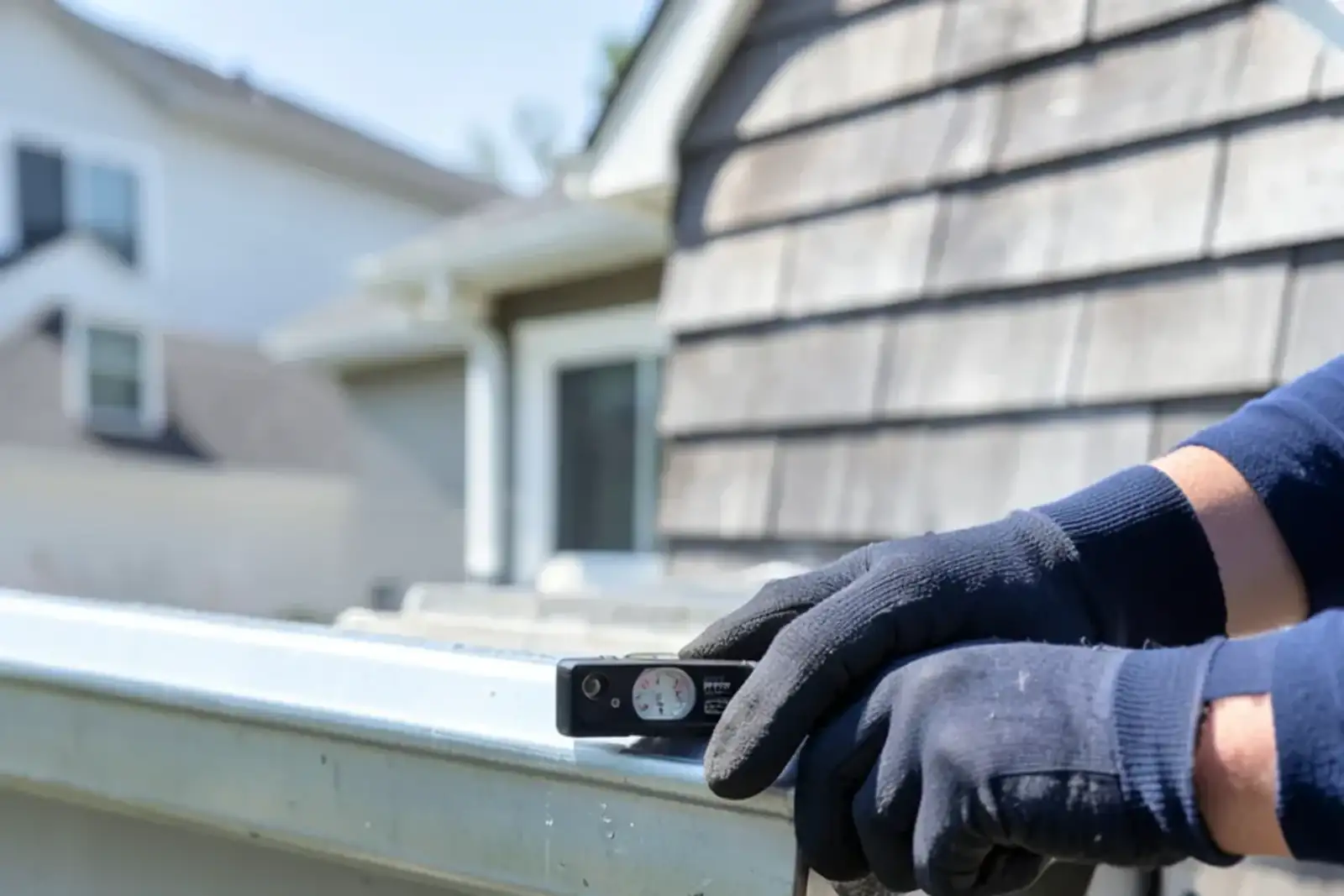
- Hold a small level against the front lip near each hanger. You are looking for the bubble to lean toward the downspout, not away from it.
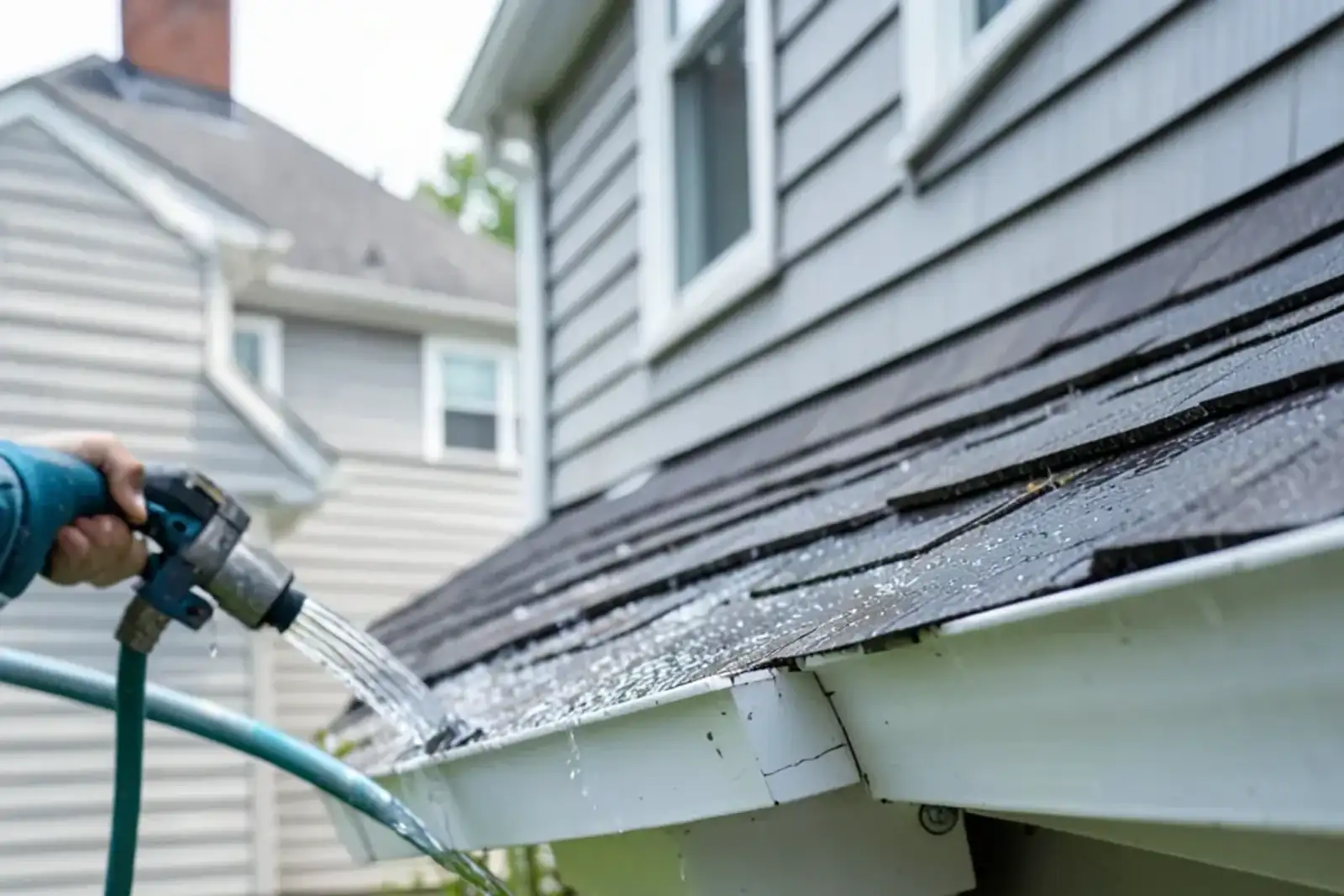
- Run a hose at the high end and watch. Water should travel to the outlet steadily, without stopping to pool.
- Count the downspouts. A run longer than about 50 feet with a single outlet is asking for trouble, because the practical maximum per downspout is around 50 feet (SMACNA).
Gutter pitch wrong, or a clog or sag?
Three different problems pool water, and the fix for each is different.
| Symptom | Probable cause | Fix |
|---|---|---|
| Water backs up, then clears when a downspout is flushed | Clog | Cleaning |
| Water sits in one spot, the fascia is straight | Hanger dropped | Reset hangers to a new line |
| Water sits along a bowed stretch, the board is soft | Sag from rot or ice load | Repair the board, then re-hang |
| Water flows the wrong way along the whole run | Pitch set backward | Re-pitch the run |
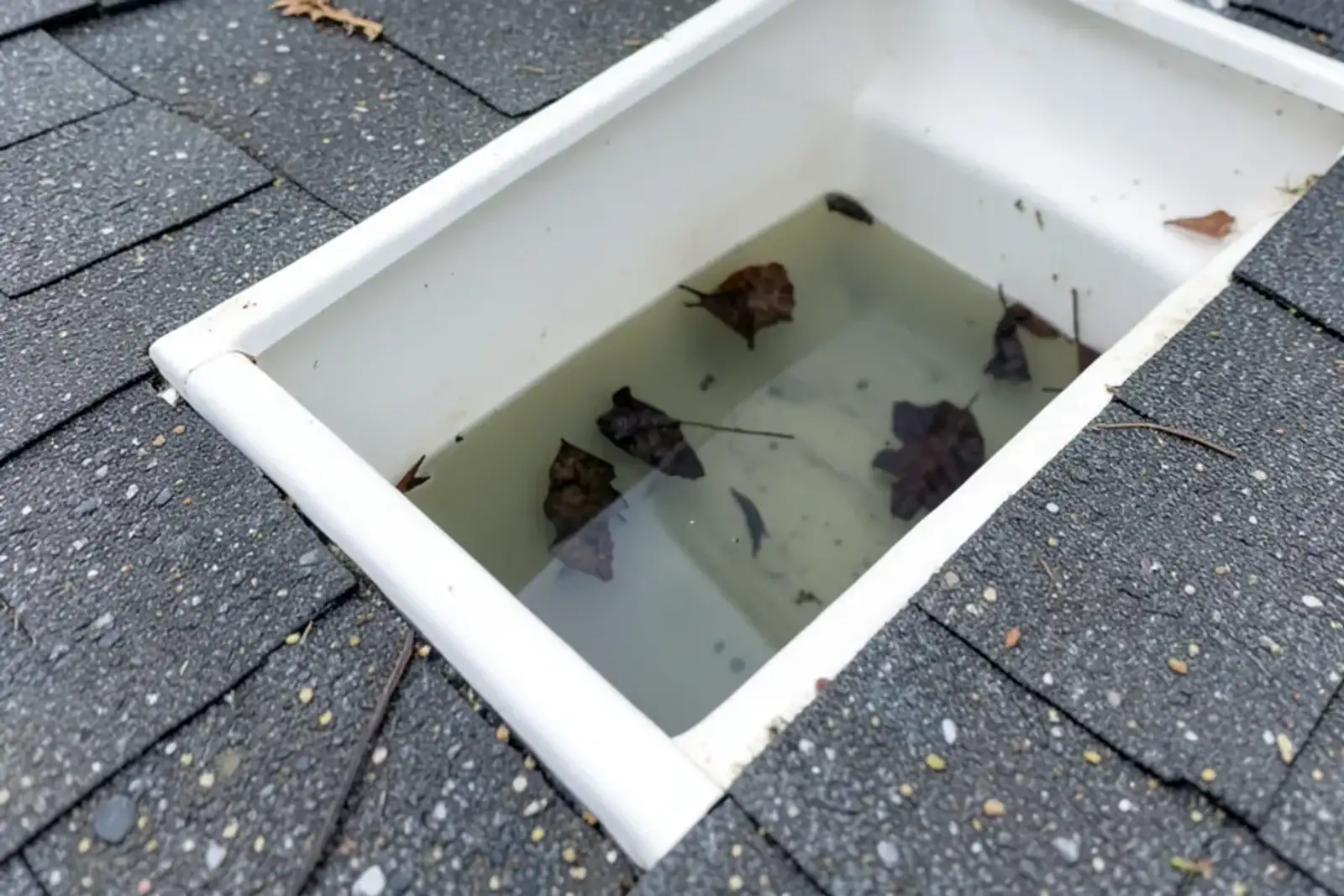
Check for a clog first, because it is the cheapest answer. A downspout that is packed solid looks exactly like bad pitch from the ground.
How much drop does a run need? A worked example
The rule of thumb is about a quarter inch of fall per 10 feet, and it helps to turn it into a number for your own roofline. Angi and most trade guides land on the same figure, with a range from an eighth to half an inch depending on rain and debris.
Take a 40-foot run on a ranch with one downspout at the right-hand corner. Four 10-foot lengths at a quarter inch each is a total drop of 1 inch from the far end down to the outlet. Now suppose the same 40 feet has its high point in the middle and a downspout at each end. Each half is 20 feet, so each half only needs a half inch of fall. The gutter stays tighter to the roof edge and looks straighter from the street.
A level shows how small these numbers are. Over a 4-foot level, a quarter inch per 10 feet is about a tenth of an inch, so the bubble sits barely off center. That is hard to read from a ladder, which is why a string line pulled tight along the run and measured at each hanger is more reliable than a bubble. Use the level to catch the obvious problems: a bubble that leans away from the downspout, or a stretch that is flat.
A 50-foot run with a single outlet is the other common case. Fifty feet at a quarter inch is 1.25 inches of fall, and at the steeper half inch it is 2.5 inches. On a low-slung ranch that is a visible slant, and the SMACNA limit of about 50 feet per downspout is the reason crews add an outlet rather than keep tilting one long run.
What we check before we touch a hanger
The pitch is usually a symptom, not the cause. A gutter holds a good line when the hangers are tight and the board behind them is sound. When the line goes, something moved it.
We look for three things. Spikes that have backed out of the fascia are the most common. After them come hangers spaced too far apart, which lets the gutter flex under snow, and soft wood where a leak has been running behind the gutter for years. Resetting a line on rotten wood does not last. The board has to be right first.
Hanger spacing deserves a straight answer, because it is where trade-offs show up. Hidden hangers screwed into the fascia hold better than old spikes and ferrules, and closer spacing resists snow load better than wide spacing. Many installers set hangers around 24 inches apart in snow country, and some go tighter on exposed runs. The cost is more hangers and more labor per run, and the benefit is a gutter that keeps its line under ice. Ask what spacing a quote assumes, because it is easy to leave out of a price.
We also check the downspout end. If a corner outlet sits higher than the gutter beside it, no amount of re-hanging will make water run uphill.
How a gutter gets re-pitched
Correcting the slope is a measured job. The crew marks a new line, usually with a chalk line from the downspout end to the high point. Then the gutter is released, lifted or lowered to the line and fastened with hangers at a spacing that suits the snow load. We cover this on our gutter pitch correction page, and the wider gutter repair hub shows how it fits with other fixes.
The repair gets more involved when:
- The run is longer than a single outlet can serve
- Old seams crack when the gutter is moved
- The fascia needs boards replaced first
- The gutter itself is bent or kinked
A longer run often gets a second downspout, with the high point moved to the middle so each half drains to its own end. Pitch should be tested again with a hose before the crew leaves. Hampstead sees about 195 days a year below 50°F (Dwellics), so a repair that holds water in November becomes an ice patch in January.
Is a steeper pitch always better?
No. More slope drains faster, and it is a sensible choice under trees, but it has costs. The high end sits tight under the shingles while the low end drops away from the roof edge, which looks off and, on a steep roof, lets fast runoff overshoot the trough. Steeper pitch also means the outlet end sits lower, so it has to be planned with the downspout location in mind.
For most Hampstead roofs, the honest answer is a modest slope of a quarter to a half inch per 10 feet, with the high point moved to the middle on anything over about 40 feet. Hampstead averages about 53.8 inches of snow a year (BestPlaces), and a gutter that flexes under that load will lose its slope no matter what it started with. Slope and hanger spacing work together.
Sandown homes with wooded lots
Sandown is about 4 miles from our Hampstead office, and the median home there was built in 1986 (ACS 2020-24), often on a wooded lot. We cover Sandown as part of our service area. Pine needles are the local twist on pitch trouble. They pack the low end of a sagging run and hold water there, so a slope problem that would drain slowly instead stays wet and rots the board sooner.
If your gutter holds water and there are pines overhead, clean it first and then run the hose test. The gutter will show its real slope once the needles are out.
When the hose test says call us
If the hose test shows water stopping and pooling after you have cleared the gutter and the downspout, the line has moved. A seam that sits in standing water will fail sooner, as we explain in our guide to why gutters leak at seams, and a leaking joint is its own leaking gutter repair. Fix the pitch before the first hard freeze, because a trough that holds water in November holds ice by January.
Stay off the ladder if it is a second story or there is ice. Call (208) 464-4195 and describe where the water sits, and we will set the earliest visit we can.
Quick answers
How much pitch should a gutter have?
A common minimum is about a quarter inch of drop for every 10 feet of run, and many installers go steeper, sloping toward the downspout. On a long run the high point goes in the middle with a downspout at each end. Too little slope holds water, and too much looks crooked and can push water past the outlet. Check the installer's plan for the run.
Can I fix gutter pitch myself?
Sometimes, if the gutter is single-story, sound and only a hanger or two has let go. Snap a chalk line, reset the hangers to it and test with a hose. If the fascia is soft or the run is on a second story, leave it to a crew. A ladder fall costs far more than the repair.
Why does my gutter hold water only at one end?
That end sits lower than the outlet, or the outlet itself is clogged. Flush the downspout first. If water still pools after it flows freely, a hanger has dropped or the fascia has shifted under that stretch. Sandown lots with tall pines add needles that pack the low end and hide the problem.
Can a gutter be pitched too steeply in Hampstead, NH?
Yes. Past about half an inch per 10 feet, the gutter looks crooked against the roofline and the low end drops away from the shingle edge, which gives fast runoff room to overshoot. On long runs we would rather split the slope in two than steepen one long run. Ask the installer where the high point sits.
Is a puddle in a Sandown gutter always a pitch problem?
No. Pine needles, oak tassels and shingle grit can dam a flat gutter and hold water behind them even when the slope is right. Clean the run and flush the downspout, then wait for the next rain. If water still sits in the same spot once everything flows, the line has moved and the hangers need resetting.
Sources
- Dwellics, Hampstead NH climate data
- SMACNA, practical maximum run per downspout
- American Community Survey 2020-24, Sandown NH
- BestPlaces, Hampstead NH snowfall
- Angi, gutter slope guidance (about 1/4 inch per 10 feet, range 1/8 to 1/2)
Questions about your gutters?
25 Glenwood North Rd #16, Hampstead, NH 03841
(208) 464-4195
Mon–Sat 8am–6pm · Sunday closed