

Seamless Gutters
Salt Air and Gutters on the New Hampshire Seacoast
Salt air shortens the life of the weakest part of a gutter system, which is usually the fasteners and any exposed cut edge, not the aluminum run itself. On the New Hampshire seacoast, gutters nearest the water need rust-proof screws, a sound painted finish and a freshwater rinse each year.
- ★ 5.0 on Google · 29 reviews
- Serving since 2024
- Based in Hampstead, NH
Published and updated November 2, 2026 · By the Lanes Gutters crew, Hampstead, NH
On this page
- What does salt air actually do to a gutter?
- How do the common gutter metals compare near salt?
- Which fasteners hold up on the coast?
- Why does mixing metals cause trouble?
- What a crew pays attention to on a salty roofline
- Should you rinse gutters on the coast?
- Historic Portsmouth and the open question of material
- What to ask before you sign a coastal quote
- Service on the coast
- Common questions
New Hampshire has one of the shortest coastlines of any state, about 18 miles (Yankee Magazine). It runs through Seabrook, Hampton, North Hampton, Rye, New Castle and Portsmouth. Gutters on those houses live in a different environment from gutters in Hampstead, which sits well inland.
What does salt air actually do to a gutter?
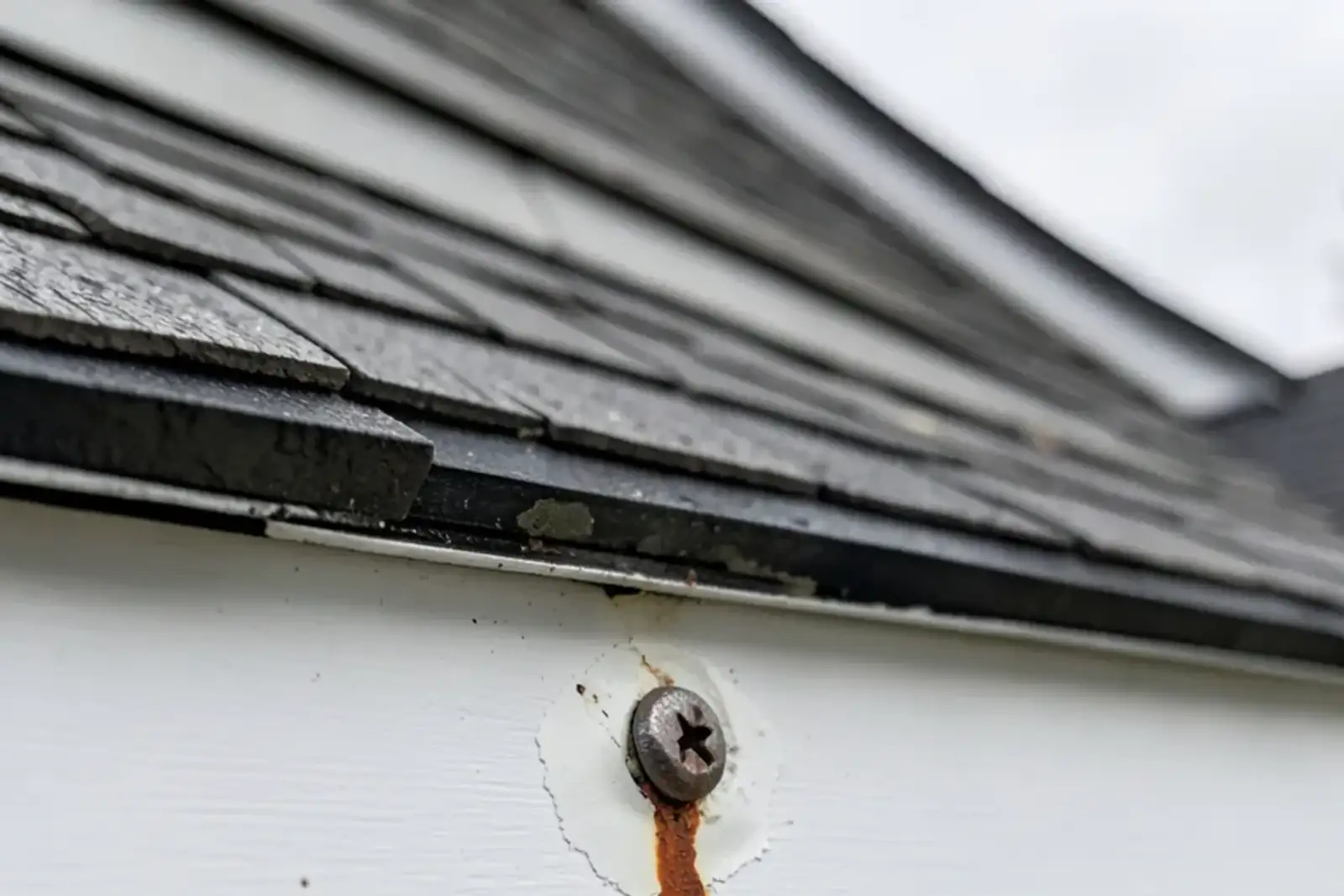
It speeds up corrosion wherever metal meets moisture. The gutter itself is usually the toughest part. Aluminum builds a thin oxide skin and does not rust, though bare spots can pit in salt. The damage tends to start at the small parts: screws, rivets, brackets and cut edges where the paint finish ends.
Rye's oceanfront homes along Route 1A face direct salt spray and nor'easter wind. Census survey data puts the typical Rye house at a 1972 build (American Community Survey, 2020-24). A gutter from that era may be on its second or third set of fasteners. Hampton's median home dates to 1978, and its beach cottages add summer rental wear.
Storms add a second layer. The January 12-13, 2024 nor'easter flattened the seawalls that separated Ocean Boulevard from the beach in Rye, closed Route 1A in sections from Hampton to Rye, and sent responders to rescue 20 people from flooded homes at Hampton Beach (NHPR). NH DOT later found the Rye seawall severely damaged. Storm surge is a flood problem, not a gutter problem. But the spray and wind-driven rain from storms like it coat every roof edge nearby with salt, and a good rinse afterward is cheap insurance for the metal.
How do the common gutter metals compare near salt?
Treat the table below as general trade knowledge, not a product pitch. Aluminum is the usual metal for seamless residential runs. Steel and copper are options other installers may offer.
| Metal | Behavior in salt air | Watch for |
|---|---|---|
| Painted aluminum | Resists rust, pits only where bare | Scratches in the finish, cut ends |
| Galvanized or galvalume steel | Coating wears, rust follows at cut edges | Coating quality, screw holes |
| Copper | Forms a protective patina in salt air | Cost, contact with aluminum |
For steel, the baseline is a G90 coating, as ASTM A653 defines it. Ask any installer which coating or thickness the quote uses, and get the answer in writing.
A painted aluminum run is only as good as its paint. The finish is the barrier, and every cut end, drilled hole and scratch is a place where salt can reach bare metal. That is why the details at corners, outlets and screw holes matter more here than the color. If you want a particular shade, see our notes on color-matched gutters, then ask how cut ends get touched up.
Inland Hampstead and the seacoast compared
| Question | Inland, such as Hampstead | Seacoast, such as Rye or Hampton |
|---|---|---|
| Main wear on fasteners | Moisture and ice | Salt, moisture and ice |
| Hanger spacing | Set by snow load | Set by snow load and wind |
| Rinse | Optional | Once or twice a year |
| Cut ends and chips | Touch up when seen | Touch up fast, before salt sits in them |
| Cleaning | After leaf drop | After leaf drop, plus a post-storm look |
The gutter size and shape do not change with the water. Salt changes how you protect the same K-style run, and how often you look at it.
Which fasteners hold up on the coast?
Stainless steel, typically grades 304 or 316 in the harshest spots, is the usual advice for coastal fastening (Metal Architecture). Zinc-plated fasteners can show red rust in salt spray testing within 15 to 120 hours, and hot-dip galvanized fasteners are not recommended for coastal work. On a gutter, that means the screws holding hangers to the fascia matter more than the metal in the run.
Why does mixing metals cause trouble?
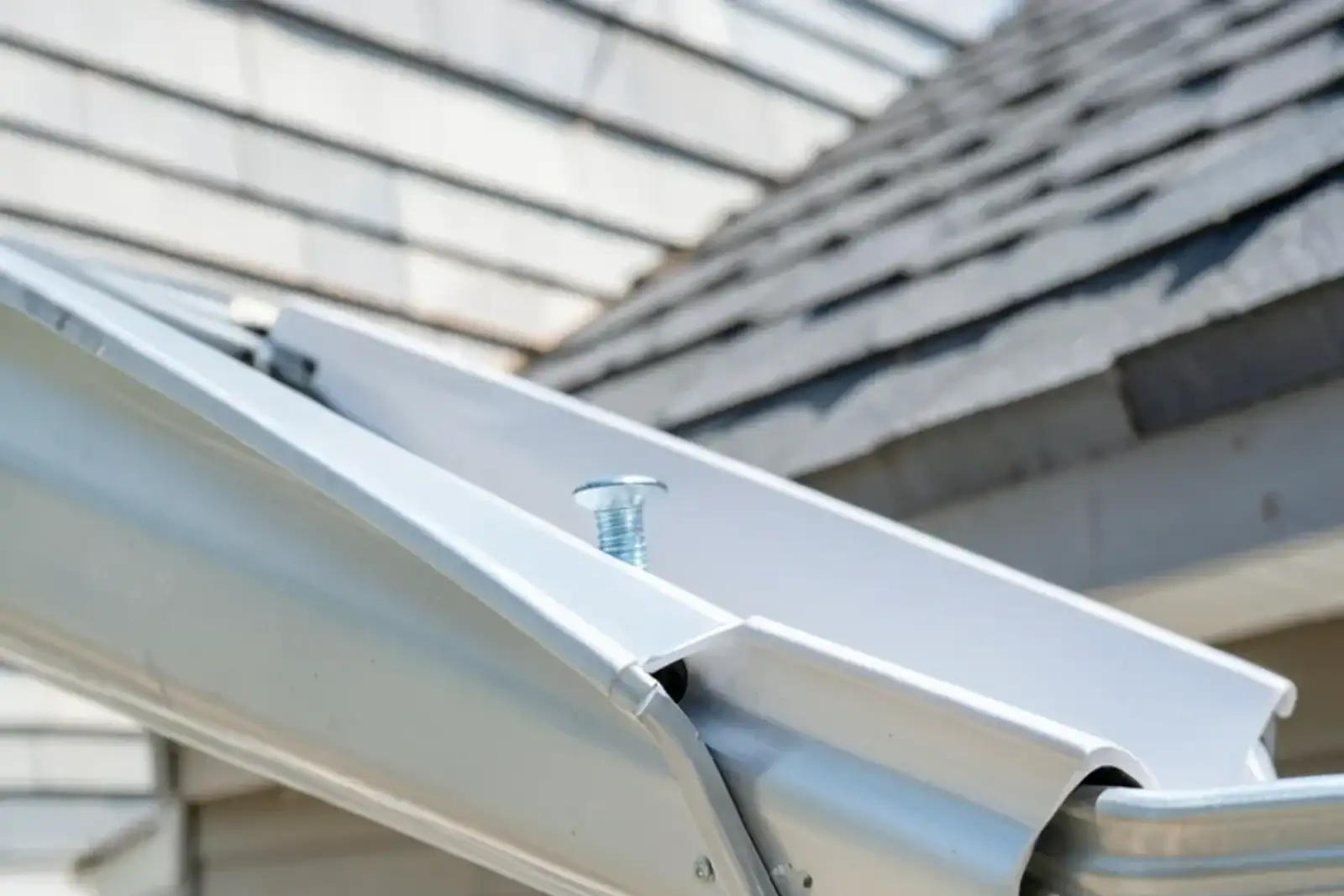
Galvanic corrosion needs three things: two different metals touching, a salty liquid and a path for current. Remove any one and it stops. Salt air supplies the liquid for free, so the job is to keep unlike metals from touching. A copper strap on an aluminum run is one example. A steel screw in aluminum is another.
What a crew pays attention to on a salty roofline
From our crew: coastal gutters fail from the outside in. The paint finish chips at a corner, salt sits in the chip and a pit starts. Wind then loads the run harder than it does inland, so hangers that held fine in a sheltered yard start to loosen.
Closer hanger spacing helps with wind, and screws hold better than spikes that work loose over time. Those are general trade points, not a claim about any past job. On a coastal quote, ask about hanger type and spacing as well as material.
Stainless screws in an aluminum run are common practice. A small screw in a large piece of metal is a low-risk pairing, and a stainless head does not streak the way a plated one does. The place to be careful is where two larger pieces of different metal touch, such as a steel strap against an aluminum trough. If the quote lists a mix, ask where the unlike metals meet and what keeps them apart.
Wind-driven rain is the other coastal habit. Rain that comes in sideways can overshoot a gutter that handles the same storm fine inland. A clean run with a clear outlet and enough downspouts keeps it working, which is why aluminum gutters on a coastal house get the same cleaning schedule as anywhere else.
Should you rinse gutters on the coast?
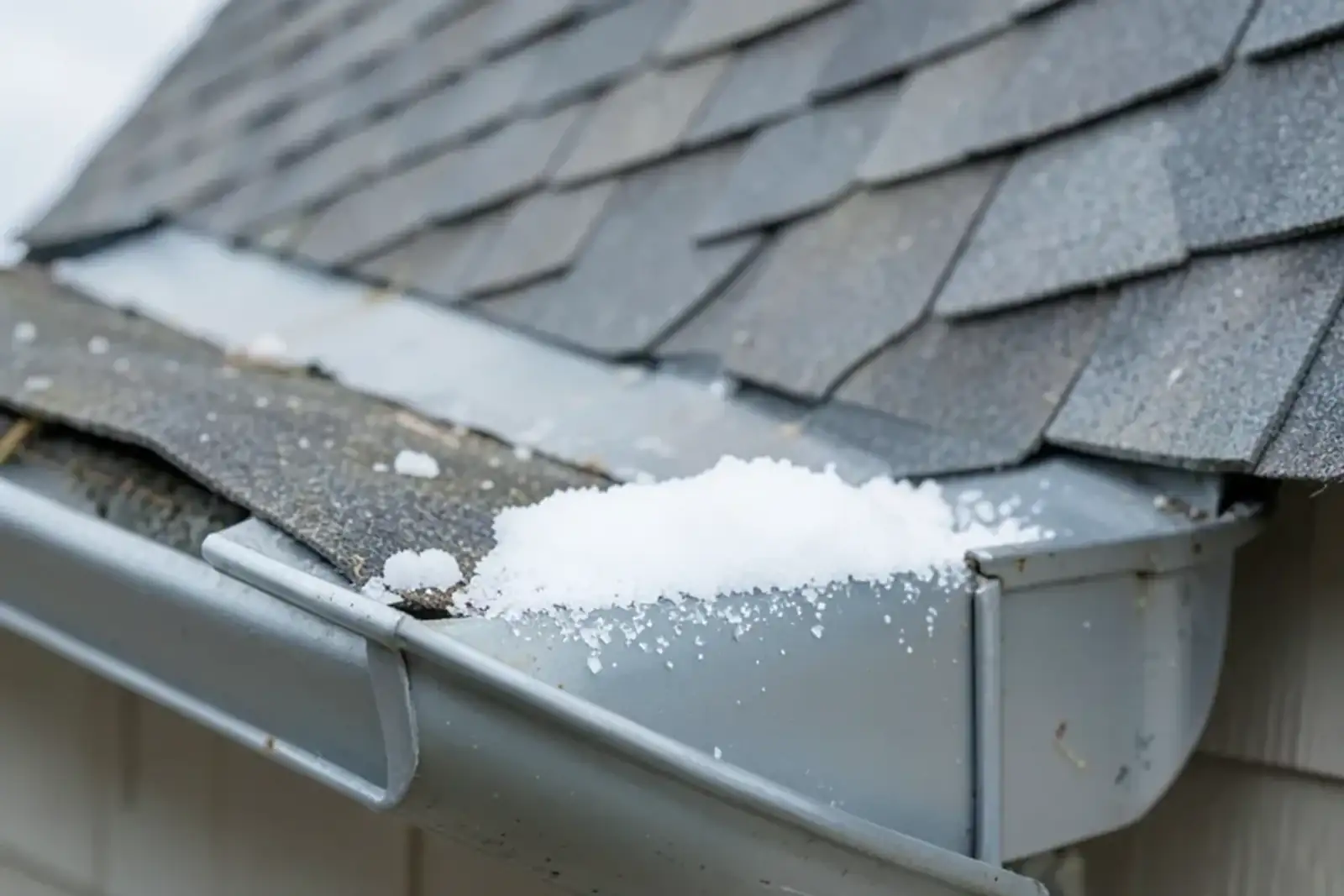
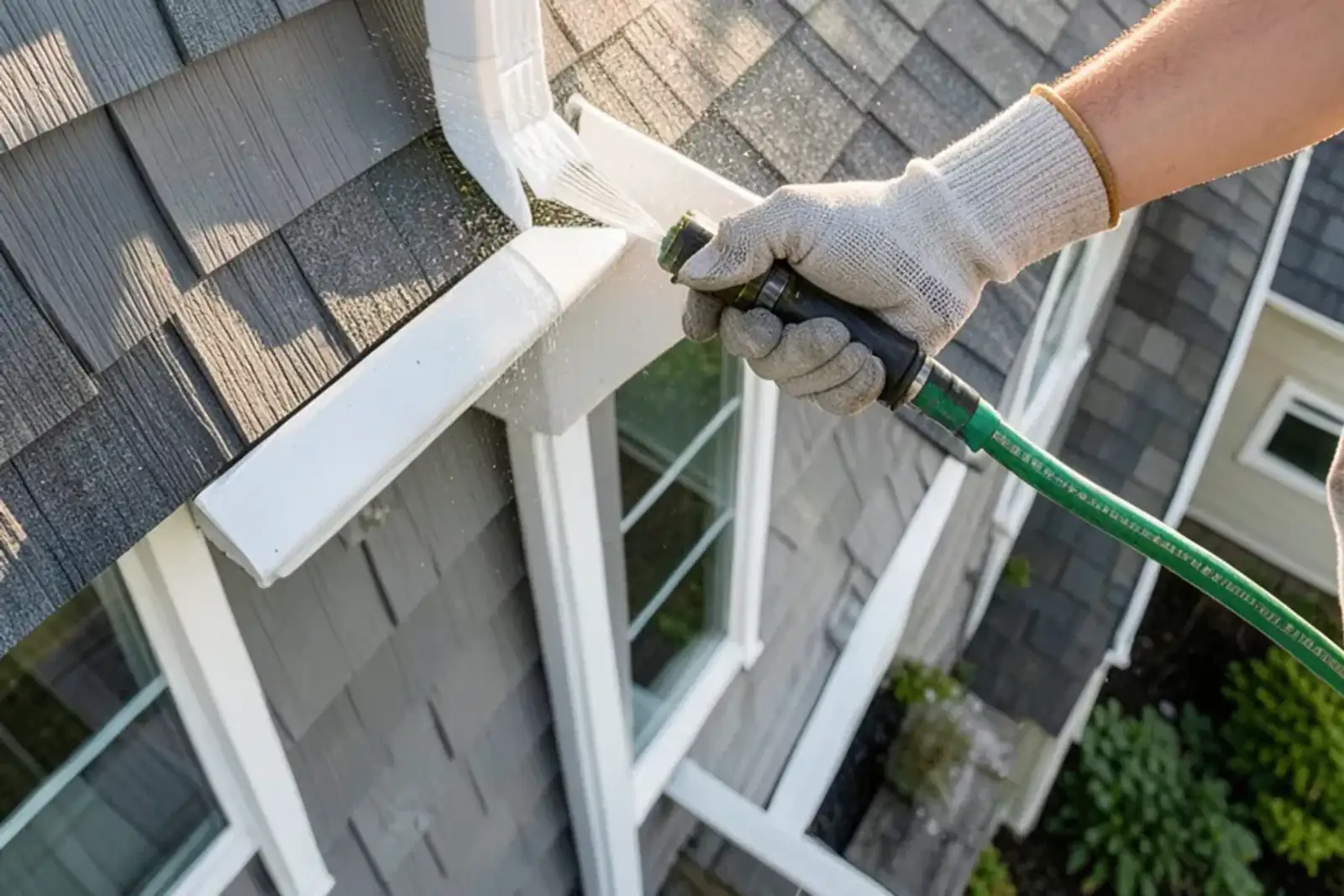
Yes, and it costs nothing. Rinse the outside face, the downspouts and the brackets with a garden hose once or twice a year, preferably in spring and after a long dry summer. Salt that dries and builds up does more harm than salt that gets washed away. Rinse on a cool, overcast day if you can, so the water does not dry in streaks, and work from the top of each run down. Skip the pressure washer, since it can drive water behind the run and scour the paint.
A coastal upkeep list looks like this:
- Rinse the gutter faces and downspouts with fresh water.
- Look for white powder or rust streaks at screws and brackets.
- Replace any corroded fastener with a stainless one.
- Touch up chips in the finish at corners and cut ends.
- Clean out the gutters after leaf drop, as you would inland.
Historic Portsmouth and the open question of material
Portsmouth is a harbor city with a large stock of old houses. Exposure varies by street, and waterfront blocks get far more salt than inland ones. Many of those homes sit in the historic district, where exterior changes may need approval first. Call the commission before changing anything visible from the street.
The city's Historic District Commission agendas and minutes show gutters and downspouts coming up as certificate items. In one past case, the commission allowed aluminum in place of wood gutters but required that the existing wooden ones be kept. Those are past decisions, not current rules, and they do not predict yours. We could not confirm the commission's current gutter guidelines, so ask Portsmouth's planning office what applies to your address. Our companion post on historic homes in Portsmouth and Exeter goes further.
What to ask before you sign a coastal quote
A quote for a seacoast house should answer a few questions that an inland quote can skip. Ask any installer:
- Which screws or rivets fasten the hangers, and what are they made of?
- Is the run one piece, and where will the joints sit?
- How far apart will the hangers be?
- Will anything copper or steel touch the aluminum?
- What does the finish look like at cut ends, and who touches it up?
If the answers are vague, get a second written price. Clear answers cost the installer nothing.
Service on the coast
By our estimate Rye is a 45-minute drive from Hampstead and Hampton about 35. Coastal visits are scheduled in advance and can be combined with other jobs nearby. Read about Rye and Hampton, or start with our page on aluminum gutters and the broader seamless gutters overview. A written price comes after we have looked at the roofline, and we will say plainly when a rinse and a few new screws are all the gutters need. To ask about a coastal house, call (208) 464-4195.
Quick answers
Do aluminum gutters rust near the New Hampshire seacoast?
No, aluminum does not rust, since rust is iron oxide. Salt can still pit bare aluminum and attack steel fasteners and scratched finishes. In Rye or Hampton the weak points are usually screws, brackets and cut edges, so ask which fasteners a quote uses before you ask about the gutter metal.
How close to the ocean do salt air problems start for gutters in Hampton?
Salt spray is heaviest on the oceanfront and along streets with a clear path to the water, and it fades inland. No single distance applies, because wind and exposure matter as much as miles. If you can taste salt on the wind or see it on your windows, treat the gutters as coastal.
Do Rye and Hampton homes need different gutters than Hampstead homes?
Usually the same size and shape, with more attention to metal and fasteners. A K-style aluminum run works inland and on the coast. The differences are rust-proof screws, a sound finish at cut ends, hangers set for wind and a yearly freshwater rinse. Ask any installer to list those details in the written quote before you compare prices.
How often should seacoast gutters be rinsed with fresh water?
Once or twice a year is a sound habit, in spring and again after a long dry summer. Add a rinse after any big coastal storm, since spray and wind-driven rain leave salt on the roof edge. Use a garden hose from the top down, not a pressure washer, which can force water behind the run and scour the paint.
Do you work in Rye and Hampton, NH, from Hampstead?
Yes, we cover both towns. By our estimate Rye is about a 45-minute drive from Hampstead and Hampton about 35. Coastal visits are booked ahead and may be grouped with other nearby jobs. Call with the address and what you are seeing, and we will set the earliest visit we can and confirm coverage first.
Sources
- Selecting the Right Fastener to Resist Corrosion, Metal Architecture
- New Hampshire Seacoast 18-Mile Vacation, Yankee Magazine
- High tide and storm winds prompt evacuations, road closures along NH coast, NHPR, January 13, 2024
- Preserving the Coast, the Rye Seawall Project, NH Department of Transportation
- Portsmouth Historic District Commission agendas and minutes, City of Portsmouth
- Portsmouth, Hampton and Rye plan data, American Community Survey 2020-24
Questions about your gutters?
25 Glenwood North Rd #16, Hampstead, NH 03841
(208) 464-4195
Mon–Sat 8am–6pm · Sunday closed